WWDC 2026: Apple Rebuilt Siri from the Ground Up — Here's Everything That Changed
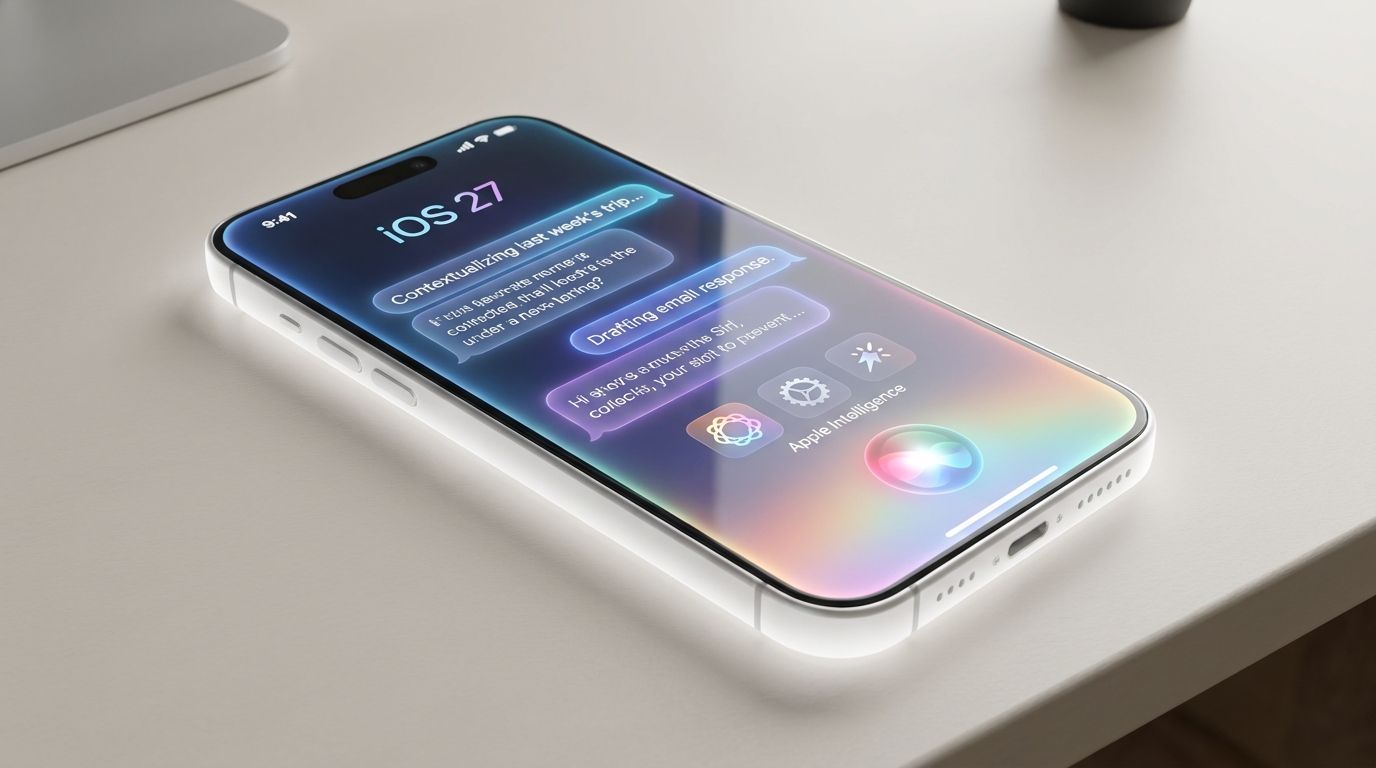
Apple has been playing from behind on AI since ChatGPT made "AI assistant" a mainstream category in late 2022. The company's cautious, privacy-first approach produced Apple Intelligence in 2024 and a series of incremental Siri improvements that left many users underwhelmed. WWDC 2026, held on June 8, represented Apple's most significant response yet: a complete rebuild of Siri announced under the name Siri AI, alongside iOS 27, iPadOS 27, and macOS Tahoe — all available in developer beta immediately.
Siri AI: what actually changed
The new Siri is not an incremental update to the existing system. Apple describes it as a ground-up rebuild, and the feature list makes that claim credible. The key changes:
Conversational context across sessions. The current Siri loses context the moment you close a conversation. Siri AI maintains conversation history across sessions — synced via iCloud across all your devices — meaning you can continue a research conversation started on your iPhone while cooking dinner when you sit down at your Mac. This is the feature most comparable to how ChatGPT and Claude handle multi-turn conversations.
Personal data integration. Siri AI can pull from your messages, emails, calendar, photos, notes, and contacts to give contextually relevant answers. Ask "what did my wife send me about the trip next week?" and Siri searches your Messages and Calendar to construct a coherent response. This operates on-device for most processing, with Apple Intelligence's private cloud compute handling heavier tasks that can't run locally.
Standalone app with web knowledge. Siri AI ships as a standalone app (not just a system overlay) with a persistent chat interface, conversation history, and the ability to answer general web-knowledge questions. Apple described this as Siri "tapping into broad internet knowledge" — a capability that was notably absent from previous versions.
Visual Intelligence expansion. The camera-based Visual Intelligence features (point your phone at something to identify it, translate text in view, look up products) are significantly expanded in Siri AI and now work in real-time without pressing any buttons — just raising the camera to an object triggers analysis automatically.
iOS 27 highlights beyond Siri
iOS 27 brings a range of changes beyond the Siri overhaul. The lock screen and notification system have been redesigned for the third time in three years, this time with Live Activity widgets that can span multiple notification types. The Photos app received a substantial redesign with AI-powered automatic curation that creates "Memory Movies" and highlights reels without any user input required.
Apple Intelligence's writing tools are more deeply integrated into the system: every text field system-wide now has an AI rewrite option accessible with a long press. The feature has been extended to support Arabic and additional languages beyond the initial English and Chinese rollout from iOS 26.
On the security side, iOS 27 includes AI-assisted weak password fixing that automatically detects and offers to update compromised or reused passwords stored in iCloud Keychain — a feature that works without sending password data to Apple's servers.
Compatible devices
Siri AI requires an iPhone 16 or later, iPhone 15 Pro or 15 Pro Max, any M1 or later iPad or Mac, or Apple Vision Pro. Notably, the base iPhone 15 and 15 Plus are not supported for Siri AI — they lack the RAM required to run the on-device models. iOS 27 itself will run on iPhone 14 and later, but Siri AI features will be absent on unsupported hardware.
The developer beta is available now. A public beta is expected in July, with the general release tied to the iPhone 17 launch in September 2026. Initial availability will be English-only; Apple announced support for Spanish, French, German, Japanese, and Korean coming before the end of 2026, with Arabic and additional languages in 2027.
How does it compare to the competition?
Apple's approach remains differentiated primarily by its on-device-first privacy architecture. The personal data integration that powers Siri AI's context-awareness processes the vast majority of queries without data leaving the device. When cloud processing is required, Apple's private cloud compute infrastructure — auditable by third-party security researchers — handles it in an isolated environment without Apple having access to query content.
The trade-off is capability. Google's Gemini running natively on Pixel hardware has a measurably larger general knowledge base and stronger multi-step reasoning. OpenAI's ChatGPT integration (available on iOS via the App Store) handles complex analytical tasks better than Siri AI in early head-to-head comparisons. What Siri AI does better than either is deep, seamless integration with the Apple ecosystem: it knows your calendar, your messages, your health data, and your device usage in ways that cloud-first assistants simply cannot access by default.
Whether that trade-off — better privacy and system integration at some cost to raw AI capability — is the right one depends on what you actually want from an AI assistant. Apple's bet is that for most iPhone users, the answer is the former.