Nach der ISS: Das Rennen um den Bau der ersten privaten Raumstationen
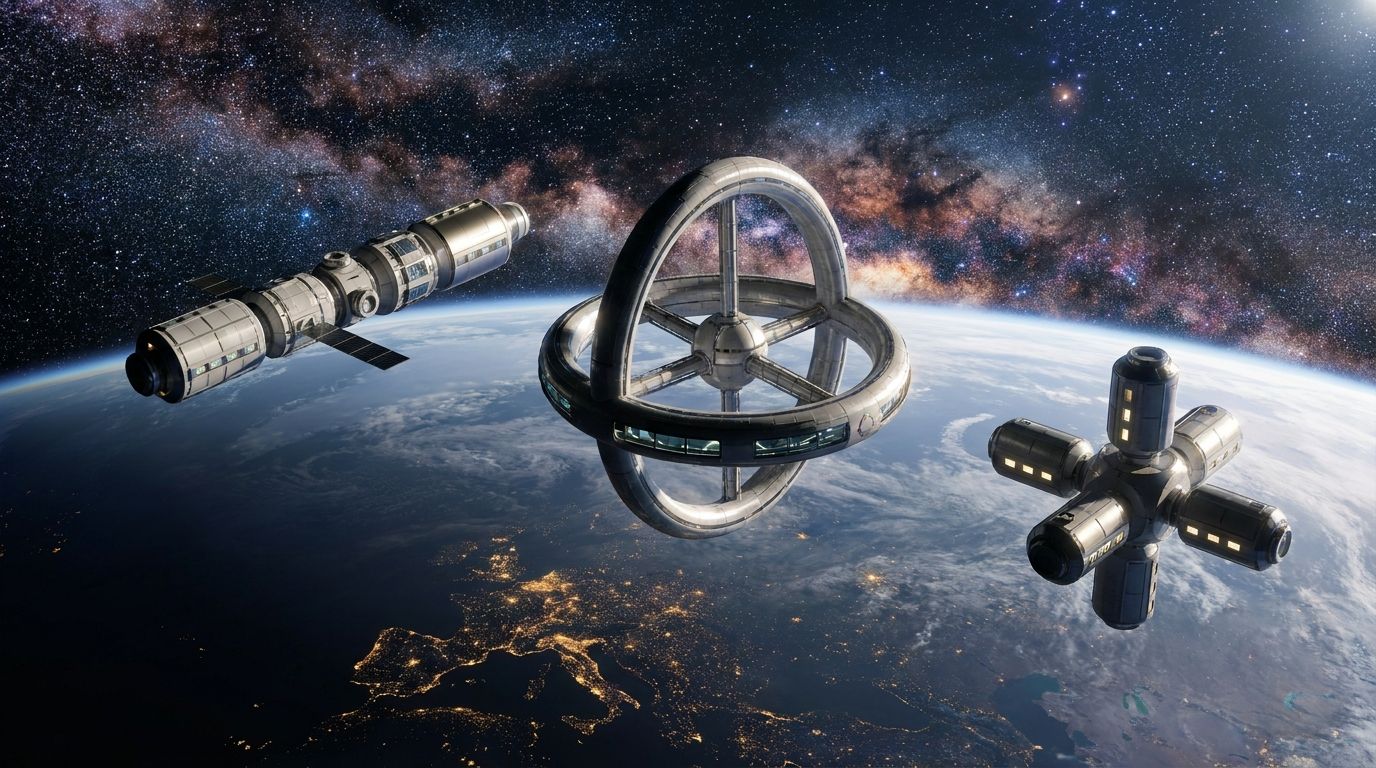
The International Space Station has been humanity's continuous home in orbit since November 2000. In four years, it will be deliberately deorbited into the Pacific Ocean. What replaces it will not be a single government-operated platform but a marketplace of commercial stations, each with different designs, different backers, and different visions for what low-Earth orbit should be used for. 2026 is the year those projects have moved from renderings to construction schedules, and the race to define the post-ISS era is genuinely underway.
Why the ISS Is Ending
The ISS was not designed to operate indefinitely. The station's primary structural elements have been in orbit for over 25 years, and fatigue analysis conducted by NASA and its international partners has identified 2030 as the outer limit of safe operations under reasonable maintenance assumptions. An extension to 2032 is being considered by US lawmakers to close the potential gap before commercial replacements are operational, but the station's fate is not in question -- only the precise timing of its end.
The transition strategy NASA has adopted is intentional: rather than building and operating a successor government station, NASA will purchase services from commercial providers, much as it purchases launch services from SpaceX and Rocket Lab today. The agency has funded multiple commercial station development programs through its Commercial Low-Earth Orbit Destinations (CLD) initiative, spreading risk across several competitors rather than betting on a single design.
Axiom Space: The Bridge Strategy
Axiom Space is pursuing the most methodical approach. Rather than building a freestanding station from scratch, Axiom is adding commercial modules to the existing ISS. The first module, the Payload Power Thermal Module, is planned for launch to the ISS no earlier than 2027. These modules will dock to the station and operate as part of it initially, then detach to form an independent commercial station as early as 2028 as the ISS approaches decommissioning.
This bridge strategy has genuine advantages: Axiom avoids the engineering challenge of building a standalone station from zero and gains operational experience with modules in orbit before they need to function independently. The company has already conducted four private astronaut missions to the ISS, a fifth is planned for January 2027, and it has built revenue and operational credibility that pure-design competitors lack. The risk is dependency on the ISS's continued operation -- if the station degrades faster than expected, Axiom's timeline compresses.
Starlab: The Single-Launch Bet
Starlab, a joint venture between Voyager Space and Airbus with Northrop Grumman as an additional partner, is taking a fundamentally different architectural approach. Rather than assembling a modular station over multiple launches, Starlab is designed as a single, large module launched in one piece -- potentially on SpaceX's Starship, which provides the volume and mass capacity to make this possible.
In February 2026, Starlab completed its Commercial Critical Design Review with NASA, clearing the program for fabrication, testing, and assembly. This milestone is significant: it means the design is frozen and the company is now building hardware rather than iterating on paper. Launch is planned no earlier than 2028 or 2029. Starlab is designed to support up to four crew members and provide research capabilities comparable in scope to the ISS's current research mission. Its commercial payload space is already fully reserved -- before the station has been built.
Vast Space: The Wildcard
Vast Space is the least-discussed but potentially fastest-moving competitor. The company initially targeted May 2026 for the launch of Haven-1, its first station, which would have made it the first private space station in orbit. That date slipped to no earlier than Q1 2027, but if Haven-1 launches anywhere near that window, Vast would have months or years of operational experience before its competitors reach orbit. Haven-1 is a relatively modest platform compared to Starlab or full Axiom Station, but it would establish operational precedent for private station operation that matters for future contracts.
What These Stations Are Actually For
The commercial framing of these projects sometimes obscures the fact that their primary customer -- at least initially -- is NASA. The agency needs to maintain continuous human presence in LEO for scientific and operational reasons, and it is paying for that through the CLD program contracts. The private astronaut tourism market exists and will grow, but it is not the primary revenue driver for any of these projects in the near term.
Beyond NASA contracts and tourism, the most interesting commercial use cases are manufacturing and research in microgravity. Certain pharmaceuticals crystallize with greater purity in microgravity. Semiconductor materials and fiber optic components benefit from the near-zero gravity environment. The ISS has hosted research in these areas for years; commercial stations operating with more flexibility than the government-run ISS could serve as contract research platforms for pharmaceutical companies, materials science firms, and research institutions that currently compete for time on the ISS's constrained schedule.
The Gap Risk
The credible concern running through all of these programs is a gap: a period after ISS decommissioning and before commercial stations are fully operational when there is no American human spaceflight presence in LEO. Given the delays that have characterized every large-scale space infrastructure program -- including the ISS itself -- the 2028-2030 launch timelines for Starlab and Axiom's independent operations carry risk. The ISS extension discussion in Congress is partly a hedge against this scenario.
What is different from previous transitions is the number of independent programs in development simultaneously. If any one of them hits a serious setback, others continue. The post-ISS era will arrive. The question is whether the handoff is smooth or whether there is a year or two of absence in the middle.