Google Fitbit Air, OPPO Reno 16 Pro, and Even Realities R1 Are the Most Interesting Gadgets of May 2026
The Screenless Wearable Gets Serious
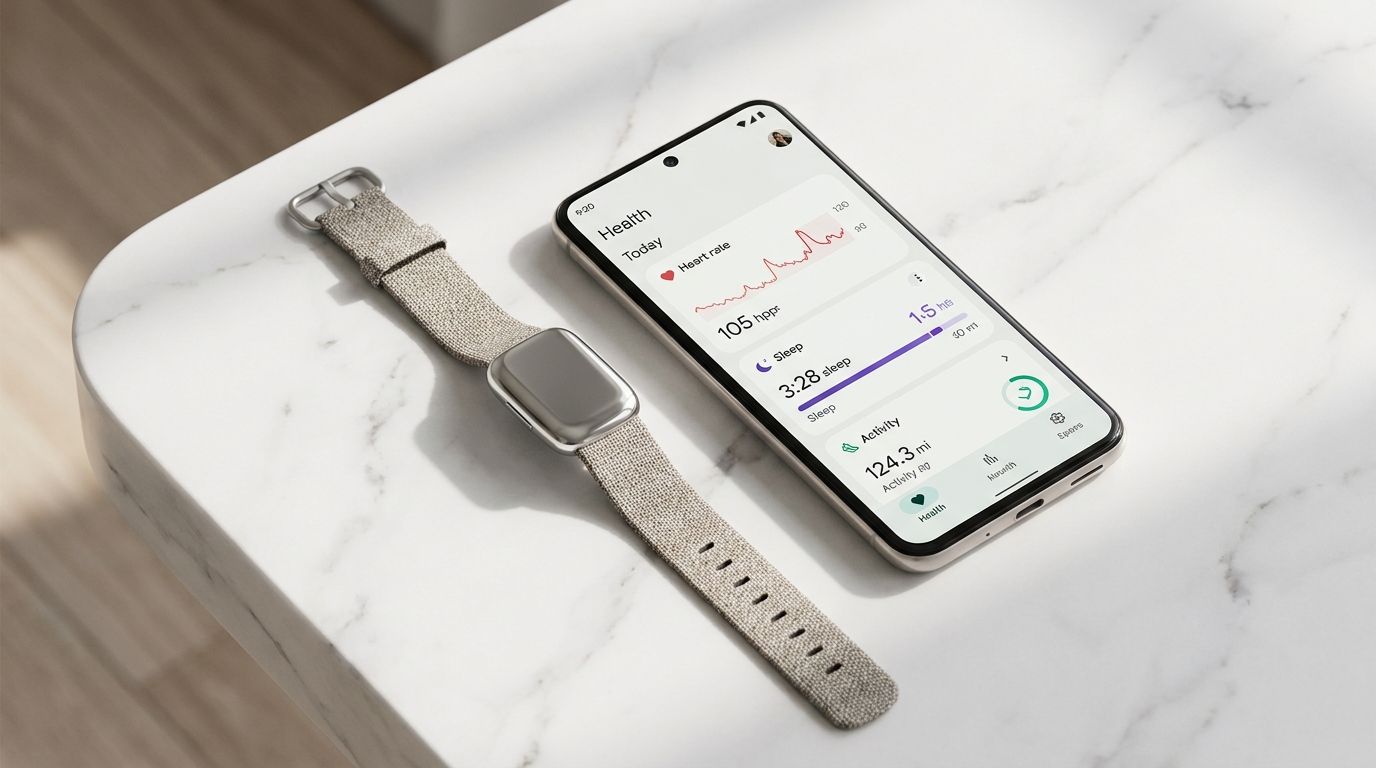
Google's Fitbit Air, released in May 2026, is the most interesting wearable launch of the year — not because of what it has, but because of what it deliberately omits. There is no screen. No notifications, no glowing display beckoning you to check your inbox mid-workout. The Fitbit Air is a health-tracking wristband that does exactly one job: collect biometric data and get out of your way.
The concept is directly inspired by the Whoop 4.0, which proved there was a market for distraction-free wearables among serious athletes and wellness-focused users. Google has taken that idea and layered on its health ecosystem advantages: deep integration with Google Health, Gemini AI-powered coaching through a premium subscription, and seamless sync with Android and Pixel devices.
What the Fitbit Air Actually Tracks
Under the band sits a multi-sensor array covering the usual Fitbit metrics: heart rate (continuous), SpO2, skin temperature, sleep stages, and stress through electrodermal activity. Added for 2026: a HRV (heart rate variability) trend feature that tracks your recovery score daily and feeds it to the Google Health Coach, which provides actionable guidance in the Gemini assistant.
Battery life is rated at 14 days — significantly better than the Apple Watch Ultra 2 (60 hours) or Galaxy Watch 7 (40 hours). The absence of a screen is the primary reason. Without constant display refresh cycles, the Fitbit Air can run its sensor suite continuously without the power drain that defines most smartwatches.
The Smart Ring Race: Even Realities R1
The Even Realities R1 smart ring, also shipping in May 2026, takes a completely different approach: rather than tracking your body, it controls your visual environment. The R1 is explicitly designed as a navigation controller for the Even Realities G2 smart glasses, using a hardware Bluetooth link that the company claims provides lower latency than phone-based controls.
The ring reads five gestures — tap, double tap, swipe forward, swipe back, and press-hold — that map to navigation actions in the G2 glasses' heads-up display. It also includes a PPG sensor for basic step counting and heart rate, though this is clearly secondary to its control function. Battery life is 5 days, and it charges via a magnetic cradle.
The practical use case is compelling: if you wear smart glasses for navigation or AR overlays, reaching for your phone to interact with the display breaks the flow entirely. The R1 keeps your hands free while giving you precise control over what you see.
OPPO Reno 16 Pro: The Camera Phone for Photographers Who Hate Carrying a Camera
The OPPO Reno 16 Pro, launching around May 25th, makes a striking hardware bet: a 200MP main sensor paired with a 50MP periscope telephoto lens in a device under 8mm thick. This is not a niche configuration — it is a direct challenge to the thesis that meaningful photography requires a dedicated camera.
The 200MP sensor uses pixel binning in default mode, outputting 12.5MP shots with excellent dynamic range. Switch to full-resolution mode and you get images with enough detail to crop aggressively — pulling a tight frame out of a wide shot without a separate telephoto capture. The 50MP periscope lens achieves 5x optical zoom, with computational photography extending effective reach to 20x before quality noticeably degrades.
Powering this is the MediaTek Dimensity 9500s, which includes a dedicated imaging NPU that handles computational photography in real time. Paired with a 7,000 mAh battery and 80W wired / 50W wireless charging, the Reno 16 Pro addresses the historically poor battery life of high-end camera phones. Full charge in under an hour. 6.78-inch 1.5K 120Hz flat OLED display.
The Garmin Venu 4: When a Smartwatch Deprioritizes Sport
The Garmin Venu 4 represents a notable strategic shift for a company built on GPS running watches. The Venu 4 is explicitly described by Garmin as built primarily around wellness over training — the first Garmin device to lead with metrics like sleep quality, body battery, stress levels, and mindfulness rather than pace, distance, and VO2 max.
This matters because Garmin's traditional user base is endurance athletes who want GPS accuracy and multi-sport tracking. The Venu 4 is positioned for the much larger market of people who want health monitoring and smart notifications without the sports-forward interface complexity. Battery life is 10 days in smartwatch mode, and the design is notably thinner than the Forerunner series.
The DuRoBo Krono: Intentional Tech for the Smartphone-Fatigued
The DuRoBo Krono deserves recognition as the most philosophically interesting device of 2026. It is a 6.1-inch E Ink device that functions like a smartphone but replaces the touchscreen with a physical dial for navigation. The deliberate friction of using the dial forces more intentional interactions — you cannot infinitely scroll social media with a dial the way you can with a thumb swipe.
The Krono runs a curated application stack focused on communication and reference: messaging, maps, browser, calendar, and an e-reader. There is no social media app store. Battery life measured in days rather than hours, thanks to the E Ink display. It is not for everyone — but for users who want to reduce screen time while keeping core smartphone utility, it is the first device that makes this tradeoff explicit in the hardware itself.
Actionable Buying Guidance for May 2026
If health tracking without distraction is the goal, the Fitbit Air is the clearest recommendation in the wearable space — particularly for users already on Android or Pixel who can use Google Health Coach. At $179, it undercuts the Whoop subscription model significantly over a two-year window.
For smartphone photography, the OPPO Reno 16 Pro at its launch price offers better camera hardware than devices costing significantly more from Apple and Samsung. The caveat: OPPO's software update cadence and US availability have historically been inconsistent. Check carrier availability before committing.
For smart glasses users, the Even Realities R1 is a logical companion purchase if you already own or are planning to buy G2 glasses. As a standalone health tracker it is overpriced — but as a glasses controller with bonus health metrics, the value proposition is reasonable.