After the ISS: The Race to Build Private Space Stations Before the 2030 Deorbit
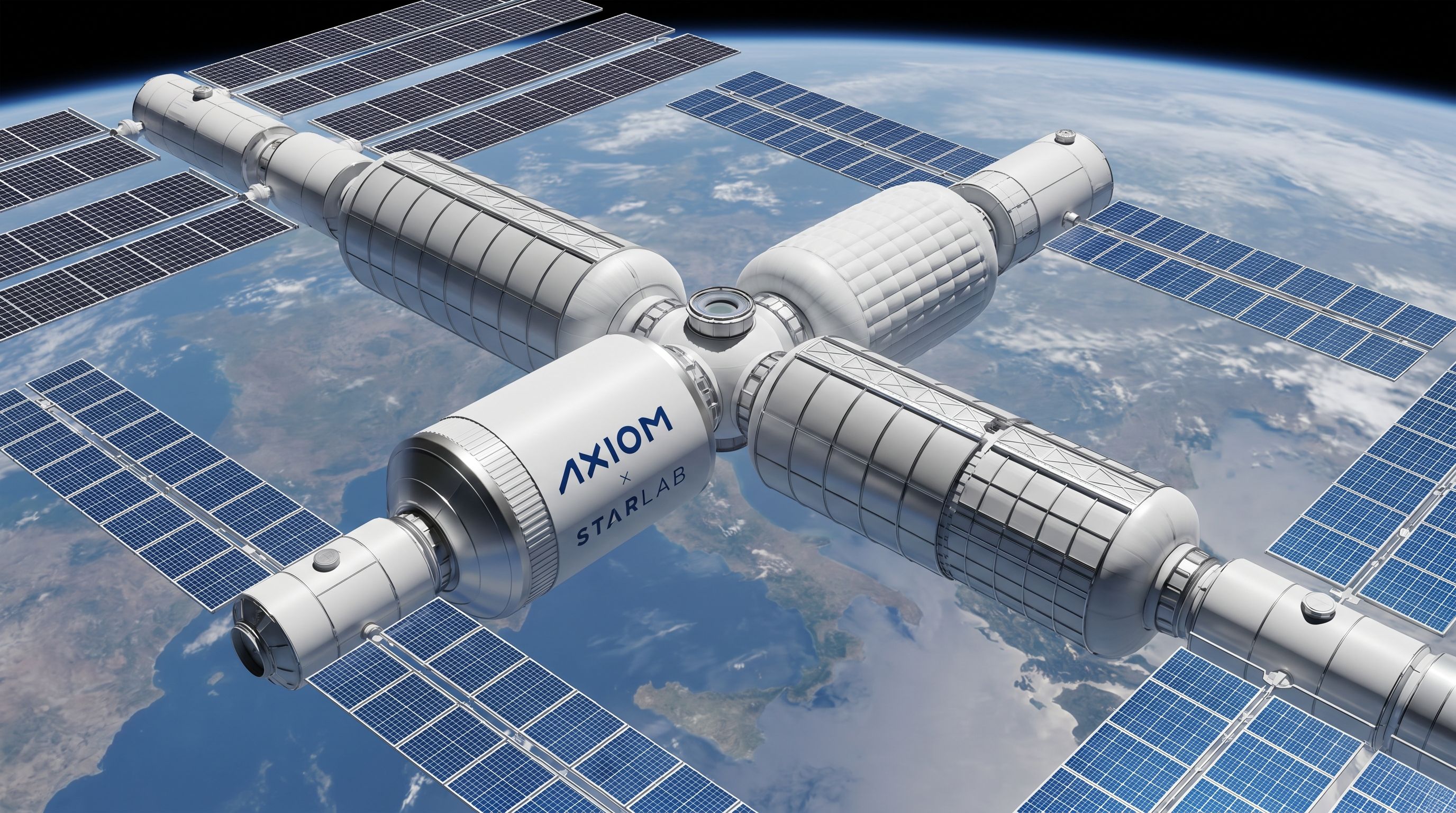
The International Space Station will be deliberately deorbited into the Pacific Ocean in January 2030. That date is fixed in NASA's current planning — it's not a vague retirement, it's a controlled reentry of a 420,000-kilogram structure that has been continuously inhabited since November 2000. What comes next is the first genuinely competitive market for human spaceflight infrastructure, and the players are moving fast.
The Three Main Contenders
NASA awarded Commercial Low Earth Orbit Destinations (CLD) contracts to three groups. Axiom Space received a $130 million contract and is furthest along — it has already launched two commercial modules that dock with the ISS and will form the nucleus of Axiom Station after separation. Starlab, a joint venture between Voyager Space and Airbus Defence and Space, received a $160 million contract for a single large inflatable station designed to accommodate up to four crew members continuously. Blue Origin's Orbital Reef, backed by Boeing and Sierra Space, received $130 million but has faced the most questions about timeline after Boeing's difficulties with other crewed spacecraft programs.
Why the Gap Matters
The deorbit date creates a genuine gap risk. The ISS is not going to last indefinitely even if NASA wanted it to — structural fatigue, particularly in the Russian segment's welded joints, has been accumulating for over two decades. Russian engineers identified cracks in the Zarya module in 2021, and more have been found since. The station was designed for a 15-year operational life and is now in its 26th year of operation.
If commercial stations aren't operational by 2030, the US loses continuous human presence in low Earth orbit for the first time since 2000. That matters strategically — China's Tiangong station is operational and expanding, with a planned crew capacity increase and additional modules in development. A gap in US LEO presence while Chinese capabilities grow is the scenario NASA's commercial station program is specifically designed to avoid.
What Commercial Stations Change
The shift from government to commercial isn't just about cost — it changes what stations are for. The ISS is a scientific research platform operated as an international treaty obligation. Commercial stations are designed around a broader revenue model: research contracts (NASA remains the anchor tenant), manufacturing in microgravity (pharmaceutical protein crystallization, fiber optics, semiconductor processes that benefit from zero-g), tourism, and eventually crew training for deep space missions.
Axiom has already sold seats — its Axiom Mission 4 crew paid in the range of $55 million per seat for ISS docking missions. The actual commercial station will enable longer stays and a larger customer mix. The question is whether the research and manufacturing demand is large enough to support stations that cost hundreds of millions per year to operate without the same level of government subsidy the ISS received.
The Timeline Pressure
Starlab has the most credible near-term path. Its single-launch architecture on Starship simplifies the orbital assembly problem significantly, and the Airbus partnership brings manufacturing expertise. The target operational date is 2028, which would provide a two-year overlap with ISS before deorbit. Axiom's first permanent modules are targeting 2026-2027 attachment to ISS, with separation planned for late 2029. Orbital Reef has pushed its timeline multiple times and is now targeting the early 2030s, which would mean a period with no US commercial station at all if the others slip.
The 2030 deadline is the most important forcing function the commercial space industry has faced. Unlike launch vehicle development, which can absorb delays, the ISS deorbit is a hard constraint — the station comes down whether or not replacements are ready.