The SaaS per-seat model is under real pressure from agentic AI — here's where it breaks first
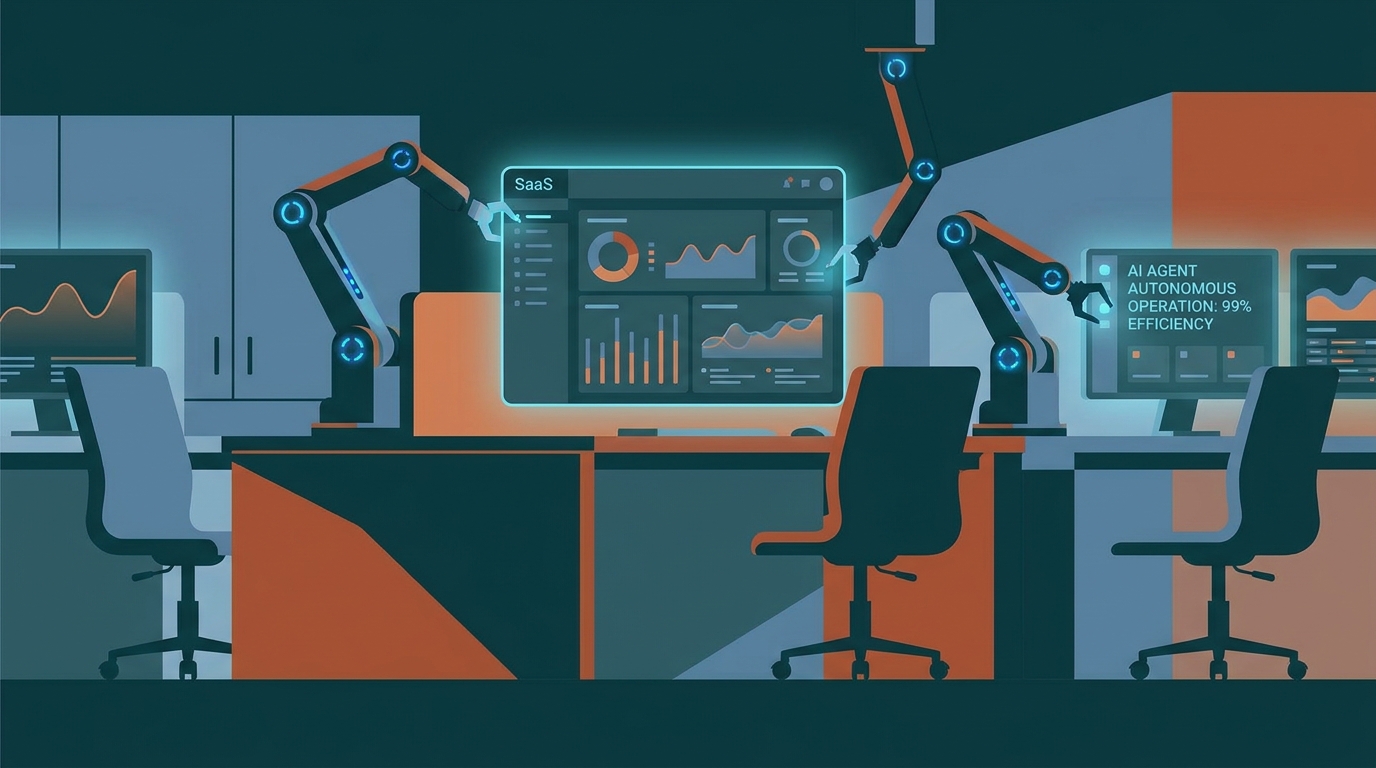
The "SaaSpocalypse" narrative has been overstated. Enterprise software has deep roots — in procurement processes, in compliance requirements, in the organizational habits of IT teams, in contracts that run years. AI agents are not going to replace Salesforce by Christmas. But the per-seat subscription model, which has been the default pricing structure for business software since the cloud era began, is under genuine pressure in specific categories, and the pressure is accelerating.
Gartner's projection that 40% of enterprise applications will embed task-specific AI agents by 2026 — up from under 5% in 2025 — is not a prediction about replacement. It's a prediction about transformation. The applications are the same; what's changing is whether a human sits in front of them executing tasks or whether an agent does it. That distinction has significant implications for how software gets priced, how it gets bought, and which vendors survive the transition.
Where per-seat pricing breaks first
Per-seat pricing makes sense when software value scales with the number of people using it. A CRM seat for a sales rep who is actively prospecting and logging deals has an obvious value relationship to the seat cost. But if an AI agent handles the CRM entry, follow-up email drafting, pipeline updating, and activity logging — and the human's role becomes reviewing and approving rather than executing — then the "seat" is no longer a sensible unit of pricing. The value delivered is now the outcome (deals closed, pipeline maintained) rather than the access (license to log in).
The categories where this logic hits hardest first share a common characteristic: they're high-volume, process-heavy workflows with well-defined inputs and outputs. Customer support is the clearest example. If an AI agent handles 80% of tier-1 support tickets, the value of the support platform is no longer proportional to the number of support agents sitting in it. The platform owner who doesn't adapt pricing will watch enterprise buyers reduce seat counts even as they derive equal or greater value from the platform.
Other high-pressure categories in 2026: marketing automation (agents now execute multi-channel campaigns that previously required teams of specialists), HR operations (recruiting screening, onboarding orchestration, compliance document management), and legal document review (contract analysis, due diligence workflows). In each case, the software still does the work — but it does it autonomously rather than with a human operating each step.
Outcome-based pricing is the logical replacement — but hard to implement
The industry's response is a shift toward outcome-based or usage-based pricing, where buyers pay for what agents accomplish rather than for the seats they occupy. Salesforce introduced outcome-based pricing tiers for its Agentforce platform in 2025. ServiceNow launched consumption-based agent pricing in the same period. Both are acknowledging the same commercial reality: per-seat doesn't capture value delivered by autonomous agents.
Outcome-based pricing creates new problems. Defining what an "outcome" is requires agreement between vendor and buyer, and different buyers have different definitions. A resolved support ticket might look like an outcome, but it's not an outcome if the resolution was poor and the customer churns. Vendors who get this wrong will sell cheap resolutions and create expensive churn. The metering and attribution challenges are also non-trivial — in a world where five different AI agents touch a customer journey, which one gets credit for the sale?
Usage-based models (paying by API call or by agent action) are simpler to meter but create budget unpredictability for buyers. Enterprise procurement teams that are accustomed to flat annual contracts find usage-based billing difficult to model and approve. This creates a market opening for vendors who can offer hybrid structures: a base subscription that covers predictable usage, with variable charges for volume above a defined baseline.
The startup opportunity is specific, not general
The investor thesis that "AI agents will kill all SaaS" has generated a lot of undifferentiated founder activity. The more precise opportunity is narrower: categories where a new agent-native entrant can outperform an incumbent's bolt-on AI layer by virtue of being purpose-built for autonomous execution rather than human-assisted execution.
Y Combinator's W2026 batch showed a concentration of vertical AI agent startups — domain-specific agents targeting legal, healthcare, real estate, and financial services. The thesis in each case is that existing SaaS players have too much legacy UI and workflow architecture optimized for human operators to easily reconfigure for autonomous agent execution. A startup built from scratch for agent-first workflows can offer better automation at lower cost.
The risk for these startups is that the incumbents are not standing still. Salesforce's Agentforce, HubSpot's AI features, ServiceNow's agent platform — these are real products, not vaporware. The window in which a startup can beat the incumbent by being native to agentic workflows may be shorter than the capital cycles needed to build and sell enterprise software. Speed of distribution matters more than technical architecture in most enterprise sales motions, and incumbents have distribution.
What founders and investors should actually watch
The leading indicator to track is not which categories are getting disrupted — it's which enterprise buyers are reducing SaaS seat counts. Reduction in seat count while maintaining or growing revenue from a platform is the signal that a vendor has successfully transitioned to agent-compatible pricing. Reduction in seat count accompanied by churn is the signal that an incumbent is losing to an agent-native competitor or internal AI deployment.
Deloitte's analysis of the SaaS-to-agent transition projects a "hybrid model" as the dominant enterprise pattern through 2028: AI agents operating on top of existing SaaS infrastructure, automating workflows between systems rather than replacing the systems themselves. This is less dramatic than disruption narratives suggest, but it still represents a fundamental change in the ratio of human users to platform value extracted — which is exactly what per-seat pricing cannot accommodate.
The SaaS business model is not dying. Specific pricing architectures within it are becoming indefensible in specific categories. For founders targeting those categories, the opportunity is real. For incumbents defending those categories, the urgency is real. For everyone else, the timeline is longer than the headlines suggest.