Agility's Digit Is Moving 100,000 Totes Per Year. The Humanoid Robot Market Is Real.
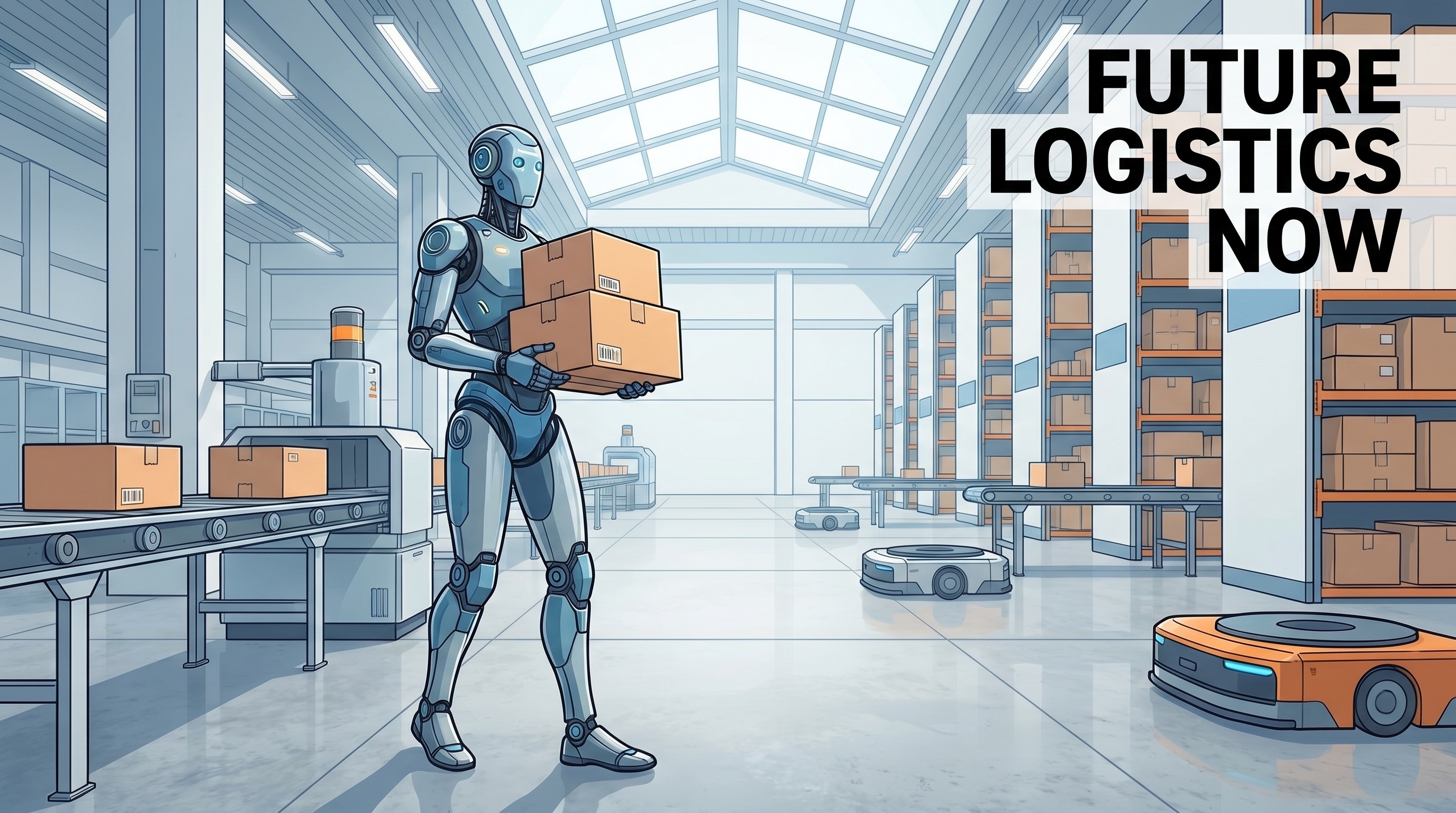
The humanoid robot has spent a long time as a concept. Boston Dynamics' Atlas has been demonstrating impressive athletic feats since 2013. Honda's ASIMO was walking and running in the early 2000s. Tesla unveiled Optimus in 2021 with Elon Musk's signature timeline optimism. The consistent gap between demonstration and deployment made it reasonable to assume that practical humanoid robots were still a decade away.
Agility Robotics closed that gap quietly. Its bipedal robot Digit is currently deployed in live warehouse operations at Amazon and GXO Logistics facilities, moving over 100,000 totes per year in production environments. That figure represents actual throughput in commercial operations — not a pilot demonstration, not a controlled research environment. And in February 2026, Agility signed a Robot-as-a-Service agreement with Toyota Motor Manufacturing Canada, the first major automotive OEM to deploy humanoids in a manufacturing context.
How Digit Works and What It Costs
Digit is built for a specific task: picking up totes from conveyor systems and placing them in storage locations, a task that represents a significant portion of labor hours in modern fulfillment centers. It operates on two legs (enabling it to navigate the same aisles humans use) with two arms capable of the pick-and-place motions the task requires. It doesn't manipulate small objects, perform complex assembly, or navigate unstructured outdoor environments — Agility chose a task scope matched to the hardware's current capabilities rather than overpromising on versatility.
The capital cost of a Digit unit is approximately $250,000. Operating cost in current deployments runs $10 to $12 per hour, which includes maintenance, power, and remote monitoring. Agility projects that cost will fall to $2 to $3 per hour as production scales — a trajectory consistent with the cost curves seen in conventional industrial robotics as volume increases.
At current operating costs, the economic case for Digit depends on the labor market context. In fulfillment centers with high labor turnover, worker shortage pressure, or wage inflation driven by competing employers, $10 to $12 per hour for a robot that operates across multiple shifts without the labor management overhead is competitive. At $2 to $3 per hour — Agility's medium-term projection — the economics become compelling across a much wider range of operations.
RoboFab and the Production Question
One of the consistent objections to humanoid robot deployment has been production capacity: even if the hardware works, can manufacturers build enough units to matter? Agility has addressed this directly with RoboFab, its dedicated manufacturing facility in Salem, Oregon, with rated capacity of over 10,000 units per year.
That capacity number is important context for understanding Agility's supply chain decisions. The company has sourced 80% of Digit's components from within the United States — a deliberate strategy that both reduces geopolitical supply chain risk and positions the company favorably in discussions with US-headquartered customers concerned about supply chain sovereignty. The domestic sourcing figure was disclosed in May 2026 as part of Agility's manufacturing transparency reporting.
Where the Competition Stands
Boston Dynamics began production of its new electric Atlas in January 2026, with initial deployments committed entirely to Hyundai's RMAC facilities and Google DeepMind. Electric Atlas is a significant technical advancement over the hydraulic version — quieter, more energy-efficient, and faster — but no external commercial customers have been announced yet. Boston Dynamics has the engineering pedigree and Hyundai's production system expertise behind it, but Agility has a 12 to 18 month head start on commercial deployment data.
Tesla's Optimus entered low-volume production for internal use in summer 2026 — primarily battery sorting and pick-and-place tasks within Tesla's own factories. Elon Musk acknowledged in January 2026 that Optimus robots were "not doing useful work yet" at that point. Commercial availability for external customers is not expected before late 2027 or 2028. Tesla's advantage — enormous manufacturing scale and vertical integration — will matter when it arrives. But it hasn't arrived yet.
Figure AI, backed by OpenAI and Microsoft, announced retail logistics partnerships with JCPenney, Aeropostale, and Brooks Brothers in May 2026, marking the first commercial deployment of humanoids in consumer retail rather than industrial logistics. The deployments are early-stage, but they demonstrate that the addressable market extends beyond warehousing and manufacturing.
The Labor Market Argument
The economic case for warehouse robotics doesn't rest solely on robot cost curves — it rests on the intersection of those curves with labor market dynamics. The warehouse and fulfillment sector has faced 7 to 9 percent annual wage inflation, turnover rates of 70 to 100 percent in some facilities, and persistent labor shortages in specific geographies. These pressures make automation increasingly attractive even at current robot cost levels.
The warehouse automation market was valued at $29.9 billion in 2025 and is projected to reach $36.2 billion in 2026 — a 16% single-year increase. Autonomous mobile robots (AMRs) and automated guided vehicles already demonstrate payback periods under 24 months in high-throughput facilities. Humanoid robots, with their ability to operate in human-built environments without infrastructure modification, extend automation to tasks that fixed-path robots can't reach.
What Commercial Deployment Proves
Agility's deployment data matters beyond the company's own business. When a customer like GXO Logistics runs Digit in live operations and reports 100,000+ totes moved annually, it demonstrates that the sensing, manipulation, and navigation systems work in environments designed for humans — not specially modified for robots. That proof point reduces the perceived risk for every subsequent deployer considering humanoid robotics.
The commercial deployment flywheel is just starting. Each deployment generates operational data that improves subsequent software releases. Each customer relationship generates domain knowledge about specific task requirements. Each year of production reduces unit costs. The gap between Agility's current commercial position and its competitors' demo-stage products is not primarily a technical gap — it's an operational learning gap that takes time to close regardless of engineering quality.