Bitcoin Mining Post-Halving Reckoning: Industrial Scale, Tighter Margins, and a Shrinking Map of Profitable Operators
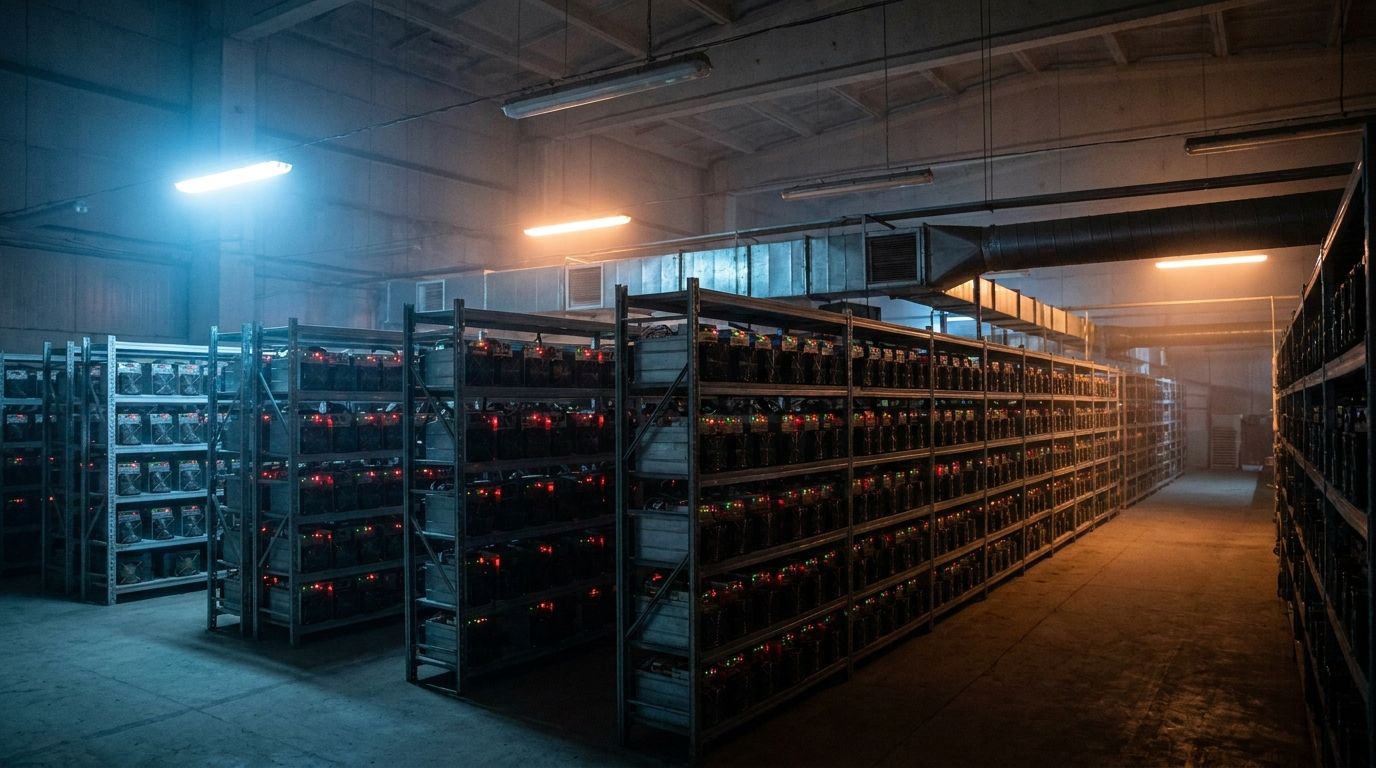
Every four years, Bitcoin's protocol cuts the block reward in half. The 2024 halving, which occurred at block 840,000 in April 2024, reduced the reward from 6.25 BTC to 3.125 BTC. The math is simple: miners who were generating revenue per petahash were suddenly generating half as much from block rewards alone, overnight. Survive it long enough and rising BTC prices can compensate. But the structural effects are more permanent than the price recovery.
Two years past the halving, Bitcoin mining looks significantly different than it did in 2023. The industry has consolidated, hardware has advanced, and the competitive moat is now as much about energy strategy as hash rate. What is left is a leaner, more industrial operation — and a much higher bar for new entrants.
Margin Math After the Cut
At ,000 BTC and a block reward of 3.125 BTC, each block produces approximately ,500 in revenue. Divide that across a global network producing around 600 exahashes per second (EH/s) of computational power, and the per-unit economics get tight. A miner operating Antminer S21 Pro hardware at 234 TH/s draws 3,531 watts. At /bin/zsh.05/kWh electricity — the rough floor for competitive industrial mining — that is about .24/day in power costs. Revenue at current difficulty is around -8/day per unit. At /bin/zsh.07/kWh, common for grid-connected operations without long-term power purchase agreements, the margin largely disappears.
The halving does not kill mining — Bitcoin's difficulty adjustment mechanism ensures that. If miners shut off, difficulty drops, making remaining machines more profitable. The market finds equilibrium. But it does kill the least efficient operations: older hardware, high-cost power, and operators without the scale to negotiate industrial electricity rates.
The Hardware Arms Race
The response to tighter post-halving margins is predictable: better hardware. ASIC manufacturers — Bitmain, MicroBT, Canaan — release new generations every 12-18 months. The Antminer S19 XP (2022) delivered around 21.5 joules per terahash (J/TH). The S21 Pro (2024) cuts this to about 15 J/TH. MicroBT's Whatsminer M66S++ targets 14 J/TH. Next-generation units using 3nm and 5nm fabrication, announced for 2025-2026, are targeting 10-12 J/TH.
Each efficiency improvement is a multiplier on margins. A miner running 10 J/TH hardware at /bin/zsh.05/kWh has the same power cost as one running 20 J/TH hardware at /bin/zsh.025/kWh. As the frontier pushes toward 10 J/TH, operations with legacy S19-era hardware become structurally unprofitable except at very low electricity costs.
Access to new-generation hardware has itself become a competitive moat. Large publicly-traded miners like Marathon Digital, CleanSpark, Riot Platforms, and Core Scientific signed purchase agreements for 2025-2026 hardware deliveries totaling hundreds of thousands of units, often 12-18 months in advance. Smaller operators have limited access to frontier-efficiency machines and must pay premiums in the secondary market.
Energy Strategy as the New Differentiator
After two halvings in four years, cheap power has become the primary differentiator. The operators who survive and grow between halvings are those who locked in long-term power purchase agreements (PPAs) at /bin/zsh.025-0.04/kWh — rates only available through direct deals with power generators at scale.
This has driven a structural shift toward co-location with generation assets. Several large miners operate in direct partnership with natural gas producers, using flared gas to generate power on-site. Crusoe Energy, which pioneered this model, converts methane that would otherwise be vented or flared into computing revenue. Regulatory pressure on methane emissions has made these operators unexpected allies of environmental enforcement.
Texas has emerged as a major mining hub partly because ERCOT's grid incentivizes demand response: miners sign curtailment agreements, shutting off when grid demand peaks and earning payments for the flexibility. The largest miners can earn 10-20% of their revenue from demand response programs, independent of BTC prices.
Hashrate Concentration and Network Implications
Post-halving consolidation has a network governance dimension. The four largest mining pools — Foundry USA, AntPool, F2Pool, and ViaBTC — collectively account for over 60% of global hash rate. Foundry USA alone has held 25-30% of total hash rate in recent months.
Pool operators control block template construction — what transactions get included and in what order. This has become relevant as transaction fees from Ordinals and BRC-20 tokens created periods of high fee revenue. Transaction fee revenue has emerged as a more significant component of miner income post-halving. Before 2024, fees typically represented 1-5% of total miner revenue. In 2024-2026, during high-demand periods, fees have reached 15-30% of block revenue, partially offsetting the subsidy reduction.
Who Is Left Standing
The post-halving mining landscape is dominated by publicly-traded industrial operators with access to capital markets, large PPAs, and first access to frontier hardware. Marathon Digital, CleanSpark, and Core Scientific are the US-listed leaders. The era of small-scale hobbyist mining on home electricity is effectively over at any grid-connected electricity rate above /bin/zsh.06/kWh.
Bitcoin's proof-of-work mining has become, in economic terms, a commodity industry with characteristics more similar to data center infrastructure than the garage operations of 2011. The next halving is scheduled for April 2028, at which point block rewards drop to 1.5625 BTC. Whether transaction fees can absorb another 50% subsidy cut is the question the entire network is watching — and its answer will define what Bitcoin's security model looks like in the 2030s.