After the ISS: The Race to Build the First Private Space Stations
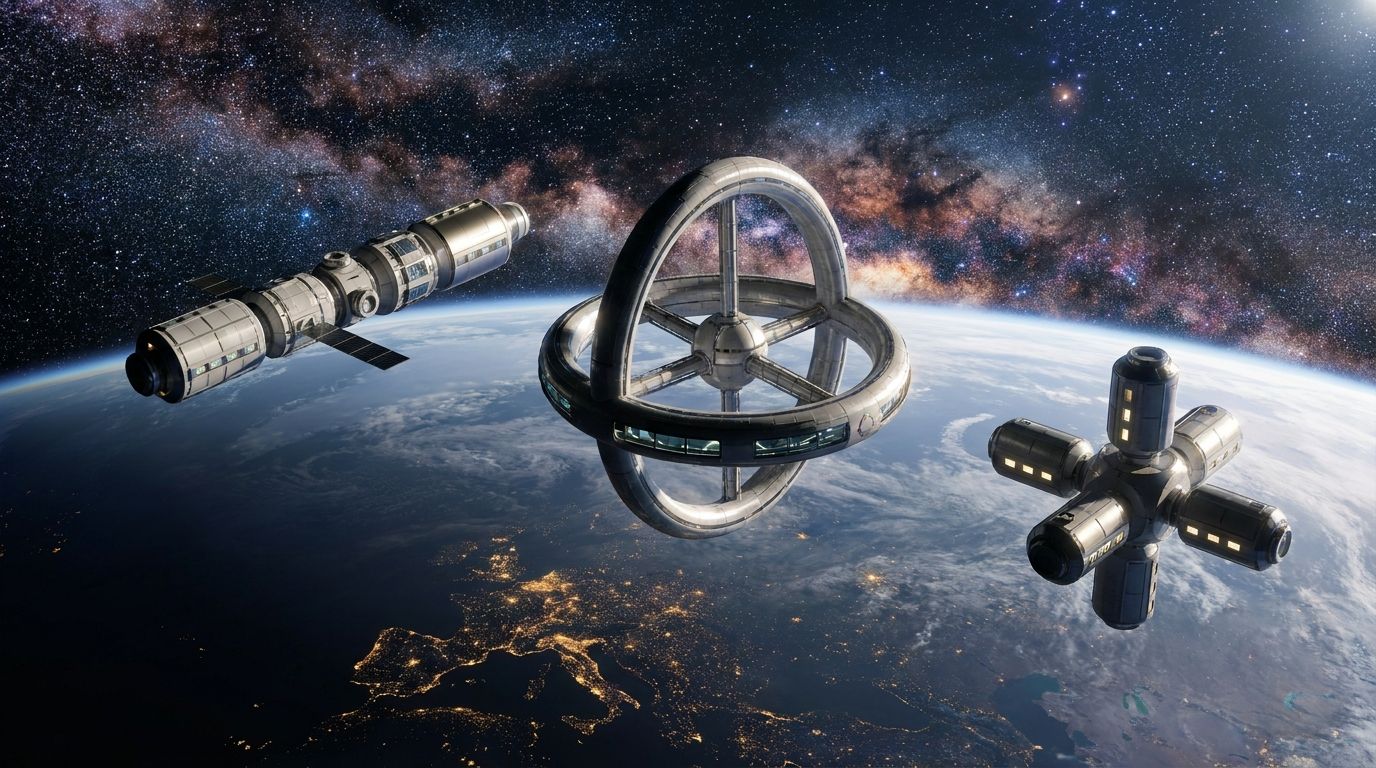
The International Space Station has been humanity's continuous home in orbit since November 2000. In four years, it will be deliberately deorbited into the Pacific Ocean. What replaces it will not be a single government-operated platform but a marketplace of commercial stations, each with different designs, different backers, and different visions for what low-Earth orbit should be used for. 2026 is the year those projects moved from renderings to construction schedules.
Why the ISS Is Ending
The station's primary structural elements have been in orbit for over 25 years, and fatigue analysis has identified 2030 as the outer limit of safe operations. An extension to 2032 is being considered by US lawmakers, but the station's fate is not in question -- only the precise timing. NASA's transition strategy is deliberate: rather than building and operating a successor government station, it will purchase services from commercial providers through its Commercial Low-Earth Orbit Destinations (CLD) initiative.
Axiom Space: The Bridge Strategy
Axiom Space is adding commercial modules directly to the existing ISS. The first module, the Payload Power Thermal Module, is planned for launch no earlier than 2027. These modules will dock to the station initially, then detach to form an independent commercial station as early as 2028. Axiom has already conducted four private astronaut missions to the ISS, with a fifth planned for January 2027 -- building operational credibility that pure-design competitors lack.
Starlab: The Single-Launch Bet
Starlab, a joint venture between Voyager Space and Airbus with Northrop Grumman as additional partner, completed its Commercial Critical Design Review with NASA in February 2026, clearing the program for fabrication and testing. Designed for a single launch -- potentially on SpaceX's Starship -- the station targets deployment no earlier than 2028-2029. It is designed for up to four crew and research capabilities comparable to the ISS, and its commercial payload space is already fully reserved before the station has been built.
Vast Space: The Wildcard
Vast Space initially targeted May 2026 for the launch of Haven-1, its first station, which would have made it the first private space station in orbit. That date slipped to no earlier than Q1 2027. If Haven-1 launches near that window, Vast would have months of operational experience before its competitors reach orbit -- a meaningful lead for future contracts.
What These Stations Are Actually For
The primary customer, at least initially, is NASA. The agency needs continuous human presence in LEO and is paying for it through CLD contracts. Beyond NASA, the most interesting commercial cases are microgravity manufacturing and research: certain pharmaceuticals crystallize with greater purity in microgravity, semiconductor materials benefit from near-zero gravity, and commercial stations operating with more flexibility than the government-run ISS could serve as contract research platforms for companies currently competing for scarce time on the ISS's constrained schedule.
The Gap Risk
The credible concern is a gap after ISS decommissioning and before commercial stations are fully operational. Given the delays that have characterized every large-scale space program, the 2028-2030 launch timelines carry risk. What is different from previous transitions is the number of independent programs in development simultaneously. If any one hits a serious setback, others continue. The post-ISS era will arrive -- the question is whether the handoff is smooth or whether there is a year or two of absence in the middle.