EV Battery Recycling Is Becoming a Strategic Industry — Here's How the Economics Actually Work
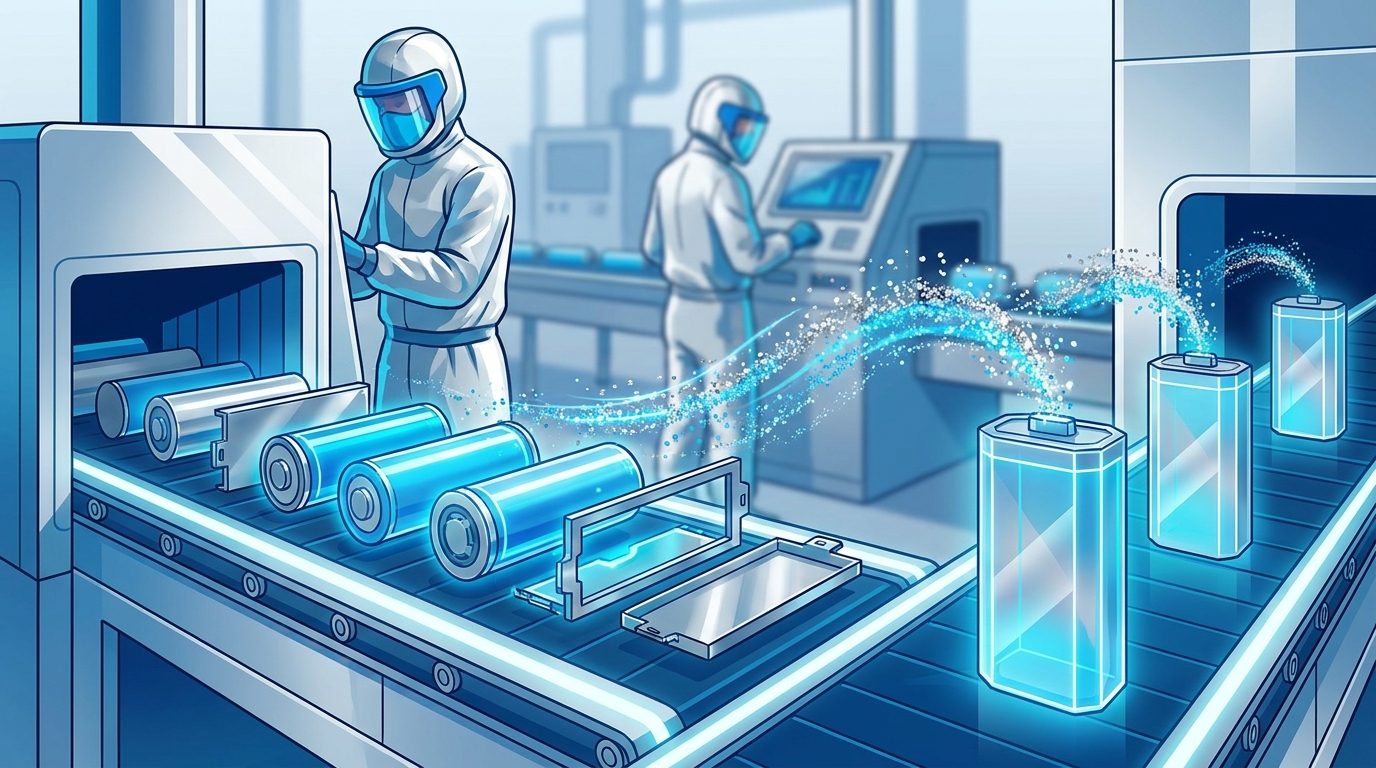
When the first mass-market electric vehicles sold in the 2010s, the question of what would happen to their batteries at end of life was largely theoretical. Batteries were expected to last a decade or more, so the recycling industry had time to develop. That time has now run out. The first significant wave of end-of-life EV batteries is arriving, and the recycling industry it is meeting is one that has had to learn, fail, and adapt in real time.
Battery recycling is now a geopolitical priority, a manufacturing necessity, and a rapidly maturing industry — and the economic logic driving it has changed significantly from the original assumptions.
What's Inside a Battery That's Worth Recovering
A lithium-ion EV battery pack contains several materials worth recovering at scale. Cobalt is the most valuable: it can represent 5–20% of cathode mass depending on the chemistry (NMC 111 is cobalt-heavy; NMC 811 and LFP are not). Nickel, lithium, manganese, and copper are also recoverable. The aluminum and steel in the pack structure are recovered as commodities.
The economic case for recycling has shifted as battery chemistries have changed. Early EV batteries (2010–2018 era) used NMC 111 cathodes with significant cobalt content — cobalt was the primary economic driver for recycling, since it is expensive, concentrated in the Democratic Republic of Congo (DRC), and subject to supply chain risk. As battery makers have migrated toward NMC 811 (higher nickel, less cobalt) and LFP (lithium iron phosphate, no cobalt or nickel), the per-pack economics of recycling have become more complex. LFP batteries are harder to make profitable from recycling alone, but they are also becoming dominant in Chinese and mid-market EVs.
Lithium recovery has become the new economic anchor. Lithium carbonate prices peaked above $80,000 per tonne in 2022 before correcting sharply, but the long-term demand trajectory from EVs, grid storage, and portable electronics is expected to sustain a significant price floor. Recovering battery-grade lithium from black mass (the slurry produced by shredding cells) is technically harder than recovering cobalt but increasingly economically justified.
The Two Main Processes
Battery recycling uses two primary approaches, often in combination.
Pyrometallurgy burns the battery in a high-temperature furnace (1200–1400°C), which destroys the electrolyte (removing the fire risk from the lithium salt) and produces an alloy of cobalt, nickel, and copper. The process is robust, handles a wide range of battery chemistries, and is commercially proven at scale. Its weaknesses: lithium is lost to slag, significant energy input, and the process doesn't recover manganese or aluminum in useful form.
Hydrometallurgy uses aqueous chemical processing to dissolve and selectively recover individual metals from the shredded battery material. It recovers lithium, produces battery-grade precursor materials, and has a lower carbon footprint than pyrometallurgy. Its weakness: it requires more preprocessing steps, is sensitive to feed chemistry, and the facilities are more capital-intensive to build.
Leading recyclers increasingly use a hybrid: pyro to stabilize and reduce the material, hydro to recover the full range of metals including lithium. This is the approach Umicore uses in its Hoboken facility in Belgium — one of the largest battery recycling operations in Europe.
Redwood Materials: The Closed-Loop Bet
JB Straubel co-founded Tesla and served as its CTO from inception through 2019 — he watched firsthand as the company scaled battery production and knew better than almost anyone where the raw material bottlenecks would emerge. He founded Redwood Materials in 2017 to bet on a specific thesis: that EV batteries could provide a large portion of their own raw materials through recycling, reducing dependence on virgin mining.
Redwood has built a campus in Nevada that takes in end-of-life batteries and consumer electronics, processes them into battery-grade anode copper foil and cathode active material (CAM), and sells those outputs to battery cell manufacturers — including Panasonic's plant at the Nevada Gigafactory. Amazon has committed $2 billion to the company; Volkswagen Group is also an investor. As of 2025, Redwood claims a capacity to recycle enough material to supply approximately 100 GWh of battery production annually, with a target of 500 GWh by 2030.
The Redwood model is significant because it closes the loop geographically — rather than shipping black mass to Asia for processing (the current default for most US recyclers), it aims to produce CAM domestically. This directly supports the IRA's requirements for battery supply chains to have North American content to qualify for EV tax credits.
Li-Cycle and the Challenge of Scaling
Li-Cycle, a Canadian company that went public via SPAC in 2021, illustrates how difficult the scaling phase of battery recycling can be. Li-Cycle's hub-and-spoke model was designed to separate collection (spokes — smaller facilities that shred batteries and produce black mass) from refining (hubs — large hydrometallurgical plants that process black mass into battery-grade metals). The spoke network was successfully deployed across North America.
The Rochester, New York hub — the flagship facility that would prove the hydro refining model — ran into serious cost overruns in 2023. Li-Cycle paused construction and restructured its finances, ultimately securing a conditional $375 million loan from the US Department of Energy under the Bipartisan Infrastructure Law. The Rochester hub is expected to resume construction through 2026.
Li-Cycle's difficulties were not unique: Ascend Elements, another North American recycler using a hydro process called Hydro-to-Cathode, also faced commissioning challenges at its Georgia facility. The common thread is that hydrometallurgical battery recycling at commercial scale is harder to commission and operate than pilot projects suggested.
The EU Battery Regulation
The European Union's Battery Regulation, which became effective in stages from 2024, has added regulatory force to market incentives. The regulation mandates minimum recycled content in new EV batteries: 6% cobalt, 6% lithium, and 6% nickel by 2031, increasing to 12% cobalt, 4% lithium, and 4% nickel by 2036. It also requires a digital "battery passport" by 2026 — a scannable record of a battery's chemistry, manufacturing provenance, state of health, and recycled material content.
These mandates are among the most detailed battery supply chain requirements ever enacted and are forcing both battery manufacturers and automotive OEMs to build traceability systems that did not previously exist. They also create a floor for European recycled material demand that makes European recycling capacity investment more defensible.
Second Life Before Recycling
An underappreciated aspect of the EV battery lifecycle is that most end-of-life EV batteries are not at end of life for all purposes. When an EV battery's capacity degrades below roughly 70–80% of original — the point at which EV range becomes significantly compromised — it may still have years of useful capacity for stationary storage applications, where peak power and energy density matter less than in a vehicle.
Second-life battery programs are being developed by Nissan (reusing Leaf batteries for grid storage), BMW, Volkswagen, and several independent operators. The economics are complicated: second-life batteries require diagnostics, pack reconfiguration, and BMS adaptation, which adds cost. And falling new battery prices compress the margin that makes second-life viable. But in markets where grid storage is valuable and labor costs for refurbishment are acceptable, second-life extends the value extracted from each battery before it reaches the recycler.
The Supply Chain Stakes
The reason battery recycling has become geopolitical is that the battery material supply chain is heavily concentrated. China processes roughly 70% of the world's lithium and 80% of its cobalt into battery-grade materials — even when the ore is mined elsewhere, it often flows through China for refinement. Domestic recycling in the US and Europe is one of the limited tools available to reduce that concentration without decades-long lead times for new mines.
For the automotive industry, battery recycling is transitioning from an environmental obligation to a strategic supply chain asset. The companies that build the best closed-loop systems in the 2026–2030 window will have a structural cost advantage in the decade that follows.