Foldable phones finally work — the Galaxy Z Fold 7 era fixed what the original broke
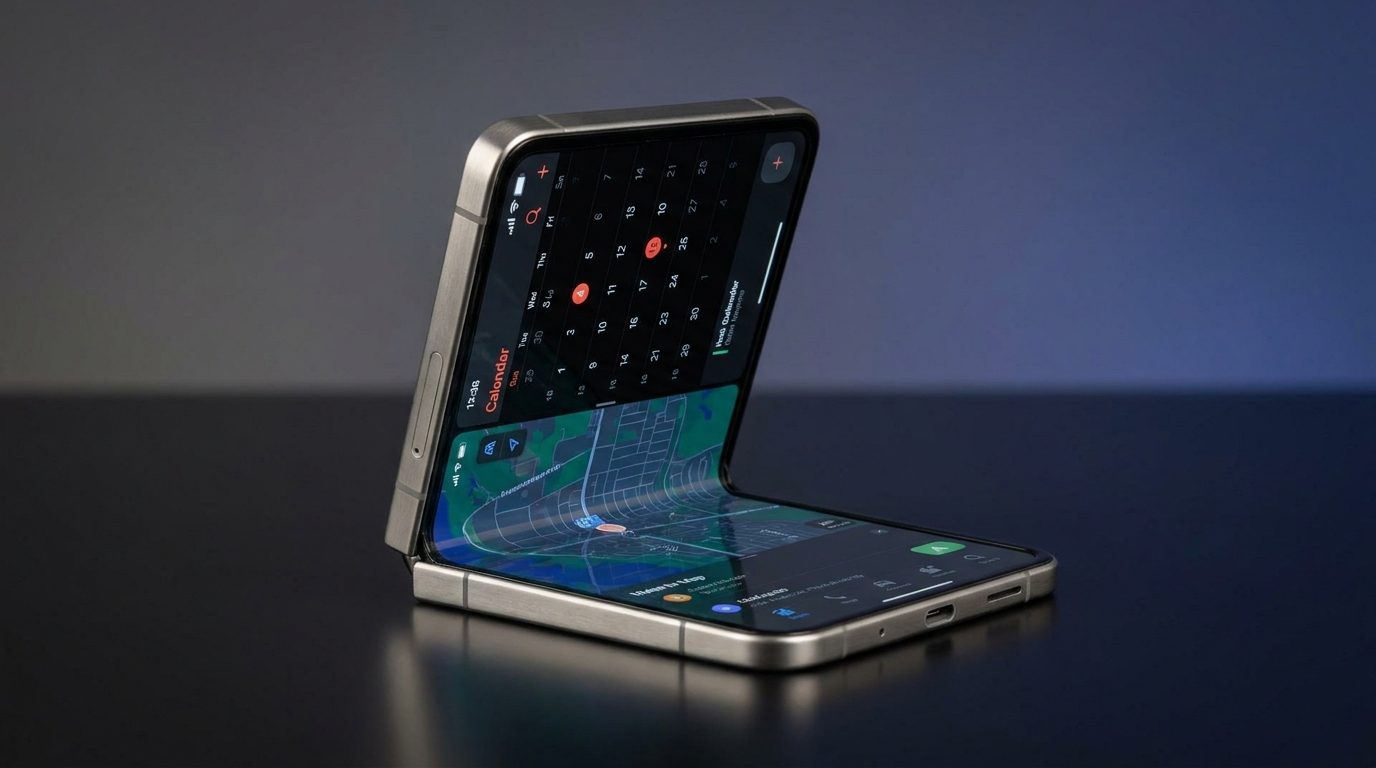
The original Samsung Galaxy Fold launched in April 2019 at $1,980. Within 48 hours of review units shipping, multiple tech journalists had broken their screens — some by peeling off what looked like a protective film but was actually a structural layer fused to the display. Samsung recalled the devices, delayed launch by months, and shipped a revised unit that still suffered from hinge grit ingestion, visible crease lines you could feel with a fingernail, and zero water resistance. It was a cautionary tale sold at a premium price.
Seven years later, the category that debacle nearly killed is, quietly and genuinely, good. The Galaxy Z Fold 7, Pixel 9 Fold, and OnePlus Open 2 are devices that reviewers — including critics who panned the early generations — are recommending without major caveats. That shift didn't happen by accident. It happened because Samsung, Google, and OnePlus spent half a decade engineering out the specific failure modes that made early foldables unacceptable.
What failed and why
The first-generation problems were structural and interconnected. The inner display used an ultra-thin glass (UTG) laminate bonded to a plastic layer that couldn't handle repeated folding stress — the crease that appeared after a few hundred fold cycles was both visible and tactile. The hinges on early models had gaps that admitted dust and pocket lint, which acted as an abrasive against the display over time. There was no ingress protection: a splash of coffee or a rain shower was a $2,000 gamble. And Android itself wasn't ready — apps defaulted to stretched phone-sized windows with black bars rather than using the available screen real estate.
The Galaxy Z Fold 3 introduced IPX8 water resistance in 2021, which was the first sign Samsung was treating this as a durable product rather than a concept device. But crease reduction and hinge refinement lagged. The Z Fold 5's hinge was the first to allow the device to fold completely flat without a gap — a meaningful step for pocket ergonomics. The crease remained visible under certain lighting angles through 2024.
What's actually fixed in 2026
The Galaxy Z Fold 7 hinge uses a tenon-fiber composite structure with a self-sweeping brush mechanism — fine filaments that actively clear debris from the hinge channel with each open and close cycle. Independent teardowns confirm the gap between hinge panels when closed is now sub-0.1mm, compared to roughly 0.5mm on the original Fold. Samsung's internal durability rating is 200,000 fold cycles, independently tested by labs at around 180,000 before measurable wear begins. At 100 folds per day — generous for a heavy user — that's nearly five years of mechanical life.
The crease is not gone, but it's genuinely near-invisible in normal use. Under oblique lighting or when pressing the display, you can locate it. During active use — watching video, reading, working in apps — the majority of users in structured tests stopped noticing it within two weeks. The Pixel 9 Fold uses a slightly different approach: a thicker UTG layer with a stiffer backing that distributes fold stress more evenly, resulting in a shallower crease angle. Side by side, the difference is marginal. Both are credible.
IPX8 water resistance is now standard across all three flagship foldables: Galaxy Z Fold 7, Pixel 9 Fold, and OnePlus Open 2. This matters not because users are swimming with their phones but because it removes the anxiety that defined early foldable ownership. Rain, sink splashes, dropped drinks — the hardware handles it.
Google's Android app continuity framework, which Samsung has implemented at the OS level, now handles the fold/unfold transition cleanly for the majority of the Play Store's top 200 apps. When you unfold the device mid-call, mid-video, or mid-document, the app expands to fill the inner display without restarting or reloading. Google has worked directly with developers at the major app categories — productivity, streaming, social — to ensure large-screen layouts are default, not optional. The result isn't perfect across the long tail of apps, but it's sufficient for practical daily use.
The Galaxy Z Fold 7 also gains satellite connectivity via Snapdragon Satellite integration — the same emergency SOS capability that appeared on flagship slabs in 2024 has moved to foldables, removing the last hardware parity gap with top-tier conventional smartphones.
What the form factor is actually good at
The inner display on current flagship foldables runs 7.6 to 8.0 inches diagonally — tablet territory, but in a pocketable device. That size advantage is real in specific contexts.
Reading and documents: A PDF, research paper, or long-form article at full width without pinch-zoom is genuinely different from the same content on a 6.7-inch slab. Professionals who spend time reviewing contracts, annotating papers, or reading reports will notice this immediately and meaningfully.
Split-screen productivity: Running two full apps simultaneously — email and calendar, Slack and a browser, a note-taking app alongside a reference document — works at a screen size where both panes are actually usable. On a standard phone, split-screen is a compromise. On the inner display of a Z Fold 7, it's a workflow.
Camera versatility: The hinge enables a hands-free prop mode where the camera acts as a dedicated capture device without a tripod, the lower half serving as a preview monitor. For video creators and frequent travelers, this has practical value that you don't get from a flat slab.
Media consumption: A 7.6-inch OLED display with adaptive refresh rate up to 120Hz is a meaningfully better video and gaming experience than a conventional flagship display. Not iPad-better, but noticeably better than a 6.7-inch screen — particularly for subtitled content, where the larger canvas eliminates the compression that forces trade-offs on smaller displays.
What still hurts
The price gap is real and significant. The Galaxy Z Fold 7 launches at approximately $1,799. The Galaxy S25 Ultra — Samsung's best conventional flagship — is $1,299. The Pixel 9 Fold is $1,799 versus the Pixel 9 Pro at $999. You are paying $500–$800 for the folding hardware, and that delta buys a lot of accessories, cases, or simply stays in your pocket.
Thickness when folded remains a friction point. The Z Fold 7 folded is 12.1mm thick — roughly twice the profile of a standard flagship. In a front trouser pocket, that's noticeable. The OnePlus Open 2 improves on this at 11.1mm folded, the slimmest of the current flagships, but the category hasn't reached the profile of a conventional phone and may not without a fundamental rethink of battery chemistry.
Weight is a secondary concern but worth acknowledging: 253g for the Z Fold 7, 257g for the Pixel 9 Fold. Extended one-handed use is fatiguing. These are two-handed devices in their primary use case, and one-handed interaction on the outer display — while functional — feels like using the cover screen of a book rather than the book itself.
Who should buy one today, and who should wait
Buy one now if your use case maps directly to the form factor's strengths: document-heavy professional workflows, frequent long-form reading, video creation requiring hands-free framing, or genuine split-screen multitasking. If the inner display solves a specific daily problem, the premium is justifiable. Users who switched from tablets plus phones to a single foldable are, anecdotally, the most consistently satisfied cohort.
Wait if you're primarily motivated by novelty, or if the $1,400–$1,800 price point requires meaningful financial trade-off. The next generation of foldables — likely arriving in mid-2027 — will almost certainly reduce thickness further, improve battery life (current foldables trade approximately 15% battery capacity versus same-class slabs to accommodate the hinge mechanism), and continue closing the price gap as manufacturing scale improves.
The Galaxy Fold generation that nearly killed the category has, against reasonable expectations, produced something that works. The engineering that fixed the crease, sealed the hinge, and brought app continuity to a usable state represents real progress. The form factor has a genuine use case. What it doesn't have yet is a price that makes the trade-offs obvious rather than effortful — and until that gap closes, it will remain a premium for a specific kind of user rather than an upgrade for everyone.