Handheld gaming PCs grew up — here's where the Steam Deck, ROG Ally X, and Legion Go 2 stand in 2026
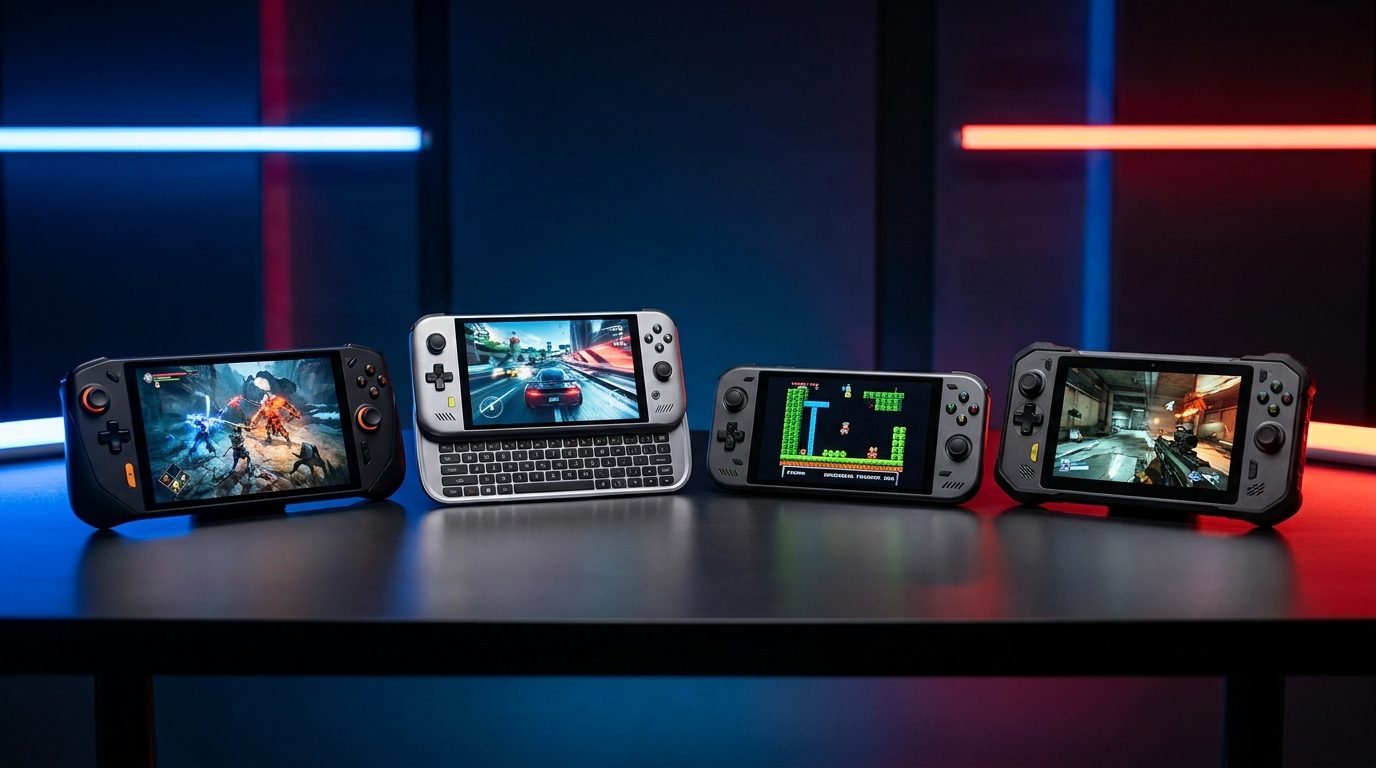
In early 2022, Valve shipped the original Steam Deck and proved something the industry had doubted: people would pay real money to play full PC games on a handheld. The question now isn't whether handheld gaming PCs are legitimate — it's which one you should buy, and whether the category has solved its early problems. It mostly has. Mostly.
The current device landscape
Four manufacturers now compete seriously in this space. Each made different trade-offs.
Steam Deck OLED 2 (Valve, ~$549)
Valve's second OLED iteration ships with a custom AMD APU built on RDNA 4 architecture, a 1280×800 90Hz OLED display, and a 53.5Wh battery. Weight: 640g. TDP range: 3–18W. SteamOS 4 is the operating system, and the integration is tight — game compatibility flags, cloud saves, and controller configs all work out of the box. This is the best pure gaming experience in the category, assuming your library lives on Steam.
ROG Ally X (ASUS, ~$799)
The 2025 ROG Ally X moved to AMD's Ryzen Z2 Extreme, which is essentially a Strix Halo APU with RDNA 4 integrated graphics. Performance numbers: sustained 15W TDP gives you roughly 60fps in most AAA titles at 1080p medium settings. The 80Wh battery is the largest in the category, though Windows 11 burns through it fast. Weight: 678g. Display: 7-inch 1920×1080 120Hz IPS. ASUS also added a second USB-C port and bumped RAM to 24GB LPDDR5X. The tradeoff is Windows — powerful, flexible, occasionally infuriating.
Lenovo Legion Go 2 (Lenovo, ~$699)
The Legion Go 2 is the Switch-adjacent option: detachable controllers, an 8.8-inch 2560×1600 display, and a kickstand for tabletop mode. AMD Ryzen Z2 Go APU, 16GB RAM, 68Wh battery. Weight with controllers attached: 854g — the heaviest in the category by a wide margin. The larger screen makes it excellent for turn-based games and strategy titles where you're not craning over a 7-inch panel. It runs Windows 11, which means the same software flexibility and the same battery management headaches as the Ally X.
MSI Claw 8 AI+ (MSI, ~$899)
MSI's Claw 8 AI+ is the odd one out: it uses Intel's Lunar Lake architecture (Core Ultra 200V series) instead of AMD, with Intel Arc graphics and a 40+ TOPS NPU for AI workloads. 80Wh battery, 8-inch 1920×1200 display, Windows 11. Intel's drivers have improved dramatically, but AMD still leads in raw gaming performance per watt. The Claw 8 AI+ makes sense if you're doing creative work alongside gaming and want to stay in the Intel ecosystem. As a pure gaming device, the ROG Ally X at $100 less is the better call.
What AMD Strix Halo actually changed
AMD's Strix Halo APU — marketed as Ryzen AI Max in desktop configurations — is the reason 2025–2026 handhelds feel like a generational jump from 2022's Steam Deck. The integrated RDNA 4 GPU delivers roughly 2.5× the performance of the original RDNA 2 chip at comparable TDP settings. That means genuine 1080p gaming at 60fps is achievable in demanding titles like Cyberpunk 2077 at medium-high settings (15W sustained) or Elden Ring at high settings without thermal throttling.
The NPU (up to 40 TOPS on Strix Halo) is mostly marketing at this point — there are limited handheld games that meaningfully use it. But the memory bandwidth improvements (LPDDR5X at up to 128GB/s) genuinely help the integrated GPU. This is why the Legion Go 2 and ROG Ally X both feel snappier than their specs suggest.
The OS divide: SteamOS vs. Windows
This is the defining choice in the category, and Valve's answer is clearly better for most people.
SteamOS 4 (Steam Deck): boots in under 15 seconds, shows you your library, runs your games. Proton compatibility has reached ~85% of the Steam catalog. Battery life is 30–40% better than equivalent Windows handhelds at the same TDP because SteamOS has none of Windows' background processes, telemetry services, and update interruptions. The downside: if a game isn't on Steam or isn't Proton-compatible, you're either sideloading with extra steps or locked out entirely.
Windows 11 (Ally X, Legion Go 2, Claw 8 AI+): runs everything — Game Pass, Epic, GOG, emulators, creative apps. But out of the box, it's not optimized for handheld use. Power plans, fan curves, TDP limits — ASUS's Armoury Crate and Lenovo's Legion Space apps handle most of this, but they add complexity. Battery life on Windows handhelds in demanding games is typically 1.5–2.5 hours. SteamOS gets 2.5–4 hours on equivalent hardware.
Persistent problems that haven't gone away
- Battery life: Two to four hours for demanding games is the realistic range across the category. That's a round-trip flight, not a long one. The ROG Ally X's 80Wh battery is the best answer here, but it still only gets ~2 hours in CPU/GPU-heavy sessions. Carry a 100W USB-C GaN charger and accept this as the category's inherent constraint.
- Anti-cheat on Linux: Valorant (Vanguard kernel-level anti-cheat), The Finals, and a handful of competitive multiplayer titles still refuse to run on SteamOS/Proton. If your primary gaming is competitive multiplayer, the Steam Deck will frustrate you. Valve has been pushing game developers on this for two years; progress is slow because anti-cheat vendors have little incentive to change.
- Heat and fan noise: At 15–18W TDP, all these devices get warm — 45–50°C on the grips during extended sessions. The fans are audible (45–52 dBa under load). Gaming with headphones is essentially mandatory in quiet environments. The Steam Deck OLED 2 runs quieter than the Windows devices due to its lower default TDP ceiling.
Price vs. value breakdown
Entry ($399–$499) — Steam Deck OLED 2: You get the best software experience, best battery life, and best value per dollar. The compromise is a 1280×800 display and Steam-only gaming without tinkering.
Mid ($599–$699) — Legion Go 2: The big screen and detachable controllers are genuinely useful. Best pick if you want a Switch-style setup that also runs PC games. The weight is a real issue for handheld-only play.
Premium ($799–$999) — ROG Ally X / MSI Claw 8 AI+: You're paying for Windows flexibility and top-tier performance headroom. The ROG Ally X is the better gaming choice at this tier; the Claw 8 AI+ for mixed creative/gaming workloads.
Who should buy what — and who should skip the category
Buy the Steam Deck OLED 2 if: Your library is on Steam, you value battery life, and you want plug-and-play simplicity. This is the right choice for most people.
Buy the ROG Ally X if: You need Game Pass or Epic games, want the best available gaming performance, and don't mind Windows friction. Also the right call if you're already embedded in the ASUS gaming ecosystem.
Buy the Legion Go 2 if: You want a tabletop gaming device that also travels, love the detachable controller concept, and can tolerate the weight.
Skip the category if: You primarily play competitive multiplayer games that use kernel anti-cheat (Valorant, CS2 with VAC updates, Apex Legends). You'll hit Linux compatibility walls or spend money on a Windows device that drains in 90 minutes during ranked matches. The category is also wrong for anyone who expects console-style convenience and doesn't want to manage power profiles, TDP settings, or driver updates. A Nintendo Switch 2 solves that problem better for $449.
The handheld PC gaming category has genuinely matured. The hardware is fast enough, the software ecosystems have stabilized, and the form factor has proven it belongs. The Steam Deck OLED 2 is still the recommendation most people should hear. Everything else is a trade-off worth knowing about.