Humanoid robots are entering real warehouses — what the first deployments actually look like
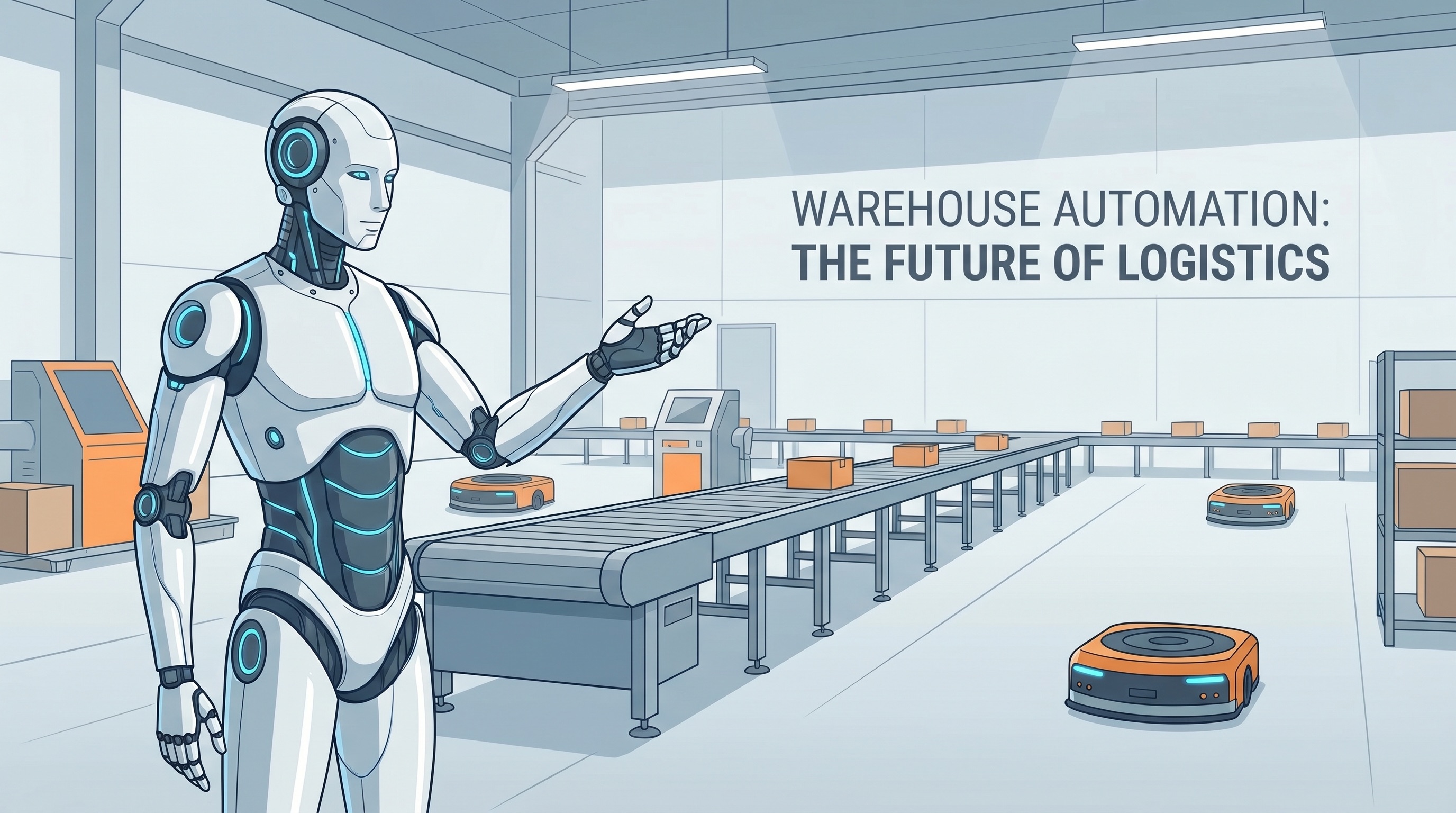
For years, humanoid robots existed in a carefully curated world of trade-show demos and venture-capital slide decks. The clips were impressive: a bipedal machine walking across a stage, picking up a box, even doing a backflip. What they never showed was what happened ten minutes later when the lighting shifted, the floor had a slight incline, or the box weighed two kilograms instead of one. That world of controlled illusion is now giving way to something messier and far more interesting: actual deployments in actual facilities, with real workers, real constraints, and real stakes.
From demos to deployments: the 2025-2026 inflection point
The transition began accelerating in 2024 and has reached a genuine inflection point in 2025-2026. Several humanoid platforms are now operating inside commercial facilities under supervised conditions. This is not full autonomy — it is the equivalent of a new hire shadowing an experienced colleague — but it marks a categorical shift from laboratory research to operational reality.
Figure AI has its robots working on the BMW manufacturing line in Spartanburg, South Carolina. Agility Robotics' Digit has undergone trials inside Amazon fulfillment centers. Apptronik's Apollo is being evaluated by Mercedes-Benz for assembly support. 1X Technologies, backed by OpenAI, is deploying its NEO robot in warehouse settings. Boston Dynamics' Atlas, now in its all-electric configuration, has moved from research curiosity to an actively commercialized platform targeting industrial customers.
None of these deployments look like the Terminator. They look like a robot carefully moving a plastic tote from one conveyor to another, under the watchful eye of a human supervisor with an emergency stop button.
What deployment actually means today
It is worth being precise about what these pilots involve, because the word deployment covers a wide spectrum. In current implementations, humanoid robots are operating within tightly scoped task envelopes — specific, repeatable actions in controlled zones of a larger facility. The robots are not roaming freely or making independent decisions about what to do next. They are executing a defined sequence of motions, typically learned through teleoperation or imitation learning, in a space that has been physically mapped and often slightly modified to reduce variability.
Human supervisors remain on-site. The ratio varies, but one operator monitoring two to four robots is common. When the robot encounters something outside its training distribution — an oddly oriented package, a label obscuring a sensor target, a colleague walking through the workspace unexpectedly — the system flags the situation or halts and waits for human intervention. Recovery from unexpected states is still largely a human task.
This is not a criticism. It is the correct engineering approach for deploying novel autonomous systems in environments where errors have real consequences. The question is how quickly the scope of autonomous operation can be expanded without compromising reliability.
Why warehouses, and why now
The logistics and warehousing sector has become the proving ground for humanoid robotics for reasons that are structural, not accidental. Labor costs in fulfillment and distribution have risen sharply across North America, Europe, and East Asia. Worker injury rates in warehouse environments remain high — repetitive strain, lifting injuries, and slip-and-fall incidents are persistent problems that conventional automation has not fully addressed. Demand for 24/7 operation, driven by e-commerce expectations, creates pressure to staff facilities at hours when human labor is scarce and expensive.
There is also a deeper compatibility argument. Warehouses were designed by humans, for humans. The shelves are at human height. The aisles accommodate a person carrying a box. The tools — scanners, carts, conveyors — have handles and interfaces sized for human hands. A humanoid robot can, in principle, operate in this environment without the facility being redesigned. This is the core economic argument for the bipedal, human-shaped form factor: it inherits the infrastructure investment already made for human workers.
The tasks robots are actually doing
The task selection in current deployments reveals a great deal about where the technology genuinely stands. Robots are being assigned work that is physically demanding, repetitive, and — crucially — forgiving of imprecision. Moving plastic totes between conveyors. Picking uniform boxes from pallets. Transporting parts bins along fixed routes. These tasks share a common property: if the robot places the item two centimeters from the ideal position, it does not matter. The tolerance is wide enough that even imperfect grasps succeed.
The tasks robots are not doing are equally revealing. They are not handling soft goods — the deformability of clothing, for instance, makes grasping and placement dramatically harder than it looks. They are not sorting items with highly variable geometry. They are not managing fragile or high-value goods where a dropped item has real financial consequences. The dexterity gap between a human hand and a current robot end-effector remains significant, particularly for manipulation of irregular objects or anything that requires adaptive grip force based on tactile feedback.
The bipedal question
Not everyone in the industry agrees that legs are the right answer. Several companies developing robots for warehouse use have opted for wheeled mobility platforms, arguing that wheels are faster, more energy-efficient, more mechanically reliable, and more stable on flat surfaces — which describes the vast majority of warehouse floors. Amazon's own Proteus platform is wheeled. The specialized mobile robots that have successfully scaled in logistics, from Kiva-era systems to modern autonomous mobile robots, all roll.
The case for legs rests on environments that wheels handle poorly: stairs, curbs, ramps, uneven outdoor surfaces, vehicle loading docks with gaps and lips. If a robot needs to operate across a full supply chain — warehouse, loading dock, delivery vehicle interior, final-mile path to a door — legs provide capability that wheels cannot match. The counterargument is that most commercial deployments do not require this versatility, and companies are paying a significant mechanical complexity tax for a capability they rarely use.
The honest answer is that both approaches will find niches. Wheeled robots will dominate flat, structured environments. Legged robots will earn their complexity premium in mixed-terrain settings. The current bipedal push is partly technical (legs are a harder problem and therefore attract research interest) and partly narrative (humanoid robots capture media attention in ways that a box on wheels does not).
How robots learn: teleoperation and demonstration
The dominant training paradigm for current humanoid deployments is learning from demonstration. A human operator, typically wearing a haptic glove or motion-capture suit, physically performs the target task while the robot records the motion. This teleoperation data is then used to train a policy — a neural network that maps sensor inputs to motor commands — that the robot can execute autonomously.
The appeal of this approach is that it leverages human intuition and dexterity without requiring engineers to explicitly program every movement. The limitation is that the learned policy is only as good as the demonstration data. Robots trained this way can be brittle outside the distribution of their training examples. Figure AI, 1X, and others are investing heavily in scaling up demonstration datasets and combining them with simulation-based training to improve generalization.
The economics: an honest assessment
Current humanoid robots cost between $150,000 and $300,000 per unit for early commercial deployments, before accounting for integration, infrastructure modification, maintenance contracts, and the human supervision required during the pilot phase. When all costs are included, the total cost of ownership for a supervised humanoid pilot is often higher than simply hiring additional workers for the same tasks.
This is not unusual for early-stage industrial technology. The economic case for humanoid robots today is not that they are cheaper than human labor — they are not, yet. The case is that they represent a hedge against future labor constraints, that the data collected during pilots will train better systems, and that unit costs will fall substantially as manufacturing scales. Companies like Figure AI and Agility Robotics are explicit that they are pricing for relationship-building and data collection at this stage, not margin.
The break-even point, where a deployed humanoid robot is genuinely cheaper than the labor it displaces, is plausibly three to five years away for the most favorable task profiles — assuming manufacturing volumes increase significantly and reliability metrics improve.
The three-to-five year outlook
Realistic progress over the next three to five years looks like this: the task envelope for autonomous operation expands modestly but meaningfully, covering perhaps twenty to thirty percent of common warehouse workflows without human supervision. Robot reliability improves to the point where uptime metrics are comparable to mature industrial equipment. Unit costs fall to the $80,000-$120,000 range as manufacturing scales. A secondary market emerges for refurbished and upgraded units.
What is unlikely in that timeframe: fully autonomous, generalist humanoid robots operating across all warehouse tasks without human oversight. The dexterity gap will narrow but not close. The long tail of edge cases — the odd item, the unexpected situation, the task that was never in the training data — will continue to require human judgment. The vision of a lights-out, fully robotic warehouse is a longer horizon, and probably requires advances in tactile sensing, manipulation policy robustness, and real-time adaptation that remain open research problems.
The more interesting near-term story is not replacement but reconfiguration: humans and humanoid robots working alongside each other, with the robots absorbing the most physically demanding and repetitive tasks while humans handle exception management, quality control, and the genuine judgment calls. That future is already, quietly, beginning in a BMW plant in South Carolina and a handful of Amazon fulfillment centers. It is less dramatic than the demos suggested. It is also more durable.