Humanoid robots are entering real warehouses — what the first deployments actually look like
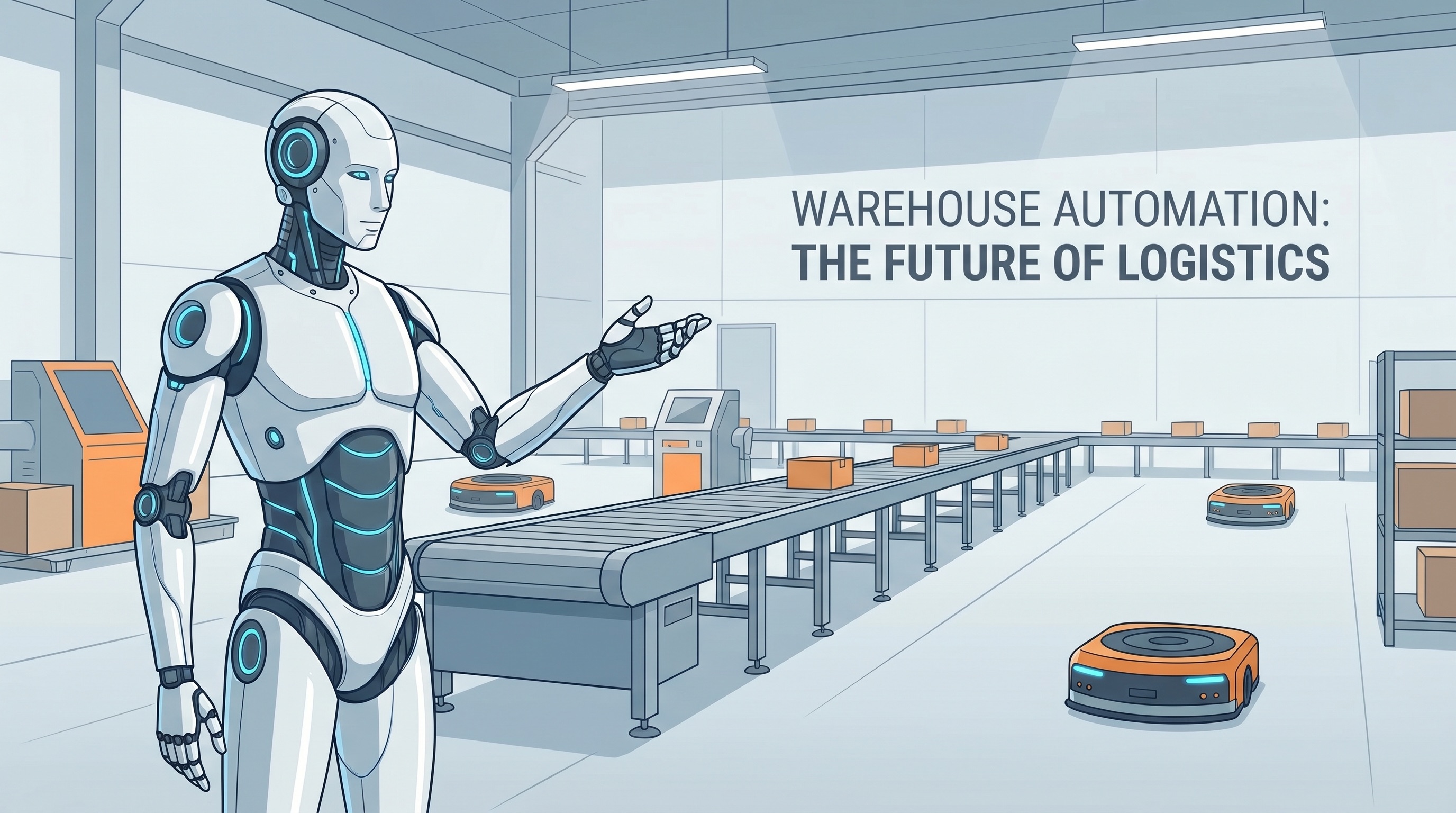
In 2022, humanoid robot demos were still largely the province of carefully rehearsed stage performances and edited highlight reels. By 2026, several humanoid robot companies have signed agreements with major manufacturers and logistics operators to deploy systems in real production environments. The gap between "demo" and "deployment" matters enormously — and understanding what these early deployments actually involve is important for cutting through the hype.
Who is deploying and where
Figure AI announced a partnership with BMW in early 2024, with robots operating in the Spartanburg, South Carolina manufacturing plant. The tasks assigned are carefully scoped: moving parts between stations, loading components into fixtures, basic pick-and-place operations with consistent, predictable objects. BMW is one of the most automation-forward manufacturers in the world, with decades of industrial robot deployment experience — their willingness to trial humanoids is meaningful signal.
Agility Robotics' Digit has been piloted at Amazon fulfillment centers, handling tote movement — carrying standardized containers between conveyors and shelving locations. Amazon has also invested in Agility Robotics, making the relationship both commercial and strategic. The tote-moving task is deliberately chosen: the object is uniform, the weight is predictable, and errors have low consequences compared to handling fragile or high-value goods.
Apptronik's Apollo robot is being trialed with Mercedes-Benz in Germany, focused on parts kitting — assembling the set of components needed for a specific vehicle build and bringing them to the assembly line. Sanctuary AI has a partnership with Canadian Tire for retail logistics tasks. Boston Dynamics' Atlas, now in its electric third-generation form, is being evaluated in automotive and manufacturing settings.
What "deployment" means today
The phrase "robots working in a warehouse" conjures images of autonomous systems operating independently around the clock. The reality of current humanoid deployments is more qualified. These are supervised pilot programs, typically with human operators who can intervene remotely, operating in limited zones within larger facilities, handling a narrow range of pre-approved tasks.
The robots are not working autonomously in the general sense. They operate within mapped environments where the layout has been specifically characterized. They handle objects that have been identified and categorized in advance. When they encounter an unexpected situation — an unfamiliar object, an obstacle in an unusual position, a surface that doesn't match the training distribution — current systems are designed to pause and request human guidance rather than attempt improvisation.
This is intentional and appropriate for this stage of development. The alternative — letting systems attempt to generalize beyond their training — introduces failure modes that are difficult to predict and potentially dangerous in production environments. The supervised deployment model lets companies accumulate real-world operating data while maintaining acceptable safety and reliability standards.
Why warehouses and factories
The choice of logistics and manufacturing for early humanoid deployments isn't accidental. These environments were designed for human workers, which means they're physically accessible to humanoid form factors. Forklifts aside, the equipment, shelving heights, floor surfaces, and tool interfaces assume a roughly human-sized body with two arms and an upright stance. A wheeled robot built for a specific warehouse task can be more efficient, but it requires redesigning the environment around the robot. A humanoid can use existing infrastructure.
Labor economics reinforce the case. Warehouse work involves high injury rates, significant turnover, and sustained labor demand that's difficult to meet in many markets. Companies already paying large amounts for staffing, workers' compensation, and recruitment see a credible business case for robot deployment even at current robot costs and capabilities — provided reliability is high enough.
The dexterity problem
The most significant gap between current humanoid capabilities and what would make them broadly useful is manipulation dexterity. Moving standardized boxes and totes is straightforward because the objects are designed to be mechanically handled. Picking irregularly shaped items from a bin, handling soft or deformable goods, operating tools designed for human hands — these tasks require manipulation capability that current systems achieve inconsistently.
The human hand has 27 degrees of freedom and tactile sensing across the fingertip surface that no artificial system has replicated at production cost. Current robot hands typically have 3-5 degrees of freedom with limited tactile feedback. This is sufficient for a surprising range of tasks but falls short for the full generality of what a human worker does in the same environment.
Multiple companies are working specifically on the hand problem: Dexterous Robotics, Shadow Robot, and several AI-focused startups are developing both the hardware and the learning approaches needed to improve manipulation in unstructured settings. This is widely understood to be the critical bottleneck for expanding humanoid capability beyond carefully selected task sets.
Bipedal versus wheeled: an ongoing debate
Not everyone believes bipedal locomotion is the right platform for automation in human environments. Wheeled and tracked robots are faster, more stable, cheaper, and have lower power consumption for movement. Companies like 1X Technologies have designed systems that are bipedal but move slowly and carefully, prioritizing stability over speed. Others, like Boston Dynamics with Spot, have shown that non-humanoid forms can be highly capable in industrial settings.
The argument for bipedal specifically (as opposed to just roughly-humanoid upper bodies on wheeled bases) is that stairs, ladders, and uneven terrain are present in many real-world environments and require legs. Facilities designed for humans have steps at loading docks, stairs between floors, and surfaces that wheels don't handle well. Whether the mobility advantage justifies the mechanical complexity and stability challenges of bipedal locomotion depends heavily on the specific deployment environment.
The economics: honest numbers
Humanoid robots in 2026 cost roughly $100,000–$250,000 per unit, depending on the manufacturer and configuration. Operating costs — maintenance, power, connectivity, software licensing — add to the total cost of ownership. At these price points, the economics work in environments with high labor costs, difficult working conditions, or 24/7 operational demand where human staffing is structurally challenging.
The cost curve is expected to follow the pattern of other robotics hardware: volume manufacturing will drive prices down significantly over a 5-7 year period. Companies like Figure, 1X, and Agility are explicitly building toward manufacturing scale as a strategic goal, not because the economics work today at any volume, but to establish the production infrastructure that will make the economics work at scale.
The 3-5 year outlook
The most likely near-term trajectory is expanding task scope within controlled environments rather than rapid deployment to new environment types. Systems operating at BMW and Amazon will take on more varied tasks as confidence in their reliability builds. Manipulation capabilities will improve incrementally, enabling more types of objects to be handled. Deployment numbers will grow from tens of units per facility to hundreds.
Full autonomy in unstructured, dynamic environments remains further away. The image of a humanoid robot navigating a chaotic warehouse floor independently, handling any object a human worker could handle, and making contextual decisions about how to prioritize competing tasks — that's a meaningful capability frontier that current systems haven't crossed. The deployments happening now are important because they're accumulating real-world data and operational experience that will inform the systems that eventually do cross it.