Humanoid Robots Are on the Factory Floor in 2026: Here Is What Is Actually Happening
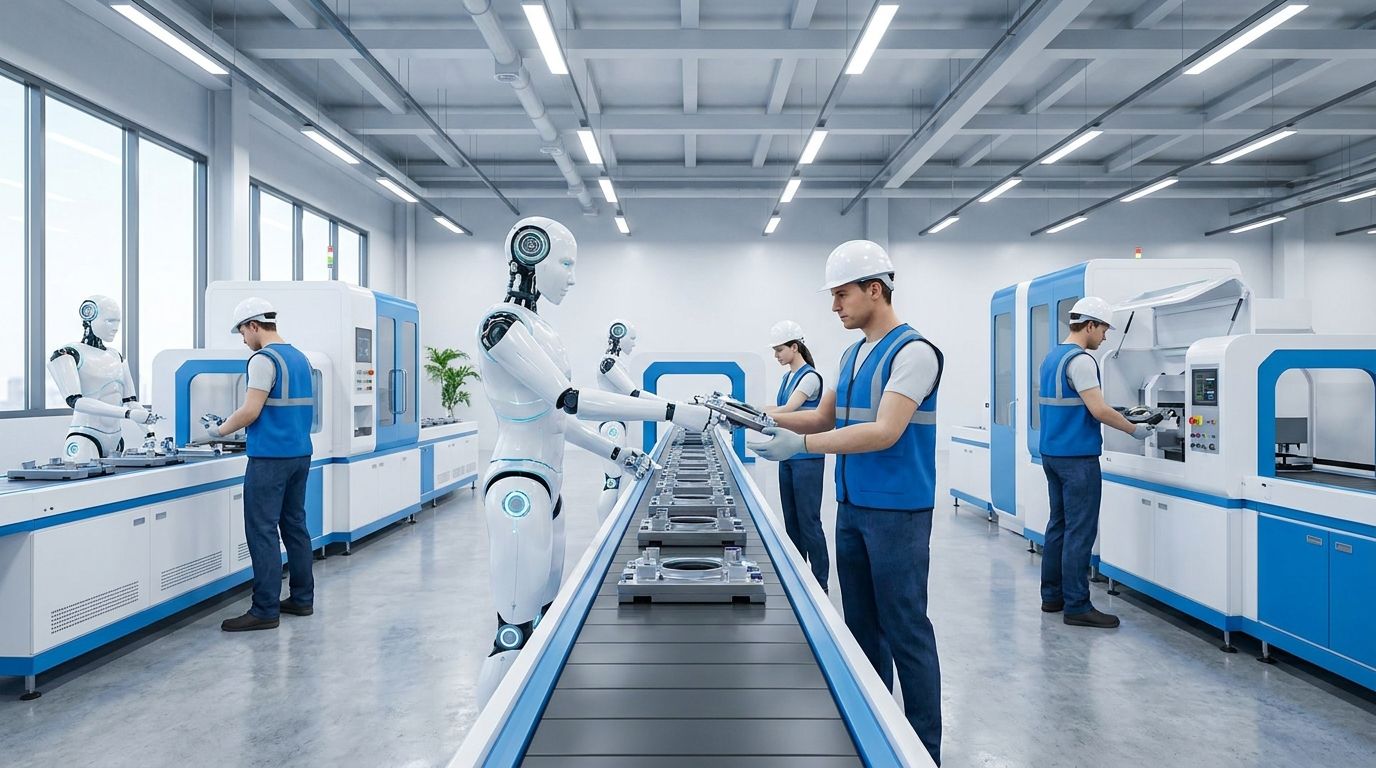
The question of when humanoid robots would enter the real workforce has been asked and dismissed for most of the past decade. In 2026, several thousand are already on factory floors doing actual work, and the companies deploying them are placing orders for tens of thousands more.
Who Is Deploying What
Boston Dynamics unveiled its production-ready electric Atlas robot in January 2026, designed for industrial automation rather than research demonstration. The robot lifts up to 50 kilograms, operates for approximately four hours on a swappable battery, and the initial 2026 production runs are fully committed: Hyundai has placed an order for over 25,000 Atlas units across its Hyundai and Kia plants -- the largest recorded order for humanoid robots.
Figure AI has passed 10,000 deployments in partner warehouses, with active installations at BMW's Spartanburg, South Carolina facility doing component insertion and material transport. BMW reports a 15% improvement in line efficiency. Tesla has produced over 50,000 Optimus Gen 3 units as of Q1 2026, primarily deployed within its own Gigafactories in Austin, Shanghai, and Berlin -- currently more learning platforms than production workers, with the first genuinely productive external deployments expected in late 2026 or early 2027.
What These Robots Can and Cannot Do
The tasks they perform reliably share a profile: repetitive, structured, physically demanding, and well-defined. Material handling, component transport, pick-and-place operations on known objects, and assembly of parts with known geometry. These tasks represent a significant portion of factory and warehouse labor -- but the hard frontier remains dexterity and unstructured manipulation. Picking an unknown object from a pile, or handling objects with variable shapes and weights, remain active research problems.
The Labor Economics
Humanoid robots currently cost roughly $30,000 to $80,000 per unit with ongoing software and maintenance costs. For tasks where a human worker costs $50,000 to $70,000 per year in wages and benefits, the break-even period is measured in one to three years depending on utilization. As unit costs drop with production scale, that math becomes more compelling. BMW's Spartanburg result comes from a collaborative model where robots handle the highest-repetition, highest-injury-risk tasks alongside human workers who shift to more variable-task roles.
The Software Layer Nobody Is Talking About
NVIDIA's Cosmos 3, launched at Computex 2026, is an open-world foundation model for physical AI that can reason about physical environments and enable robots to adapt to new tasks without exhaustive manual programming. The companies deploying robots that are learning from real-world operation and feeding that data back into improved models are building a compounding advantage. The robots of 2028 will be considerably more capable than those of 2026 not primarily because the hardware improved, but because the models will have been trained on millions of hours of real physical interaction data that only companies with large active fleets will have access to.