Humanoid Robots Are in Real Warehouses Now — Here's an Honest Look at What They Can and Can't Do
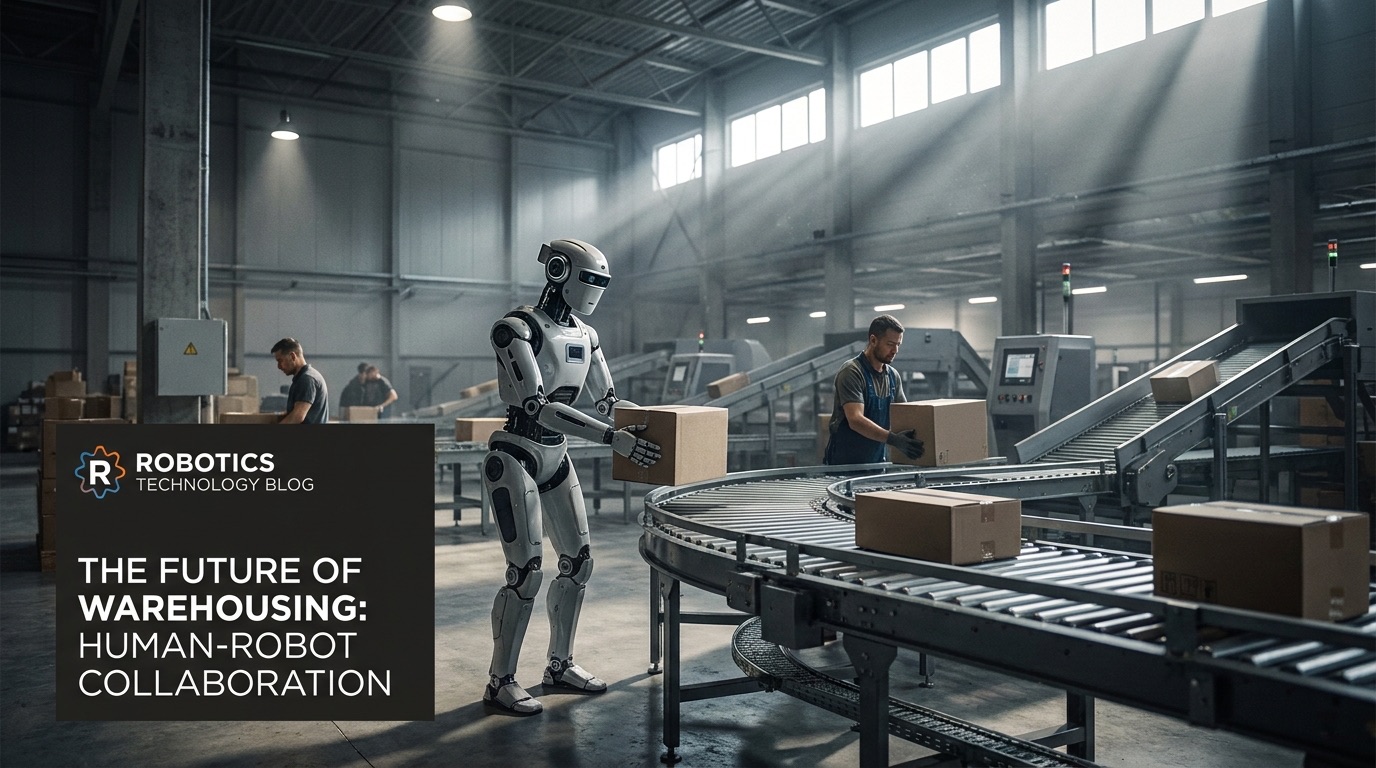
The humanoid robot narrative has run far ahead of reality for decades. Demos have dazzled audiences, venture capital has flooded in, and headlines have promised a robotic workforce just around the corner. But 2025 marked a genuine inflection point. Figure, Agility Robotics, 1X Technologies, and Boston Dynamics all moved beyond demonstrations and into limited commercial deployments. BMW, Amazon, GE Aerospace, and Spanx are running active pilots. The question now isn't whether humanoid robots are real — it's whether the unit economics work.
Who's Actually Deployed (Not Just Demoed)
Agility Robotics Digit at Amazon
Agility Robotics Digit has been deployed at Amazon fulfillment centers since 2023, handling tote movement between conveyor systems. Amazon owns a stake in Agility Robotics, which has created an unusual alignment of incentives. Digit runs on a 4-hour battery cycle and handles totes up to approximately 16 kg. As of 2025, hundreds of units are in pilot across five or more Amazon facilities. The task is narrow — move a tote from point A to point B on a known floor plan — but it's real production work, not a controlled demo.
Figure 02 at BMW
Figure 02 entered BMW's Spartanburg plant for a pilot in 2024-2025, handling body-in-white assembly tasks: moving parts between stations in a structured manufacturing environment. Figure raised $675M in early 2024 at a $2.6B valuation. Microsoft and OpenAI are investors, and Figure uses OpenAI's models for task planning and language-conditioned control. The BMW pilot represents the first humanoid deployment in a premium automotive assembly context.
Other Active Deployments
- 1X Technologies Neo (backed by OpenAI): deployed in security and facility inspection roles — a more conservative scope than factory work, but genuine commercial operation.
- Apptronik Apollo: partnership with Mercedes-Benz for factory floor pilots in 2025, focused on parts handling and logistics within assembly operations.
- Boston Dynamics Atlas (electric): the hydraulic Atlas retired in April 2024, replaced by an electric version that is dramatically more capable in manipulation and mobility. Hyundai is using the electric Atlas in a manufacturing pilot — notable given Hyundai's majority ownership of Boston Dynamics.
What Humanoid Robots Are Actually Good At Right Now
Honest assessment: current humanoids excel in a specific, narrow profile of tasks.
- Repetitive pick-and-place in structured environments: same task, same location, high volume. When the robot can rely on consistent object placement and predictable geometry, performance improves dramatically.
- Moving items between fixed points on a known floor plan: Digit's Amazon deployment is the canonical example. The environment is mapped; the task is consistent; the robot doesn't need to handle surprises.
- Human-designed environments: most warehouses and factories were built for humans — standard doorways, aisle widths, shelf heights. Humanoids fit without infrastructure retooling, unlike AGVs (automated guided vehicles) or fixed-arm robots that require purpose-built environments.
- Night shifts and hazardous environments: high heat, chemical exposure, repetitive-strain-injury-prone tasks. Humanoids don't fatigue, don't need ergonomic equipment, and can operate continuously in conditions that drive human turnover.
What Still Doesn't Work Well
The gaps remain significant, and any honest assessment requires naming them directly.
- Dexterous manipulation: humanoids still cannot reliably handle the diversity of object shapes, orientations, and materials a human worker manages instinctively. A crumpled bag, an oddly-oriented box, a soft package — failure rates remain high. Grasping arbitrary objects in uncontrolled conditions is an unsolved problem.
- Speed: current humanoids walk at 1.5–2 m/s and manipulate at a fraction of human speed. A human warehouse picker processes 300–400 units per hour; humanoid robots manage 40–80 in comparable tasks. This throughput gap directly determines ROI.
- Reliability: MTBF (mean time between failures) is still measured in hours for many units in real deployment, not the thousands of hours industrial equipment requires. Maintenance overhead is significant.
- Cost: Figure 02 is estimated at $150,000–$200,000 per unit; Digit at approximately $100,000. At those prices, ROI requires high-throughput tasks in high-labor-cost environments — a narrower opportunity set than the broad "replace all warehouse workers" narrative suggests.
The Embodied AI Angle — Why 2024-2025 Is Different
Prior humanoid robots — ASIMO, the original hydraulic Atlas — used scripted behaviors. Every action was hand-coded by engineers; the robots could not generalize beyond their programmed routines. Modern humanoids use imitation learning and reinforcement learning from human demonstration. A human teleoperates the robot to demonstrate a task 50–200 times; the robot learns a generalized policy that can handle variation within that task class.
Physical Intelligence (Pi), founded by ex-Google and DeepMind researchers, raised $400M in 2024 to build generalizable manipulation policies. Their π0 model is trained on cross-robot data and runs on Figure, Agility Robotics, and 1X hardware. This "foundation model for robots" approach means improvements to the underlying policy transfer across robot types — similar to how LLMs transfer learned capabilities across tasks without task-specific retraining.
The implication: the improvement curve for humanoid robot capability is now coupled to the improvement curve for AI models, not just hardware iteration. That's a fundamentally different dynamic than the mechanical engineering progress curve that governed prior generations.
The Labor Economics
The math is worth doing carefully. US warehouse workers carry a fully-loaded cost of $40,000–$55,000 per year, including benefits, turnover, training, and management overhead. A humanoid robot at $150,000 capital cost plus $20,000 per year in maintenance represents a payback period of roughly 4–6 years at current productivity levels — acceptable for capital equipment with a 10-year horizon, but tight.
The break-even improves dramatically under two conditions: if robot speed reaches 60–70% of human throughput (Physical Intelligence forecasts this as achievable by 2027 for structured tasks), and if unit costs drop to $50,000–$75,000 at scale. Tesla's Optimus program targets under $30,000 per unit at volume — Elon Musk has cited this figure publicly. As of Q1 2026, approximately 1,000 Tesla Optimus units are running in Tesla's own factories internally, with external sales targeted for 2026. If those cost projections hold, the ROI calculus shifts from "narrow justification" to "broadly compelling."
The Regulatory and Safety Layer
OSHA does not yet have humanoid-robot-specific standards. Manufacturers currently operate under existing machinery safety guidelines, primarily ISO 10218, which governs industrial robots. Collaborative robot (cobot) standards permit operation near humans with speed and force limits. Humanoids in shared human-robot spaces require additional safeguards; most current pilots maintain physical separation between human workers and robot operating zones. The absence of clear regulatory frameworks is both a risk (liability uncertainty) and an opportunity (regulatory capture for early movers who help write the standards).
The Honest Conclusion
Humanoid robots work today in narrow, high-volume, structured tasks — and the economics make sense in high-labor-cost environments where that narrow task is worth doing at scale. The generalist humanoid that can handle arbitrary warehouse tasks — the one that can pick a crumpled bag, reorient a misaligned box, and adapt to a changed floor plan without retraining — is probably 5–8 years away from reliable commercial deployment.
But the infrastructure being built now — the training data, the robot fleets, the policy models, the manufacturing supply chains — is what makes that future arrive on schedule. The pilots at Amazon, BMW, and Mercedes-Benz aren't just product validation. They're the training grounds for the next generation of capability. Every hour Digit runs at an Amazon fulfillment center is data that improves the next version. That's the real reason the current deployments matter, even if the economics are marginal today.