npm's Dependency Chain Is a Security Liability — and Developers Can Reduce Their Exposure
The Scope of the Problem: One Package, Millions of Victims
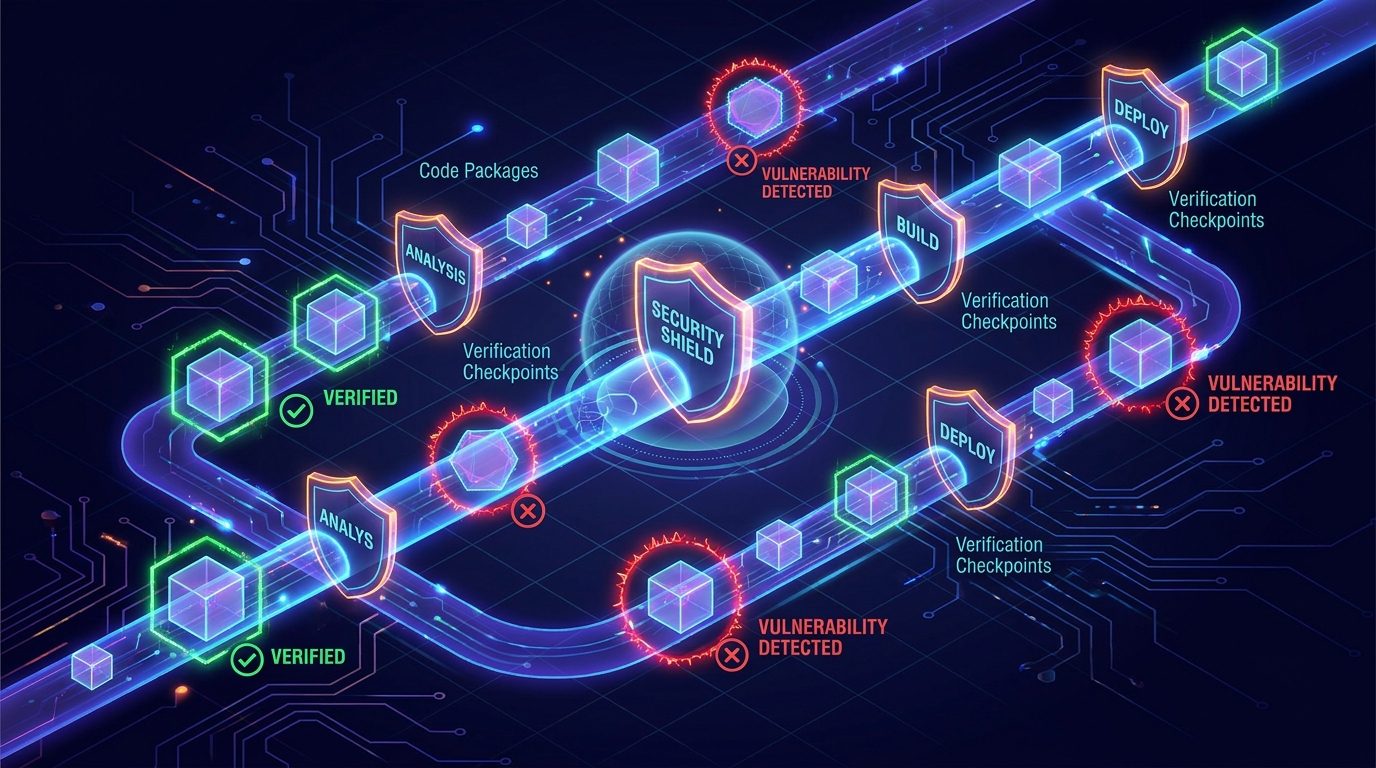
The 2021 ua-parser-js attack illustrated the reach of a compromised package with brutal efficiency. The library, which parses browser user-agent strings, had over 8 million weekly downloads and was a transitive dependency in projects from Facebook, Apple, Amazon, and Microsoft. Attackers hijacked the maintainer's npm account, published three malicious versions in rapid succession, and shipped cryptocurrency miners and credential-stealing trojans to anyone who ran npm install during that window. The package was live for roughly 4 hours before npm pulled it.
ua-parser-js was not the largest incident. The 2022 colors.js/faker.js sabotage by maintainer Marak Squires intentionally broke applications in protest over unpaid open-source labor, affecting over 19,000 dependent packages. The March 2024 XZ Utils backdoor, embedded deep in the compression library's build system after nearly two years of patient social engineering, came within days of shipping in major Linux distributions. These incidents span the entire threat surface: account takeover, malicious maintainer, and long-term infiltration.
How Dependency Trees Become Attack Surfaces
A typical React application has 6–10 direct dependencies. When you run npm install, each of those pulls in its own dependency tree. A minimal create-react-app project generates over 1,400 packages in node_modules. Of those, perhaps 20–30 are packages your team has ever evaluated for trustworthiness. The rest are transitive dependencies — code running in your build pipeline and potentially your production bundle that your team has never audited.
The attack surface grows non-linearly with dependency depth. A vulnerability in a package at depth 4 in your tree is indistinguishable in practice from a vulnerability in your own code once it reaches production. Yet most teams audit direct dependencies and have no systematic coverage of deeper levels.
Typosquatting adds another vector. The npm registry contains packages with names deliberately similar to popular ones: lodahs (lodash), crossenv (cross-env), reqyuest (request). npm's automated typosquatting detection has improved since 2022, blocking an estimated 15,000 malicious packages per month according to OpenSSF data, but novel variants still slip through.
The Tooling That Actually Reduces Risk
Software Composition Analysis (SCA) in CI: Tools like Snyk, Socket.dev, and GitHub's Dependabot scan your dependency tree against known CVE databases and flag vulnerable versions before they merge. Socket.dev differentiates itself by analyzing package behavior (new network access, obfuscated code, install scripts) rather than solely matching CVE hashes — it caught the ua-parser-js-style attacks that CVE databases lag behind. Integrate whichever you choose directly into pull request checks, not just as a periodic scan.
npm audit and lockfile enforcement: npm audit is a baseline, not a solution. More valuable: enforce that package-lock.json is committed and never bypassed. Add npm ci (rather than npm install) to your CI pipeline — npm ci installs strictly from the lockfile, refusing to update anything. A modified lockfile in a PR is a red flag worth reviewing.
Dependency pinning vs. semantic versioning: Most package.json files use caret (^) version ranges, which allow automatic minor and patch version updates. A supply chain attack that publishes a malicious patch version will be automatically pulled in on the next install. Pinning exact versions prevents silent upgrades; tools like Renovate Bot or Dependabot can automate the discipline of reviewing and applying updates explicitly rather than silently.
Subresource Integrity for CDN-loaded scripts: If you load any JavaScript from a CDN in your HTML, use Subresource Integrity (SRI) hashes. An SRI hash tells the browser to reject the script if its content doesn't match the expected hash. This prevents CDN compromise from affecting your users. The cost-benefit ratio is exceptional.
SLSA Framework and Provenance Attestation
The Supply chain Levels for Software Artifacts (SLSA) framework, now at version 1.0 and maintained by the OpenSSF, provides a four-level maturity model for supply chain security. At SLSA Level 2, build systems generate signed provenance attestations: cryptographic records that link a specific artifact to a specific source commit and build environment.
npm added support for provenance attestations in May 2023. Packages published with provenance include a verifiable attestation linking the npm package to the GitHub Actions workflow that built it, the specific commit hash, and the repository URL. Verify with npm audit signatures. As of early 2026, roughly 8% of the top 10,000 npm packages publish with provenance.
Realistic Risk Triage: Where to Focus
Not every application has equal exposure. A server-side Node.js API handling financial transactions has a very different threat model from a static blog. For high-stakes applications, the OpenSSF Scorecard (github.com/ossf/scorecard) provides automated security scoring for open-source packages across 18 security checks including branch protection, dependency update automation, and vulnerability disclosure policy.
Actionable Takeaways
- Add Socket.dev or Snyk to your CI pipeline this week as a PR gate. Socket.dev's behavioral analysis catches threats that CVE-only tools miss.
- Switch from
npm installtonpm ciin CI and commit yourpackage-lock.json. This prevents lockfile drift and silent dependency upgrades. - Pin critical dependencies to exact versions and use Renovate Bot to manage the discipline of explicit upgrades.
- Run
npm audit signatureson your key dependencies to check which publish with provenance attestation. - Add SRI hashes to all CDN-loaded scripts in your HTML. This takes minutes and eliminates CDN compromise as an attack vector.
- Assess your actual blast radius before over-engineering. A personal project doesn't need a full SLSA pipeline. A payment processing service does.