Satellite connectivity is becoming a standard smartphone feature — emergency SOS was just the beginning
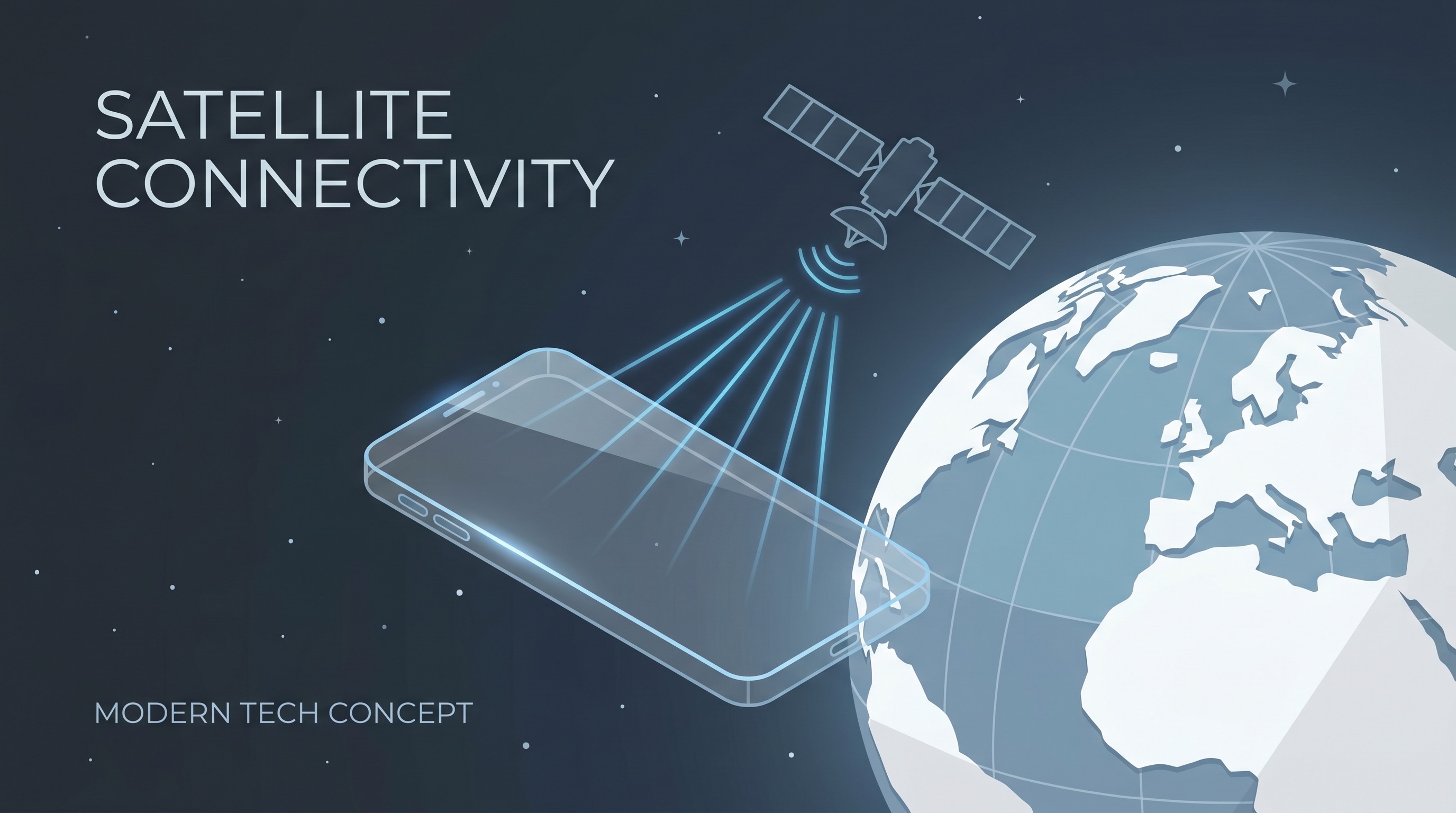
In September 2022, Apple quietly added a feature to the iPhone 14 that most people hoped they would never need: Emergency SOS via Satellite. Using the Globalstar satellite network, it let users in life-threatening situations send their location and a distress message when no cellular or Wi-Fi signal was available. It was a backup of last resort — slow, text-only, and deliberately limited.
Less than three years later, satellite connectivity has become one of the fastest-evolving areas of smartphone hardware. What began as an emergency lifeline is expanding into everyday messaging, roadside assistance, and the early stages of always-on satellite data. The trajectory is clear: within a few years, a phone without satellite support will feel as limited as a phone without GPS felt in 2008.
From emergency to everyday
Apple moved quickly after the initial launch. By 2023, the company had expanded satellite features to include Roadside Assistance via Satellite in the US, letting users contact AAA services from dead zones. The feature still requires pointing the phone at an open sky and takes longer than a standard cellular call, but it works — and it has saved lives in situations where nothing else could.
Apple's approach uses Globalstar's low Earth orbit (LEO) satellites, with antennas embedded directly into the iPhone's frame. The limitation is that Globalstar's constellation is small, meaning capacity is intentionally reserved for emergency use rather than general data. That design decision will shift as satellite infrastructure matures.
Qualcomm and the Snapdragon Satellite push
While Apple built satellite support around a specific emergency use case, Qualcomm has been pursuing a more general platform approach. Snapdragon Satellite, announced in early 2023 and shipping in flagship Android devices, uses the Iridium satellite constellation — a 66-satellite LEO network with true global coverage, including the poles.
Iridium is slower than Globalstar for data but has no geographic dead zones. Qualcomm's integration allows Android manufacturers to enable satellite messaging, location sharing, and emergency SOS through a standardized chipset feature rather than proprietary hardware. This means satellite connectivity could roll out across dozens of Android device lines simultaneously, rather than being locked to one manufacturer's flagship.
The practical experience is still similar to Apple's: you need line-of-sight to the sky, messages take 10–30 seconds to deliver, and throughput is measured in kilobits. But the use cases are expanding. Satellite messaging apps are being built that let people in remote areas check in with family, send hiking waypoints, or receive weather alerts — all without cellular coverage.
The T-Mobile and Starlink gamble
The most ambitious satellite-to-phone project belongs to SpaceX and T-Mobile, who announced a direct-to-cell partnership in 2022. Unlike Globalstar or Iridium, which require specialized antennas or chipset support, the T-Mobile/Starlink service is designed to work with existing smartphones — no hardware upgrade required.
The approach uses Starlink's next-generation satellites with large phased-array antennas capable of connecting directly to standard LTE bands already supported by existing handsets. T-Mobile customers in dead zones would seamlessly switch to satellite coverage without touching their phones. In theory, every T-Mobile subscriber with an LTE-capable phone automatically gets nationwide coverage.
Beta service for text messaging launched in late 2024, with voice calls and eventually data planned to follow. The catch is throughput: early implementations share satellite capacity across the coverage footprint, limiting per-user bandwidth. For text messages this barely matters. For voice calls, it works. For streaming video, the architecture will need significant expansion.
What this means for coverage
The wireless industry has spent decades subdividing markets by geography — urban cores get dense 5G, suburban areas get solid LTE, rural zones get coverage if carriers can justify the tower investment. Satellite connectivity breaks that model. A farmer in a dead zone 40 miles from the nearest tower and a hiker in a national wilderness area will have the same access to emergency communication as someone in a city center.
For international travelers, the implications are similarly significant. Travelers who currently buy local SIMs in every country or pay roaming premiums could eventually rely on satellite messaging as a universal backstop, regardless of local carrier agreements.
The business model question
Satellite connectivity raises a question carriers haven't fully resolved: how do you charge for it? Apple's Emergency SOS via Satellite was free for the first two years on iPhone 14 and later; the company has since moved to a subscription model bundled with AppleCare. T-Mobile has positioned satellite coverage as a no-cost addition to existing plans, though the fine print evolves as the service scales.
The challenge is that satellite capacity is genuinely expensive to provision — each satellite costs tens of millions of dollars and can only serve so many simultaneous connections. Emergency-only use keeps demand predictable. The moment satellite connectivity expands to routine messaging, usage patterns become harder to forecast, and per-user economics change.
What comes next
By 2026, satellite connectivity is transitioning from a differentiating feature to an expected baseline in flagship smartphones. Apple, Qualcomm, and MediaTek have all made clear that satellite support will be standard across their high-end platforms. The question for the next few years is whether the use cases expand from text messaging and emergency services into routine data — and whether the economics of satellite infrastructure can support that demand.
The short answer is: yes, but slowly. Constellation operators including SpaceX, Globalstar, and AST SpaceMobile are all investing in capacity expansion. The phones are ready. The satellites are being launched. The networks are being negotiated. Emergency SOS was never the destination — it was the proof of concept.