Satellite phone connectivity stopped being a backup plan
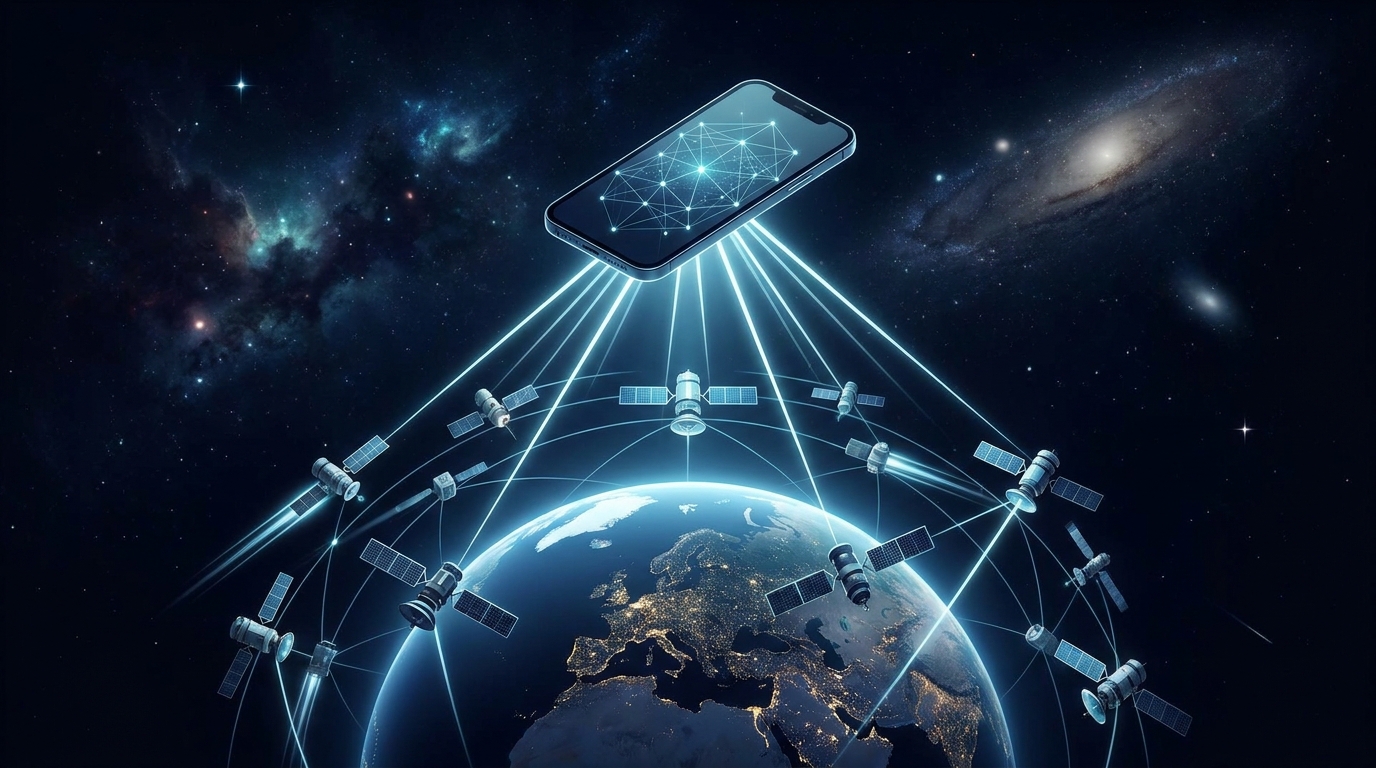
For most of the last decade, satellite phone connectivity meant a clunky dedicated device or an Apple SOS button that only worked in genuine emergencies. That changed in the second half of 2025 and has been accelerating since. By mid-2026, satellite connectivity has become something ordinary phones use routinely — and the infrastructure race behind that shift is reshaping what mobile networks will look like for the next decade.
How T-Mobile/Starlink got to market first
T-Mobile launched its T-Satellite service for text messaging on July 23, 2025. Broadband data followed in October 2025. The service works with most modern smartphones without hardware modifications or software updates — the phone connects automatically when cellular towers aren't within range. Customers on T-Mobile premium plans get it at no added cost; AT&T and Verizon subscribers can access it for $10–$15 per month through roaming agreements.
The coverage footprint as of mid-2026 includes the Continental US, Puerto Rico, Hawaii, and parts of southern Alaska, with international roaming available in Canada, New Zealand, and Japan. The Starlink Direct to Cell constellation — the satellites doing the actual work — uses standard LTE frequencies, which is why ordinary phones connect without modifications. The satellites function as orbiting cell towers operating in the same spectrum bands as ground infrastructure.
The service is not a replacement for terrestrial cellular. Latency is higher than ground networks (120–200ms typical in low-Earth orbit), and the bandwidth available per user is constrained by how many users any given satellite passes over in its coverage window. It works well for messaging, light data, and voice calls in areas where you previously had nothing. It is not a competitor to 5G in a city center.
AST SpaceMobile is taking a different architectural approach
AST SpaceMobile's BlueBird constellation is designed to deliver actual cellular broadband — peak speeds up to 120 Mbps — direct to unmodified smartphones using standard cellular frequencies. This is a harder engineering problem than what Starlink's Direct to Cell does, requiring massive phased array antennas on each satellite (the BlueBird antennas unfold to roughly the size of a basketball court).
BlueBird 1–5 launched in September 2024 with initial non-continuous coverage. BlueBird 6 launched in December 2025 and BlueBird 7 in April 2026. AST SpaceMobile's target is 45–60 satellites by end of 2026, which would enable continuous commercial service in its initial markets. The company has carrier partnerships with AT&T, Verizon, and Vodafone, which gives it a distribution path that doesn't require consumers to switch carriers.
The distinction from Starlink Direct to Cell matters: AST SpaceMobile is aiming to deliver the kind of throughput that would let a phone stream video from orbit, not just send messages. Whether the constellation scale required to do that commercially is achievable with their current funding and launch cadence remains the open question.
The carrier joint venture changes the competitive picture
AT&T, T-Mobile, and Verizon announced a joint venture to coordinate the expansion of direct-to-device satellite services. The structure is notable: the three largest US carriers, which normally compete aggressively on network quality, decided that building parallel satellite infrastructure independently made less sense than collaborating on a shared foundation.
This has significant implications for AST SpaceMobile. All three of its major US carrier partners are now coordinating their satellite strategy together, which could mean more predictable demand and faster integration of BlueBird into carrier billing and apps — or it could mean the carriers develop bargaining leverage by pooling their requirements.
Apple's evolution from SOS to calls
Apple's trajectory in satellite connectivity mirrors the broader industry shift. Emergency SOS via satellite launched with iPhone 14 in 2022 using Globalstar infrastructure. By 2025, Apple had expanded to satellite messaging in the US and select markets. The pattern is a cautious but consistent expansion of use cases — each one normalizing the expectation that phones should work even outside cellular coverage.
Apple hasn't announced a full voice and data satellite tier to compete directly with T-Satellite, but the Globalstar contract that Apple signed in 2022 (worth approximately $450M) and the satellite modem integration in recent iPhone chips point toward broader capability that Apple can unlock incrementally without major new hardware.
What this means for how phones get designed
Satellite connectivity is becoming a checkbox on mobile silicon roadmaps the way 5G was five years ago. Qualcomm's Snapdragon 8 Elite and MediaTek's Dimensity 9400 both include satellite modem capabilities as standard. Apple's custom silicon has had satellite hardware since the A16 generation. The question is shifting from whether a chip supports satellite to which satellite protocols it supports and which carriers have negotiated access.
For users, the practical outcome is a phone that stops having dead zones in any meaningful geographic sense. The experience won't be consistent — satellite links will always have higher latency and lower throughput than good terrestrial cellular — but the choice between "no signal" and "slow but connected" consistently favors the latter for almost every real-world use case.