Solid-State Batteries Are Three Years Away — and Have Been for a Decade
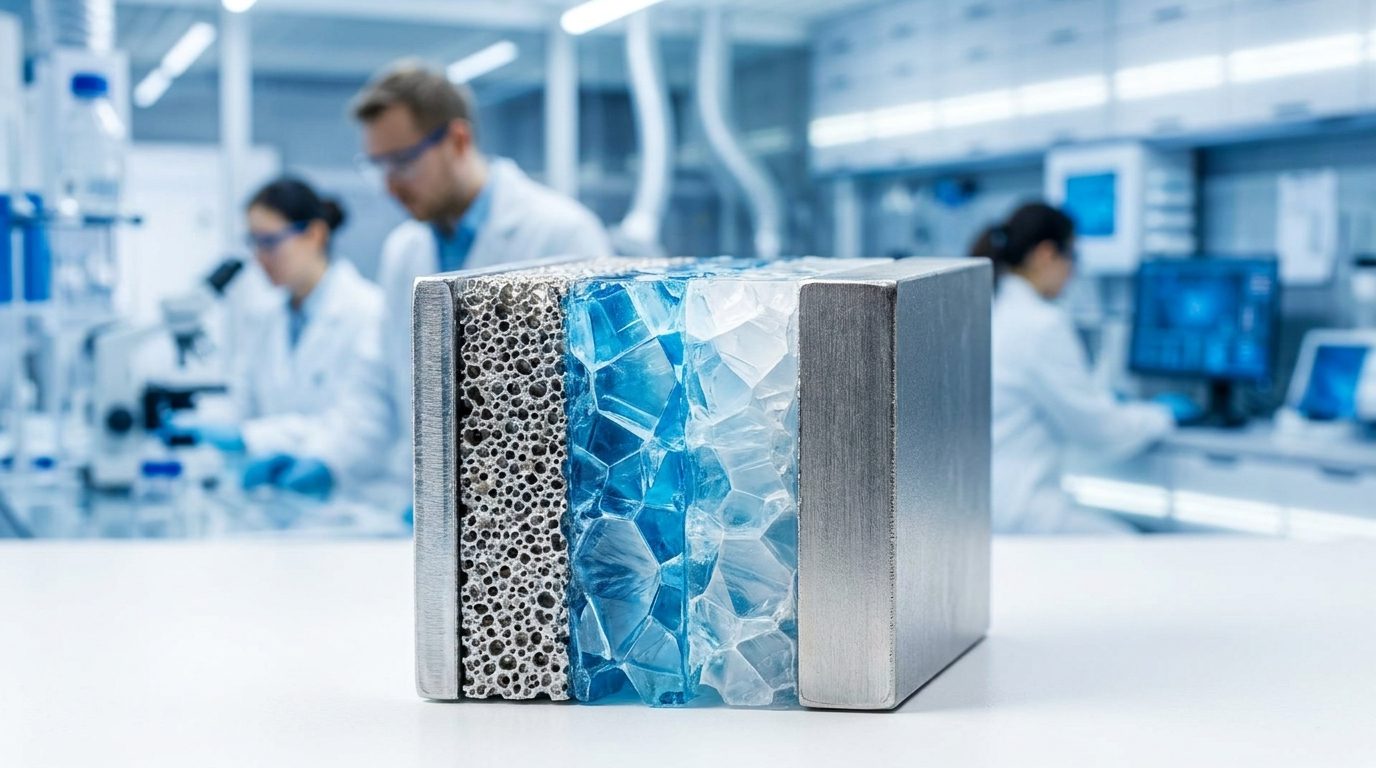
Solid-state batteries have been "three to five years away" since at least 2014. At CES that year, Toyota executives were predicting commercial solid-state EVs by 2020. That didn't happen. The 2020 prediction became 2025, which became 2027, which in Toyota's latest guidance has become 2028 for their first solid-state model. The cynical read is that solid-state is vaporware — a technology that perpetually recedes into the future. The accurate read is more complicated, and the current state of the field suggests something genuinely different is happening.
The fundamental physics case for solid-state is strong. Replacing the liquid electrolyte in a conventional lithium-ion cell with a solid material eliminates the primary failure mode that causes fires (liquid electrolyte is flammable), enables the use of metallic lithium anodes (which store roughly 10 times more lithium per unit volume than graphite), and can potentially sustain more charge cycles. The theoretical energy density ceiling for a solid-state cell with a lithium-metal anode is around 500 Wh/kg — roughly double the best cells in current EVs. The problem is closing the gap between theoretical ceiling and manufacturable product.
What Has Actually Been Stopping It
The core manufacturing challenge is the interface between the solid electrolyte and the electrodes. In a liquid-electrolyte cell, the electrolyte fills the microscopic voids between electrode particles uniformly. A solid electrolyte cannot do this without either enormous pressure (to force physical contact) or extremely thin film deposition at scale (which is slow and expensive). During charging, metallic lithium plates unevenly onto the anode, creating structures called dendrites that grow through the solid electrolyte and eventually short-circuit the cell.
QuantumScape's approach uses a thin ceramic separator with no anode material at all during initial assembly — the lithium metal anode forms in-situ during the first charge. This eliminates the dendrite-initiation problem at the anode surface and allows a very thin cell. The company has demonstrated cells that survive over 1,000 cycles at 80% capacity retention at fast-charge rates, which it published in peer-reviewed form in Nature Energy in 2022. The obstacle has been scaling this process: QuantumScape's QS-0 pre-pilot line has been producing sample cells since late 2023 for automotive qualification testing with Volkswagen Group, its primary investor. Full production qualification is expected in 2025, with high-volume manufacturing requiring a separate facility and timeline.
Solid Power, backed by BMW and Ford with a combined investment of over $130 million, uses a sulfide-based solid electrolyte. Sulfide electrolytes are more processable than ceramic alternatives — they can be rolled into thin sheets using equipment similar to existing battery manufacturing lines. Solid Power shipped engineering samples using a silicon anode (rather than lithium metal, a deliberate interim choice to reduce risk) to both BMW and Ford in 2022 and 2023. BMW's qualification testing is ongoing, with production cells expected by 2026-2027.
Toyota's Specific Bet and Its Tradeoffs
Toyota has the largest solid-state battery patent portfolio of any automaker — over 1,300 patents as of 2023 — and has been the most publicly committed to the technology. Its current development targets a bipolar solid-state battery using a sulfide electrolyte, which Toyota claims will achieve 1,200 km range (WLTP), 10-minute 10-80% charging, and a 20-year or 600,000 km service life.
Those figures appear in Toyota's investor materials, not in peer-reviewed literature, so the appropriate skepticism applies. What has changed is Toyota's manufacturing approach: the company licensed production technology from Panasonic and established Prime Planet and Energy & Solution (PPES) as its battery joint venture in 2020, specifically to industrialize solid-state manufacturing. PPES is constructing a dedicated solid-state production line at the Himeji plant in Hyogo Prefecture, with pilot production targeted for 2026 and first vehicle integration in 2027-2028.
The tradeoff Toyota is accepting is performance for manufacturability. Its target energy density is around 400 Wh/kg for the first generation — ambitious but below the theoretical ceiling. The sulfide electrolyte requires careful handling to prevent contact with moisture (it produces toxic hydrogen sulfide gas when wet), which adds manufacturing complexity and cost. Toyota's working estimate for first-generation solid-state pack cost is approximately 50% higher than comparable lithium-iron-phosphate (LFP) packs — a gap it expects to close through scale by the early 2030s.
The Competition Toyota Isn't Talking About
While Western coverage focuses on Toyota, QuantumScape, and Solid Power, the most aggressive solid-state battery programs are in China. CATL, the world's largest battery manufacturer by volume, has publicly stated a target of solid-state batteries in consumer EVs by 2027. SVOLT (spinoff of Great Wall Motor) demonstrated 20-Ah solid-state pouch cells with 350 Wh/kg in 2023. BYD, which now manufactures its own blade LFP cells, has solid-state development programs running at its FinDreams Battery subsidiary, though it has been less specific about timelines than CATL.
The Chinese competitive dynamic matters for a specific reason: cost. CATL's existing LFP cells are already among the cheapest lithium battery cells in the world, undercutting Western competitors by 20-40% on a cost-per-kWh basis. If CATL can achieve solid-state at a cost premium of 30% over its own LFP cells, the resulting price will still undercut Toyota or QuantumScape's solid-state cells priced 50% above Western LFP. This is the competitive pressure that makes the next three years critical for non-Chinese solid-state programs.
What "Commercial" Actually Means in These Timelines
One reason solid-state timelines have been so consistently wrong is definitional slippage in what "commercial" means. Toyota's 2028 target refers to a production vehicle in customer hands, in low volume (likely below 50,000 units per year for the first model). QuantumScape's qualification milestones are prerequisites for a production contract, not delivery dates. "Commercially available" in 2027-2028 means expensive, limited-volume cells in premium vehicles.
The scenario where solid-state batteries are in mainstream EVs priced below $40,000 requires manufacturing cost parity with advanced lithium-ion, which most credible analysts put at 2032-2035 at the earliest. That's a more conservative view than the press releases suggest, but it's consistent with the historical curve of every major battery chemistry transition from NiMH to standard lithium-ion to LFP.
Actionable Takeaways
- If you're considering an EV purchase in 2025-2026 and waiting for solid-state, you're waiting for the wrong thing. Current silicon-anode lithium-ion cells (like those in the Kia EV6 GT and Tesla's 4680 cells) already deliver meaningful improvements over the NMC chemistry used in 2020 EVs. Solid-state at mainstream prices is a 2032+ story.
- QuantumScape (NYSE: QS) is the only publicly traded pure-play solid-state company. Its stock is essentially a bet on whether its ceramic separator technology survives automotive qualification — a binary event expected in 2025. The company had $857 million in cash as of Q3 2024 and no manufacturing revenue, so the runway is finite.
- Solid Power (NASDAQ: SLDP) is a better indicator of the sulfide electrolyte path. BMW and Ford's ongoing qualification activity is the most relevant data point — watch for qualification completion announcements from those OEMs rather than Solid Power's own press releases.
- For fleet operators evaluating EV total cost of ownership, the battery warranty terms on current vehicles (typically 8 years/160,000 km on LFP, 8 years/100,000 km on NMC) are the relevant data point. Solid-state's claimed durability advantage doesn't matter until it's in a cell you can actually buy.