Surgical Robots Are Getting AI Co-Pilots — and the FDA Is Writing the Rules in Real Time
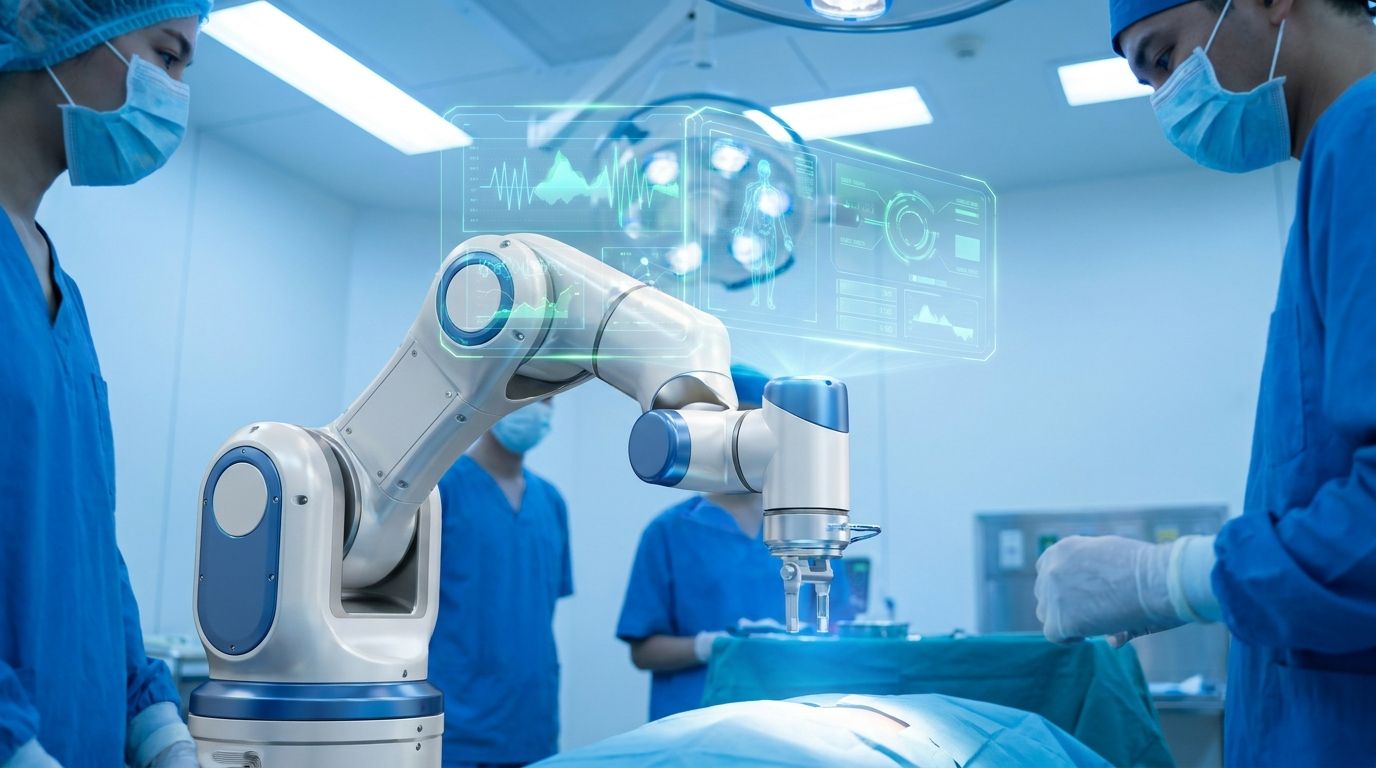
The surgical robotics market is over two decades old. Intuitive Surgical's da Vinci system received FDA clearance in 2000 and has since been used in over 12 million procedures globally. The installed base of robotic surgical systems is now substantial — over 9,000 da Vinci units alone — and yet the field is undergoing its most significant technical shift since its founding.
That shift is the integration of AI into the surgical workflow. Not AI that operates autonomously, but AI that perceives, advises, and assists in real time during procedures. The distinction matters: the regulatory and ethical landscape around autonomous surgical action remains deeply unsettled, while AI-assisted guidance is already reaching clinical practice.
What the Current Generation Actually Does
The da Vinci 5, launched in 2024, incorporates a force feedback system — the first in the commercial da Vinci line — that gives surgeons tactile information about tissue resistance. Its AI capabilities include intraoperative analytics: the system tracks instrument movements, provides benchmarks against surgeon performance data, and offers real-time tissue characterization to distinguish between structures like nerves and blood vessels. Stryker's Mako orthopedic robot uses a CT-based 3D model of the patient's anatomy to define an operating zone and prevent the robotic arm from deviating outside it — a hard constraint enforced mechanically, not just via display feedback.
The next generation from multiple vendors is incorporating computer vision models trained on video from thousands of previous procedures. These models can identify anatomical landmarks, flag when a surgeon's instrument approaches a sensitive structure, and flag deviations from typical procedural patterns — not to stop the surgeon, but to prompt a pause or second look.
The FDA's Adaptive Approach
The regulatory challenge with AI surgical systems is that traditional medical device clearance is static: a device is cleared for a specific intended use, and updates require new submissions. AI systems improve over time — which is both their value and their regulatory problem. The FDA's Predetermined Change Control Plan (PCCP) pathway, formalized in 2023, allows device makers to define in advance what kinds of algorithm updates they'll make, how they'll validate them, and how they'll monitor performance post-deployment. The device can then be updated within those pre-defined parameters without a full re-submission. Several AI surgical guidance systems have received clearance under PCCP frameworks, which is why deployment timelines are accelerating.
The Liability Question No One Has Resolved
When an AI guidance system makes a recommendation during surgery and a surgeon follows it into a poor outcome, liability distribution is genuinely unsettled. Existing case law treats surgical robots as tools under the surgeon's control — the surgeon carries liability. But AI guidance that actively recommends deviations from standard practice introduces a new actor. Vendors have generally insulated themselves through labeling that frames AI outputs as "decision support" rather than clinical recommendations. Whether courts and regulators will accept that framing as AI capabilities become more prominent in surgical workflows is an open legal question that will likely be resolved by specific cases rather than proactive regulatory guidance.
Who Benefits and What's Still Missing
The realistic near-term benefit of AI-assisted surgical robotics is in training and consistency. Expert surgeons perform consistently; less experienced ones have higher variation in outcomes. AI systems that learn from expert performance and provide guidance to less experienced surgeons could narrow that gap. The more speculative benefit — AI catching intraoperative mistakes that a surgeon misses — depends on AI systems that can perceive and reason about surgical anatomy reliably across the massive variation of real patients. That capability is developing, but not yet at the reliability threshold required for clinical trust.