Tech's Nuclear Bet: Why Microsoft, Google, and Amazon Are Signing Reactor Deals
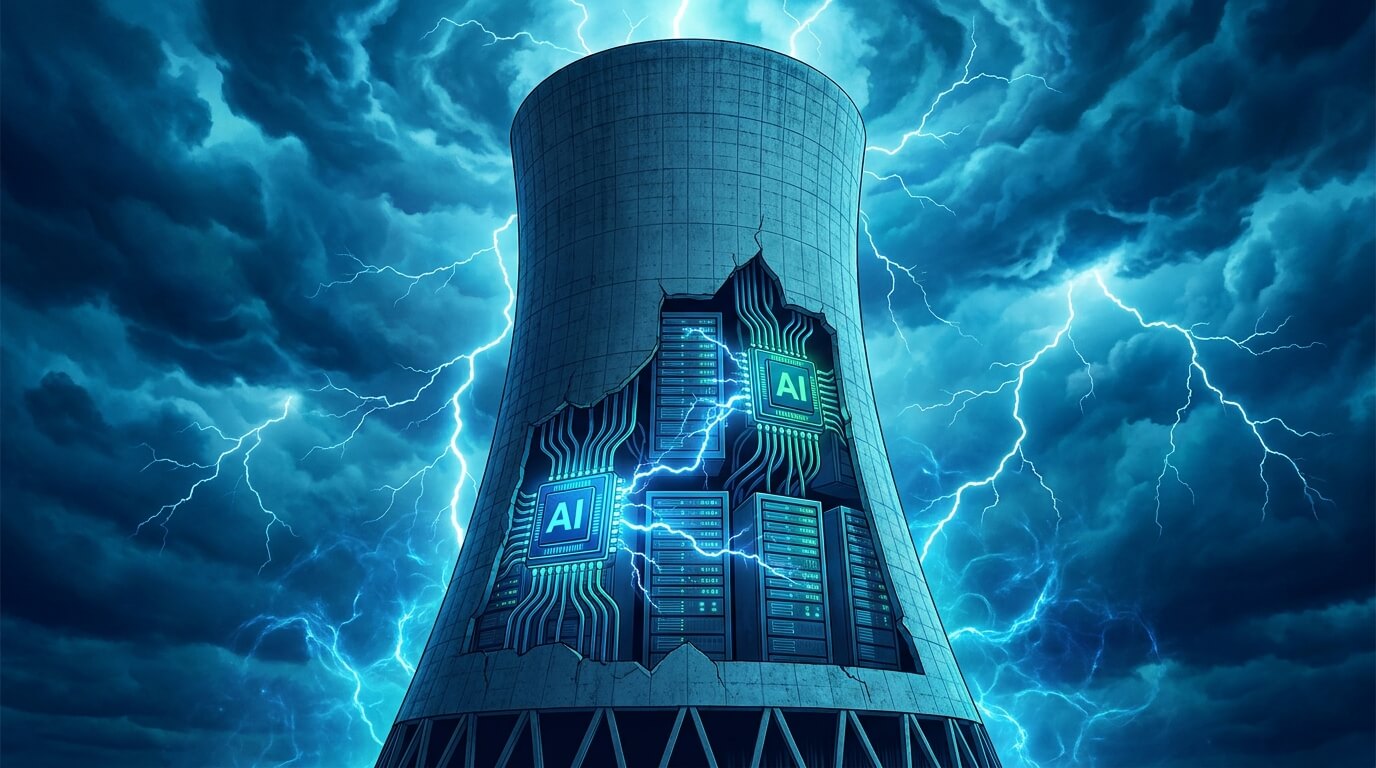
In September 2023, Microsoft signed a deal with Constellation Energy to restart Unit 1 at Three Mile Island — the reactor that partially melted down in 1979, became a symbol of nuclear anxiety for a generation, and had sat idle since 2019. The restarted plant will supply Microsoft's data centers with carbon-free electricity starting in 2028. The price Microsoft agreed to pay — undisclosed, but estimated at a significant premium to market rates — signals how seriously the company is taking its power supply problem.
That problem, in brief: training and running large AI models requires enormous, continuous electricity consumption. GPT-4-scale training runs consumed tens of millions of dollars in electricity. Inference — serving model responses to users at scale — runs continuously at power consumption levels that dwarf most industrial operations. OpenAI, Google, Microsoft, Amazon, and Meta are all building data centers as fast as construction and equipment supply chains allow, and they're all running into the same wall: reliable, carbon-free power supply at the required scale is scarce.
The Intermittency Problem
Renewable energy has made extraordinary progress. Solar and wind costs have collapsed over the past decade, and large tech companies have signed power purchase agreements covering hundreds of gigawatts of renewable capacity. But renewables have a fundamental characteristic that creates problems for data centers: intermittency. The wind doesn't blow at night. Solar doesn't generate during cloudy weeks. Grid-scale battery storage is improving but nowhere near the capacity needed to buffer large data center loads through extended low-generation periods.
Data centers can't be intermittent. They run 24 hours a day, every day. When renewable generation drops, grid operators fill the gap with gas peakers or nuclear baseload — meaning tech companies' renewable commitments don't actually map to 24/7 carbon-free power at the grid level, even when the annual totals match.
Nuclear addresses this directly. A nuclear plant runs at roughly 90-92% capacity factor — essentially continuous, on-demand, carbon-free electricity. It generates the same output whether it's cloudy, calm, or midnight. For data center operators who want genuinely carbon-free power around the clock, nuclear is the only dispatchable zero-carbon source currently available at scale.
The Deals Being Done
Microsoft's Three Mile Island deal was the most prominent, but it's part of a broader pattern. Google signed a power purchase agreement with Kairos Power in 2023 to buy electricity from multiple small modular reactors beginning in the early 2030s — the first corporate PPA for SMR power in history. Amazon has signed agreements with Energy Northwest in Washington State for SMR power and has invested in X-energy, a reactor developer. The company has also restarted a dormant nuclear power purchase agreement with Talen Energy.
Beyond direct power purchases, Microsoft has invested in Helion Energy, a nuclear fusion startup targeting commercial fusion power in the late 2020s — an extremely optimistic timeline that most fusion physicists consider unlikely, but which represents the kind of long-horizon bet large tech companies can afford to make.
Small Modular Reactors: The Promise and the Timeline
The most frequently cited nuclear technology in tech company announcements is the small modular reactor (SMR). The concept is appealing: instead of a single massive 1-gigawatt plant that takes fifteen years and tens of billions of dollars to build, SMRs would produce 50-300 megawatts each, could be manufactured in factories and assembled on-site, and could be deployed in smaller numbers as needed.
The reality is more complicated. As of mid-2026, no SMR design has been deployed commercially in the Western world. NuScale Power, which had the furthest-along US design, cancelled its flagship project in late 2023 after construction cost estimates roughly doubled. Kairos Power, X-energy, TerraPower, and others are all still in development or early construction phases. The first Western SMR deployments are realistically targeted for the early-to-mid 2030s — meaning Google's 2030 target for SMR power is optimistic but not implausible if permitting and construction proceed smoothly.
Regulatory timelines in the US and Europe are the primary constraint. The Nuclear Regulatory Commission has approved one SMR design (NuScale's, now cancelled) and is reviewing others, but NRC review processes can take five to seven years from application to approval. Streamlining nuclear permitting has become a bipartisan policy priority in the US, with multiple bills passed in 2024 and 2025 aimed at speeding the process.
The Existing Plant Revival
While SMRs are still years away, existing nuclear plants are seeing a revival. Plants that were scheduled for retirement have received license extensions. Palisades Nuclear Plant in Michigan, shut in 2022, received $1.5 billion in federal loans to restart — the first such restart in US history. Three Mile Island Unit 1's restart is the highest-profile example.
This existing plant strategy has a different risk profile from SMRs: the plants have proven operational records, regulatory approvals in hand, and the main barrier is economic (old plants with high maintenance costs competing against cheap renewables). Federal loan guarantees and corporate power purchase agreements with premium pricing change that calculation.
The Numbers Behind the Need
The International Energy Agency projects global data center electricity consumption could reach 1,000 terawatt-hours annually by 2026 — roughly equal to Japan's entire electricity consumption today. AI workloads are the primary driver of growth. A single hyperscale AI training cluster can consume 50-100 megawatts — roughly the output of a large wind farm — continuously. As model sizes increase and inference scales with user adoption, these numbers only move in one direction.
The tech industry's nuclear bet is partly environmental (meeting carbon commitments) and partly operational (securing reliable baseload power before competitors do). The companies moving earliest are positioning themselves for a future where power scarcity is a real constraint on AI scale. Whether SMRs deliver on their promise by the early 2030s will determine whether that bet pays off or forces another pivot.
What to Watch
The most important near-term milestones are NRC design approvals for SMR designs from Kairos, X-energy, and TerraPower, targeted for 2026-2028. Construction groundbreaking for Kairos Power's first demonstration plant in Tennessee, scheduled for 2026, will be a signal of whether the manufacturing-scale SMR vision is actually executable. And the political environment matters: continued bipartisan support for nuclear permitting reform in the US, and similar moves in the UK and France, will determine whether the timeline is realistic or aspirational.