The CHIPS Act Bet Is Paying Off Slower Than Expected — and Faster Than Critics Said It Would
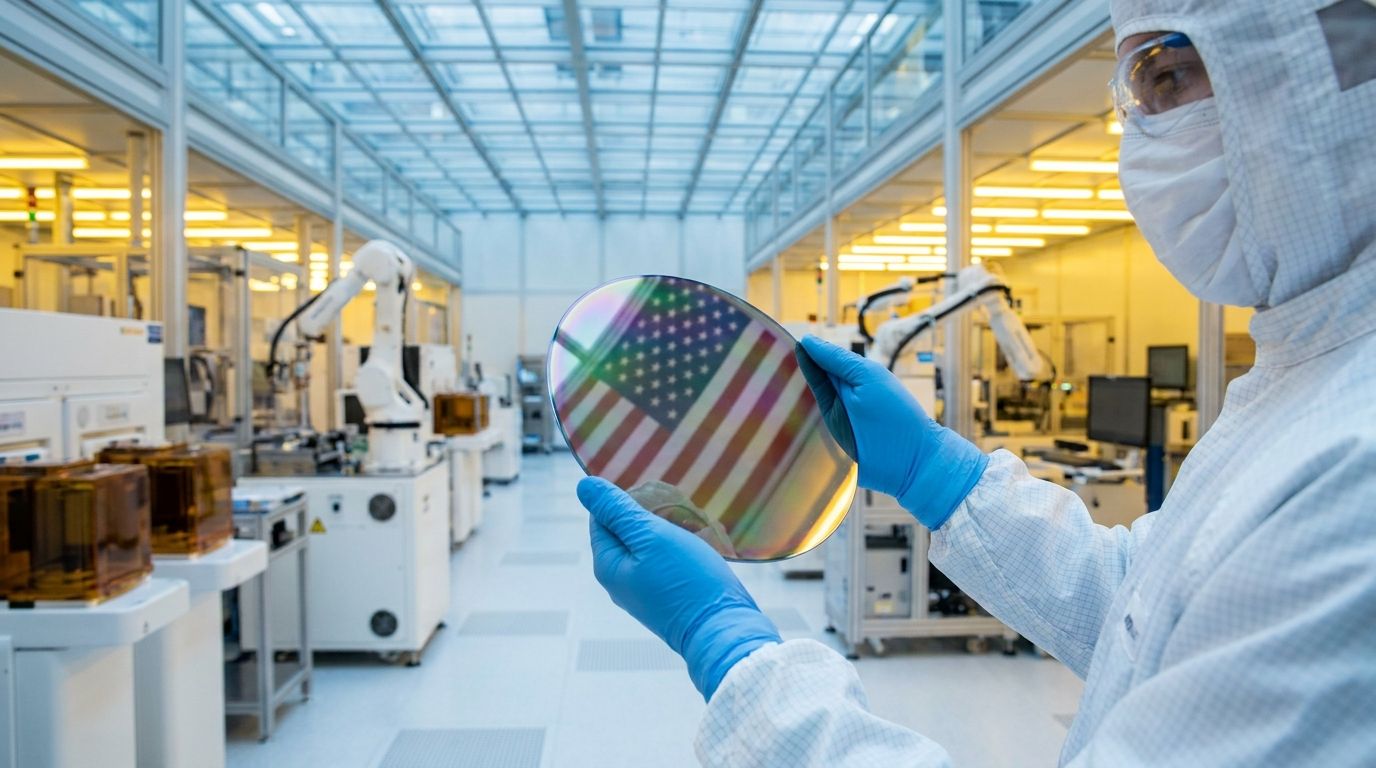
In August 2022, the US government committed $52.7 billion to rebuild domestic semiconductor manufacturing capability. The CHIPS and Science Act was the largest US industrial policy investment in decades — a direct response to the supply chain shocks of 2020–2022 and to the strategic recognition that 92% of advanced chip production was concentrated in Taiwan. Two years in, the results are real, incomplete, and more complicated than either critics or supporters predicted.
What the Money Was Actually For
The $52.7 billion broke into three main allocations: $39 billion for manufacturing incentives (direct grants and loans for semiconductor fabrication facilities built in the US), $13.2 billion for semiconductor R&D and workforce development, and a separate 25% investment tax credit for semiconductor equipment and facility construction that effectively extends the program's financial reach considerably further.
The manufacturing grants have largely been allocated. TSMC received $6.6 billion in direct funding and up to $5 billion in loans for its Arizona fabs. Intel received the largest single award — $8.5 billion in direct funding plus $11 billion in loans — for planned expansion across Arizona, Ohio, and Oregon. Samsung received $6.4 billion for its Taylor, Texas fabrication facility. GlobalFoundries, Micron, and Wolfspeed received smaller but significant awards for specialty and memory chip production.
The TSMC Arizona Reality
TSMC's Phoenix campus has become the most closely watched indicator of whether the CHIPS Act bet is working. The original plan called for Fab 21 Phase 1 to reach volume production of 4nm chips by the end of 2024. That timeline slipped; volume production began in early 2025, roughly six months late.
The reasons illuminate the structural challenge. TSMC reported significant difficulties finding and training enough workers with the specialized skills to operate extreme ultraviolet (EUV) lithography equipment. The company flew hundreds of technicians from Taiwan to Arizona for training, and American workers were sent to Taiwan for extended training periods. Construction costs in Arizona ran approximately 50% higher than equivalent construction in Taiwan — a combination of higher labour costs, supply chain differences for specialized construction materials, and regulatory complexity.
Despite the delays, the commitment has deepened. A third Arizona fab targeting 2nm production is under construction, and TSMC's total Arizona investment has grown to $65 billion (from the initial $40 billion announcement), with some of the expansion enabled directly by CHIPS Act funding. If the timeline holds, Arizona will be producing leading-edge chips — the kind that go into the most advanced AI accelerators and mobile processors — in volume by 2028.
Intel's More Complicated Picture
Intel's CHIPS Act awards came attached to one of the most difficult periods in the company's modern history. Intel Foundry Services — the external foundry business Intel launched to compete with TSMC and Samsung — has struggled to attract significant customers, and Intel's own manufacturing roadmap experienced ongoing yield and schedule challenges through 2024–2025.
Intel 18A, the process node positioned as Intel's return to manufacturing leadership, has been in validation with key customers including Amazon Web Services. Early indications suggest the process is competitive — a meaningful development after Intel's extended period of lagging TSMC on node density and power efficiency. Intel's Ohio fab, targeting volume production in 2026–2027, remains on schedule for its construction milestones. But the foundry business won't generate significant external revenue before 2027 at the earliest, and Intel restructured substantially in 2024–2025, including significant headcount reductions.
Where the CHIPS Act Is Clearly Working
The more reliable early wins from the CHIPS Act are in specialty and mature-node production. GlobalFoundries' expansion in Malta, New York for aerospace and defence applications is on track and addresses a genuine supply security concern — military-grade semiconductors produced on domestic soil, not sourced from geopolitical competitors. The US Department of Defense had documented a dangerous dependency on foreign-sourced chips for weapons systems, and GlobalFoundries' Malta expansion directly addresses that.
Wolfspeed's silicon carbide (SiC) fab in Chatham County, North Carolina is producing SiC power semiconductors for EV drivetrains and industrial power conversion — a category where supply security has become a priority as the automotive industry electrifies. SiC is distinct from logic chips but strategically important: power management in EVs, renewable energy systems, and data centre power supplies all depend on it.
Micron's DRAM expansion in Clay, New York — the first new US DRAM fab in two decades — broke ground in 2023 and is progressing toward volume production. DRAM had become almost entirely concentrated in South Korea (Samsung, SK Hynix) and is critical infrastructure for every AI server shipped. Domestic DRAM production, even at modest initial volumes, reduces a specific strategic exposure.
The Geopolitical Scorecard
The CHIPS Act had two stated strategic goals: reduce US dependence on Taiwan for advanced chip production, and limit China's access to advanced semiconductor manufacturing capability. The second goal was pursued separately through export controls implemented by the Commerce Department in October 2022 and tightened in 2023 and 2024.
On Taiwan dependence: by 2027–2028, the US is projected to produce roughly 10% of global leading-edge logic chips domestically, up from essentially zero in 2022. That's meaningful progress but falls well short of strategic independence. Taiwan will still produce the majority of the world's most advanced chips, and TSMC's dominance in leading-edge process technology is not being displaced — it's being complemented by a secondary domestic capability.
On China containment: the export controls have had measurable effects. NVIDIA's China revenue declined substantially after the 2023–2024 restrictions on advanced GPU exports. China's domestic chip industry — SMIC, Hua Hong, and others — is growing but remains multiple process generations behind the leading edge. The critical constraint isn't chip design (China has capable designers) but fabrication technology, specifically EUV lithography equipment that China cannot currently obtain or produce domestically.
What the Next Decade Requires
The CHIPS Act is best understood as a 10–15 year infrastructure investment, not a 3-year catch-up. The US semiconductor manufacturing workforce — which needs to be built largely from scratch after decades of offshore consolidation — is a constraint that capital alone can't accelerate. Engineers and technicians who can operate EUV machines, design process flows, and manage fab operations take years to train.
The CHIPS workforce development funding has seeded partnerships between semiconductor companies and community colleges near fab sites — a model that worked for other industrial transitions and may work here. TSMC's collaboration with Maricopa Community Colleges in Arizona, and Intel's partnerships with Ohio community colleges near its Johnstown fab, are early examples.
The honest assessment: the US has made credible, if slower-than-hoped, progress toward semiconductor independence. The strategic case for that independence — reducing exposure to a Taiwan contingency, limiting China's access to frontier computation — remains unchanged and arguably more urgent than when the bill was passed in 2022. The CHIPS Act placed a bet on a multi-decade timeline. The first returns are visible. The final return on that bet won't be clear for years.