The Indie Game Renaissance: How Solo Developers and Small Teams Are Competing With AAA Studios
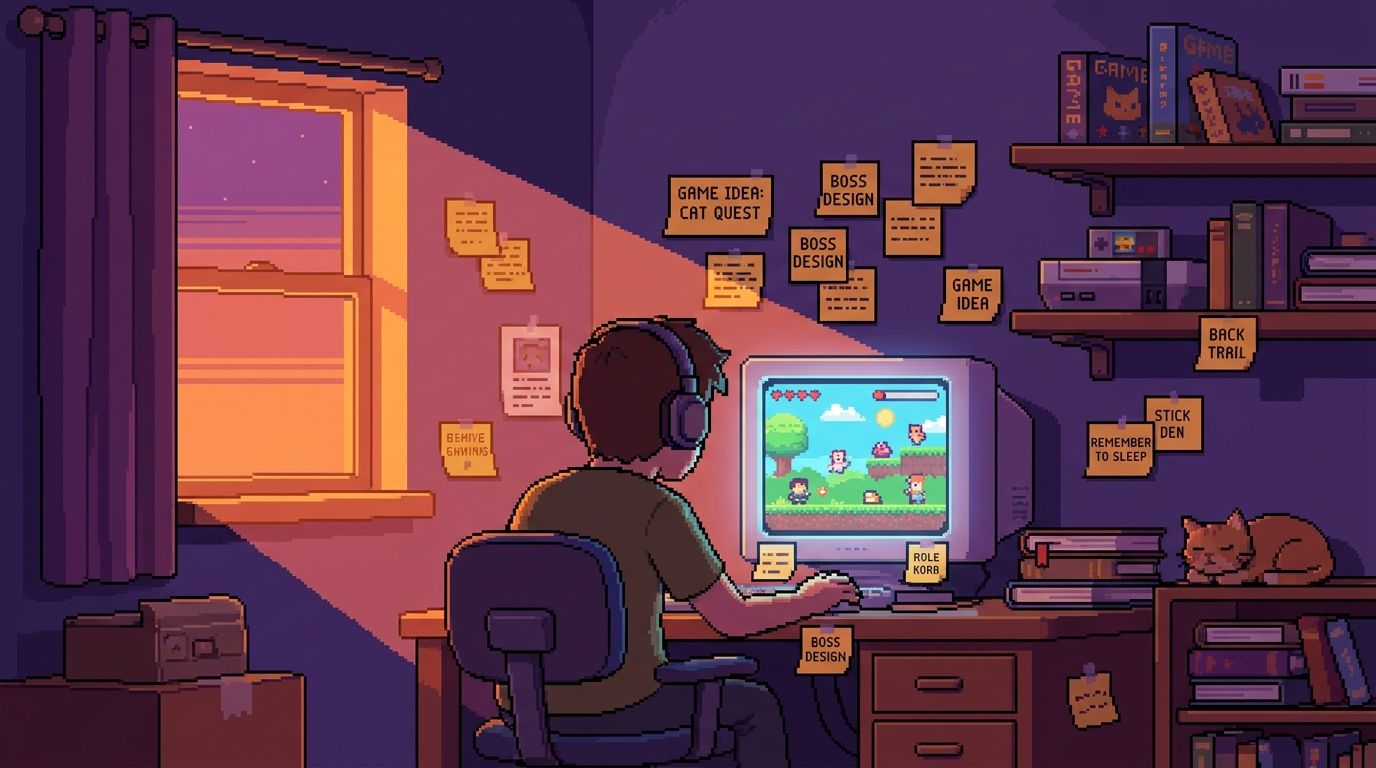
Stardew Valley was made by one person over four years. It has sold over 41 million copies. Vampire Survivors — a game that looks like it belongs on a 1990s PC — was made largely by a single developer and sold over 6 million copies in its first year at a $5 price point. Balatro, a poker roguelike made by a solo developer, was one of the top-rated games of 2024 and hit 5 million sales within months of launch. These are not outliers. They represent a structural shift in how successful games get made and who makes them.
The AAA studio model still exists and still produces some of the best-selling titles in gaming. But its advantages — enormous budgets, hundreds of developers, massive marketing spend — have been eroding for a decade. The tools that used to require a full team to operate are now available to one person. The distribution channel that used to require a publisher relationship is open to anyone. And the players who are spending the most time and money on games increasingly include audiences that AAA studios systematically underserved.
The Tools Revolution
The single biggest enabler of the indie renaissance is the democratization of game development engines. Unity and Godot (and to a lesser extent Unreal Engine, which has been more popular with mid-size studios) have reduced the engineering barrier to building a complete, polished game to near zero for someone willing to learn them.
Unity in particular built much of the indie ecosystem during the 2010s. Its asset store meant that a solo developer could purchase high-quality 3D models, sound effects, and even complete gameplay systems, assembling a game without building everything from scratch. Godot — open-source, free, with a Python-like scripting language — has accelerated dramatically since Unity's 2023 pricing controversy drove significant developer migration. Godot 4.x introduced a rendering engine, 3D capabilities, and networking features that make it competitive with Unity for the majority of indie use cases.
AI-assisted development has added another layer. GitHub Copilot and similar coding assistants have meaningfully reduced the time cost of implementing standard game mechanics — pathfinding, inventory systems, UI elements — allowing developers to spend more time on the distinctive elements of their game design. Solo developers in 2026 have access to productivity assistance that effectively multiplies their output compared to a solo developer in 2020.
Steam as Platform Democracy
Before Steam's direct publication model (Greenlight, then Steam Direct), getting a game to market required either a publisher deal or building your own distribution — both of which favored established studios. Steam Direct's $100 publishing fee, introduced in 2017, opened the platform to any developer who could meet basic quality standards and pay a nominal fee.
The result is a long tail that is genuinely monetizable. Steam's discovery algorithms, wishlist system, and regional pricing allow small games to find their audience at scale. A game that sells 50,000 copies at $15 generates $750,000 in gross revenue — after Steam's 30% cut, $525,000. For a solo developer, that's a life-changing outcome. For a small team of five, it funds the next project. The threshold for commercial success has dropped dramatically because the cost structure of indie development is a fraction of AAA.
The platform diversity has also increased: itch.io serves the experimental and pay-what-you-want market, Epic Games Store offers a 12% revenue cut compared to Steam's 30% (though with smaller audience reach), and console platforms (Nintendo eShop, PlayStation, Xbox) have streamlined indie publishing processes that previously required dedicated porting teams.
The Genre Opportunities AAA Left Open
AAA studios optimize for spectacle and broad appeal: open-world action games, sports franchises, military shooters. The economics of a $200M+ development budget require a game to appeal to tens of millions of buyers to be profitable. This means large studios systematically avoid genres with passionate but smaller audiences — deep simulation games, narrative adventures, cozy games, roguelikes, puzzle games.
These abandoned niches turned out to be where the most engaged and loyal players live. Dwarf Fortress players will spend thousands of hours in a game with ASCII graphics. Farming simulation fans drove Stardew Valley past 41 million sales while most AAA studios had no farming simulation title. The cozy game genre — games explicitly designed for relaxation rather than competition, featuring low-stakes progression and gentle aesthetics — has exploded, with titles like Cozy Grove, Spiritfarer, and A Short Hike finding devoted audiences that AAA studios hadn't thought to target.
The demographic pattern is revealing: many cozy game players are women in their 30s and 40s, a group that has historically been underserved by AAA gaming's focus on young male audiences. The indie market's willingness to serve this audience — because a team of five doesn't need to sell 10 million copies to be profitable — has opened a commercial opportunity that scales.
The New Economics of Virality
A successful indie game in 2026 doesn't need a $20M marketing budget. It needs to be genuinely distinctive and get noticed by the right streamers, content creators, and communities. Vampire Survivors spread almost entirely through word of mouth and Twitch streaming — its mechanics produced entertaining content, which produced organic marketing at zero cost to the developer.
TikTok and YouTube Shorts have added a new discovery surface for games with visually striking or mechanically unusual gameplay. A 30-second video of Balatro's card-flipping mechanics, or the satisfying particle effects of a well-run Vampire Survivors session, can reach millions of viewers and drive thousands of sales in a 24-hour window. The virality dynamics favor games that are visually distinctive and mechanically engaging in short clips — not necessarily the technically impressive photo-realistic environments that AAA studios invest most heavily in.
This creates a feedback loop: the genres and aesthetics that work in short-form video content are different from the ones AAA studios optimize for, further opening the space for indie developers who can iterate on distinctive concepts quickly rather than committing to multi-year development cycles.
What Success Actually Looks Like
The indie renaissance has not eliminated risk. The majority of indie games on Steam sell under 1,000 copies — the long tail includes many games that found no audience. The difference between Balatro (5 million sales) and an identical-quality game that sells 2,000 copies is partly skill, partly distinctive design, and partly luck in the discovery algorithm at the right moment.
The studios that have built durable indie franchises — Klei Entertainment (Don't Starve), Subset Games (FTL, Into the Breach), Supergiant Games (Bastion, Hades) — share a common feature: a distinctive aesthetic and mechanical voice that makes each release instantly recognizable as their work. They've built audiences that follow them from title to title, reducing discovery risk on new releases. That's the indie equivalent of a publisher relationship: a direct connection with players who trust your output.
The structural shift is not that every indie game succeeds. It's that the cost of attempting it has dropped dramatically, the upside of a breakout hit is substantial, and the tools and distribution channels have made the skill floor for a professional-quality game achievable for a determined individual. More people are trying, more are succeeding, and the games that result are filling gaps that AAA studios — by structural necessity — cannot.