Two years into EU sideloading, iOS is a different platform in Europe — just not in the way Apple feared
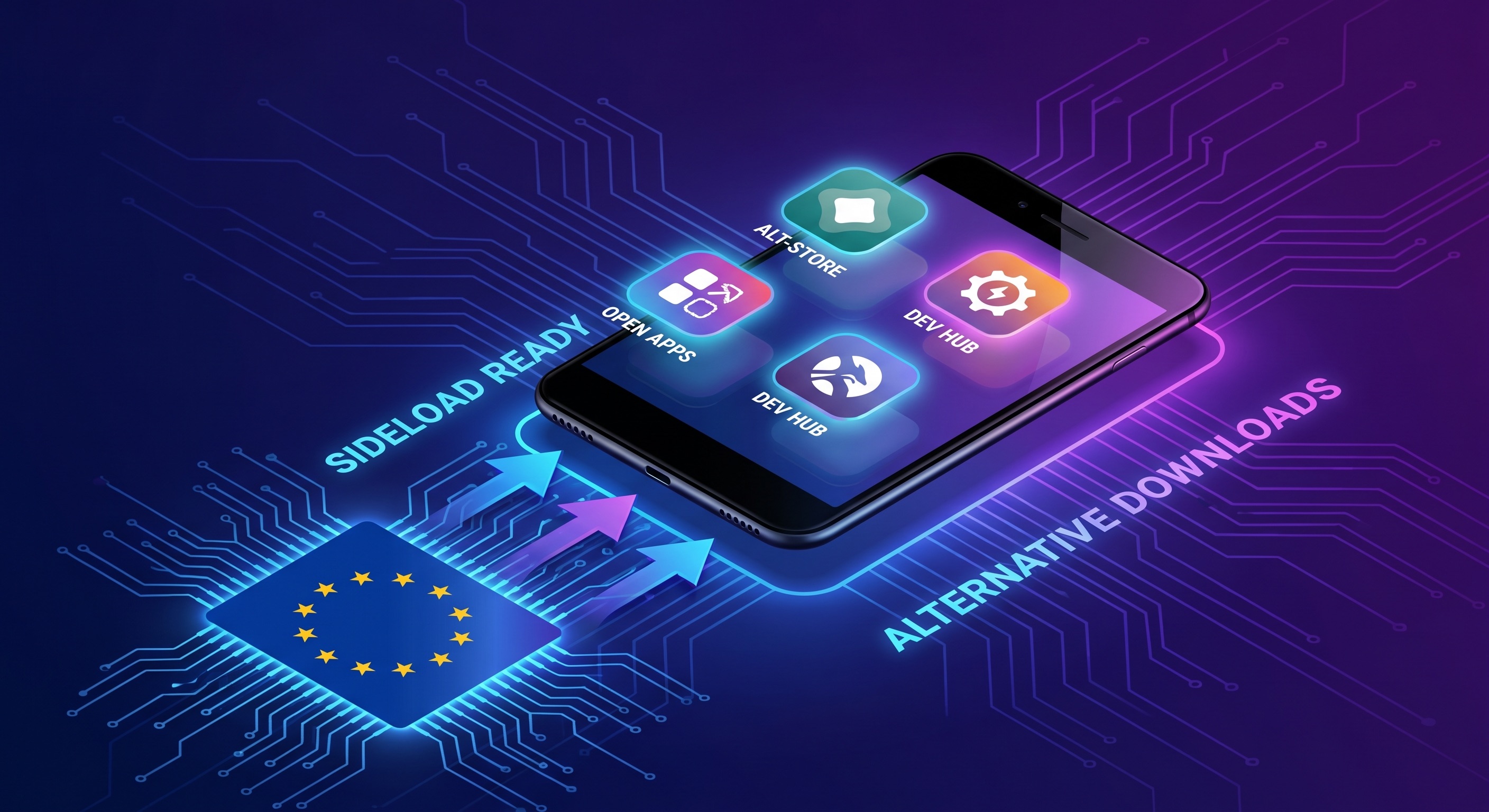
When the European Union's Digital Markets Act took effect for Apple in March 2024, the company complied — but made its displeasure unmistakable. Apple introduced a "Core Technology Fee" of €0.50 per install for every app download after the first million, applied retroactively to existing apps on alternative distribution platforms. Epic Games CEO Tim Sweeney called it a "junk fee." The EU Commission opened an investigation. Apple called it compliance.
Two years on, the EU's app ecosystem experiment has produced outcomes more nuanced than the maximalist predictions from either side. iOS in Europe is genuinely different now. But the revolution hasn't arrived yet — and understanding why reveals as much about developer incentives as it does about Apple's gatekeeping.
What DMA actually required
The Digital Markets Act designated Apple as a "gatekeeper" for iOS — one of six platforms facing new interoperability and openness obligations. For the App Store specifically, DMA required Apple to allow alternative app stores and direct sideloading (installing apps from websites outside any store), give developers the option to use alternative payment processors, and allow third-party web engines beyond WebKit.
Apple's implementation of these requirements has been contested. The Core Technology Fee applies to all downloads through alternative channels, including free apps, making large-scale distribution economically irrational for most developers. Apple also requires that developers using alternative distribution sign a new contract accepting the fee structure, which critics argue is a take-it-or-leave-it compliance mechanism designed to minimize actual adoption.
Who actually launched
Despite the friction, several significant alternative app stores launched. AltStore PAL — the European version of the long-running sideloading tool — opened with an annual fee of €1.50 and a catalog focused on emulators and apps Apple had historically rejected. Delta, the Nintendo emulator that Apple famously approved for the global App Store in 2024, was available on AltStore PAL months before that reversal.
Epic Games brought Fortnite back to iOS in Europe via its own Epic Games Store — the return it had been pursuing since Apple removed the game in 2020. The Epic Games Store launched in April 2024 with a small initial catalog, adding titles from other publishers through 2025. By early 2026, it offers around 70 games, a modest but real alternative distribution channel.
Several adult content platforms — specifically excluded from the App Store — established alternative distribution in the EU. This was perhaps the most immediately significant practical effect: categories of apps Apple had banned entirely became available to European users for the first time.
Adoption numbers tell the story
Usage numbers have been modest. Estimates suggest alternative app store installs represent under 1% of total iOS app installations in EU countries. The vast majority of European iOS users have never used anything other than the Apple App Store, and there's limited reason for most of them to change. The apps they want are still on the App Store; the friction of setting up an alternative store remains real.
Developer adoption has been similarly cautious. The Core Technology Fee makes alternative distribution economically attractive only for apps with high revenue-per-user ratios — either premium apps or those with significant in-app purchase revenue that exceeds Apple's 17-27% EU commission rate. For free apps with large install bases, the math is catastrophic: a popular free app with 10 million downloads would owe €4.5 million in Core Technology Fees.
What it changed for developers
More consequentially than alternative stores, the DMA's payment processing requirements have had real impact. Developers in the EU can now use alternative payment processors like Stripe directly, paying Apple a 17% commission (reduced from 30%) plus their processor's fees instead of Apple's 30% cut. Spotify, Netflix, and others have updated their EU apps to enable in-app purchases that were previously unavailable — users who previously had to subscribe via a web browser can now do it directly in the app.
The web engine requirement — that Apple allow alternative rendering engines, not just WebKit wrappers — is taking longer to bear fruit. Mozilla shipped a true Firefox engine on iOS in the EU in 2025, and Chrome followed with a Blink-based engine. The practical impact for users is modest so far, but it ends Apple's decade-long ability to enforce WebKit as the only iOS browser engine.
What happens next
The EU's approach is being watched by regulators worldwide, with mixed signals about who will follow. The UK's Competition and Markets Authority designated Apple as having Strategic Market Status under its Digital Markets and Competition Act, with remedies expected in 2026 that will likely mirror many DMA requirements. The US has made less progress — the DOJ's antitrust case against Apple is proceeding but a court-ordered remedy affecting App Store practices is years away.
For Apple, the DMA has revealed something important: the company's moat was never primarily about the App Store's exclusivity. It's about the quality of the ecosystem, developer tooling, and the gravitational pull of the existing install base. Even when given alternatives, most users and developers stick with the platform they know. That's a harder advantage to regulate away.