Waymo passed 500,000 weekly rides — here's what the robotaxi business actually looks like now
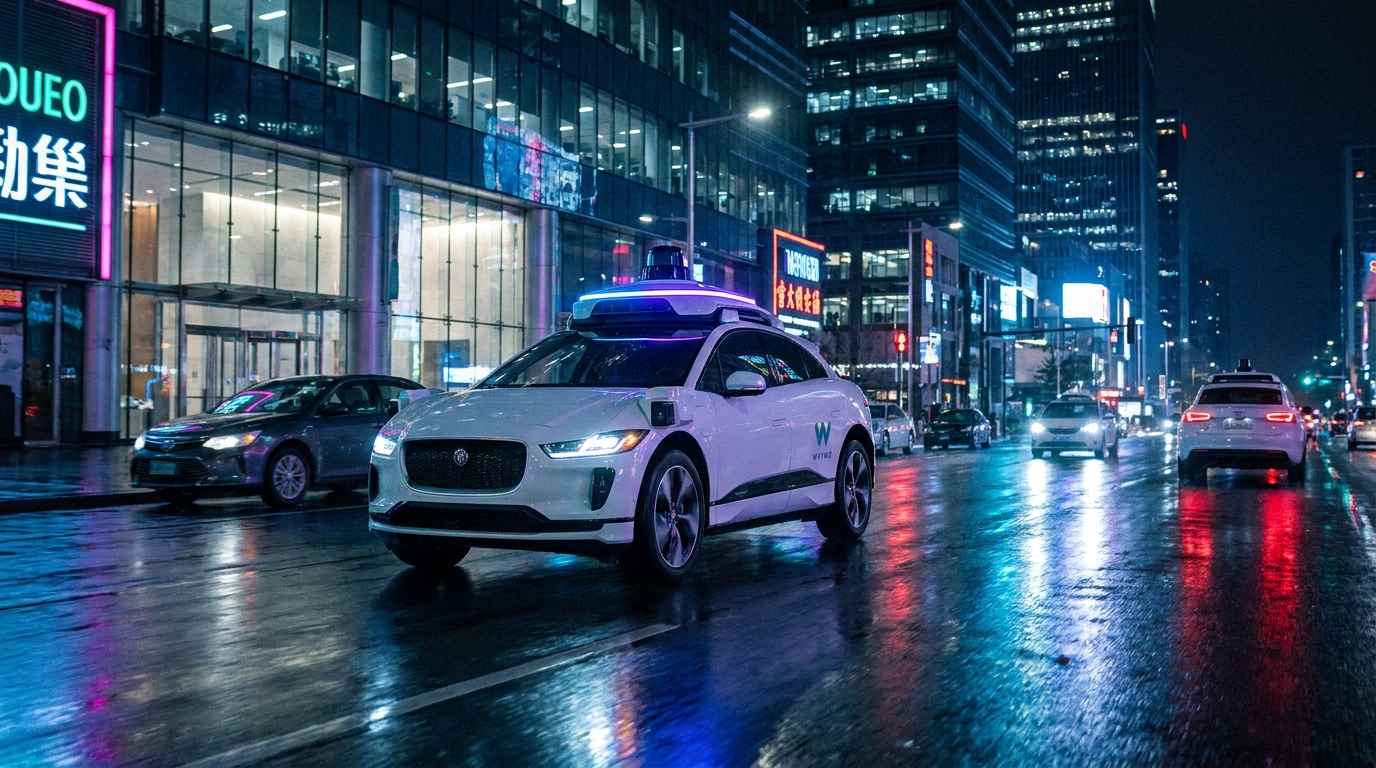
In Q1 2026, Alphabet disclosed that Waymo had surpassed 500,000 fully autonomous rides per week. That single number represents the difference between a research project and a business. The company completed 14 million paid trips in 2025, runs commercially in five US metro areas, and is expanding to six more. Revenue has grown to an annualized $355 million pace. None of this makes Waymo profitable — Alphabet has poured tens of billions into the project — but it establishes that the core technical problem, building a car that can drive itself reliably in complex urban environments, is functionally solved at a level the market accepts.
The commercial footprint in numbers
Waymo One offers fully driverless rideshare in Phoenix, the San Francisco Bay Area, Los Angeles, Miami, and Orlando. Atlanta and Austin are served through a partnership with Uber, where Waymo vehicles appear in the Uber app. Dallas, Houston, San Antonio, and Nashville are in early access, with new riders being invited on a rolling basis. The total service area has grown to over 1,400 square miles across 11 US cities — a 27% increase from its previous coverage.
Pricing sits approximately 15% below traditional rideshare services: average revenue per ride is estimated at $15–$17. That's intentional positioning. Waymo isn't trying to win on premium pricing; it's trying to win on reliability and convenience, with prices that don't require a premium justification from riders. At 500,000 rides per week and $16 average revenue, the annualized run rate is roughly $415 million — higher than Sacra's February $355 million figure, suggesting the trajectory is upward through Q2.
Management's stated goal is 1 million weekly rides by end of 2026. If achieved at current pricing, that represents roughly $830 million in annualized revenue — still far short of profitability given operating costs, but a meaningful commercial scale. Waymo's $126 billion valuation from its February $16 billion Series D implies investors are pricing in a trajectory well beyond 2026 numbers.
The Ojai vehicle and what 6th-gen Waymo Driver changes
In May 2026, Waymo unveiled "Ojai," a new driverless taxi designed specifically for rapid expansion. The Ojai runs the 6th-generation Waymo Driver — the sensor suite, compute stack, and software that enables autonomous operation. The 6th-gen system is designed to reduce per-vehicle hardware costs compared to earlier generations while expanding capability into environments previous Waymo vehicles avoided: snowy road conditions, complex intersections in cities without extensive prior mapping, and regions outside Waymo's historical Southwest US stronghold.
The ability to handle snow is operationally significant. Phoenix and LA have mild weather; Denver and Detroit — two of Waymo's announced 2026 expansion targets — do not. Operating in winter conditions requires different sensor approaches (LiDAR degrades in heavy snow), different vehicle dynamics models, and different edge case handling. The 6th-gen system's claimed capability in those conditions will be tested in practice when Denver and Detroit services launch.
The expansion cities and what London means
Waymo's confirmed 2026 expansion targets are Denver, Detroit, Las Vegas, San Diego, and Washington D.C. London is the first announced international market — a significant statement given that London drives on the left and has substantially different road infrastructure, traffic patterns, and regulatory requirements than US cities.
The London expansion, if it proceeds on schedule, would demonstrate that the Waymo Driver can generalize to markets requiring substantial adaptation rather than just rolling out the same system to more US Sunbelt cities. Left-side driving, roundabouts, narrow Victorian-era streets, and the UK's regulatory framework for autonomous vehicles are all meaningfully different from what Waymo has operated in to date. The business case in London is also strong — London is one of the most expensive taxi markets in the world, with black cab rides averaging £25–£40 for typical journeys.
Beyond the confirmed 2026 expansion, Waymo has disclosed testing activity in Baltimore, Boston, Charlotte, Chicago, Minneapolis, New Orleans, New York City, Philadelphia, Pittsburgh, Sacramento, Seattle, St. Louis, Tampa, and Tokyo. Testing is not service, but it maps the geographic ambition: Waymo intends to be a national and eventually international platform, not a handful of warm-weather US cities.
The economics that still need to work
The fundamental challenge of the robotaxi business model is that the capital costs are front-loaded and the operating cost advantages materialize gradually. Each Waymo vehicle costs significantly more than a conventional car to produce — the sensor suite, compute hardware, and specialized integration add substantial cost per unit. The business case depends on high utilization: a Waymo vehicle doing 20 rides per day for 365 days earns meaningful revenue against that capital cost. A vehicle sitting idle or operating infrequently does not.
Utilization in established markets (Phoenix, SF) is maturing to levels where the economics are becoming clearer. Utilization in new markets starts low and builds over 12–24 months as Waymo adds vehicles, expands service areas, and builds rider habit. Every expansion city creates a period of sub-optimal economics before it reaches the utilization density of mature markets. The growth targets for 2026 mean Waymo is deliberately accepting more loss-making market-building in parallel.
The comparison point is Uber, which took over a decade to approach profitability and required massive global scale to get there. Waymo's addressable market is potentially larger (it can eventually eliminate driver costs entirely), but the capital intensity of autonomous vehicle hardware means the path to profitability is longer and steeper than software-platform analogies suggest.
What the next 18 months actually tests
The 1 million weekly rides target tests operational scaling — whether Waymo can manage fleet growth, maintenance, remote operations, and customer service at 2× its current volume. The winter city expansions test genuine technical generalization. The London announcement tests international regulatory navigation. And the Series D investors' implied timeline tests whether the revenue growth rate needed to justify a $126 billion valuation is achievable on any horizon investors will stay patient for.
Waymo has accomplished something genuinely hard: it built a commercially deployed autonomous vehicle system that real people use for real trips in real cities, at a scale that demonstrates the technology works. What comes next is proving that it works as a business — which is a different and in some ways harder problem.