Alphabet Raises $80 Billion as Berkshire Hathaway Bets $10 Billion on Google's AI Future
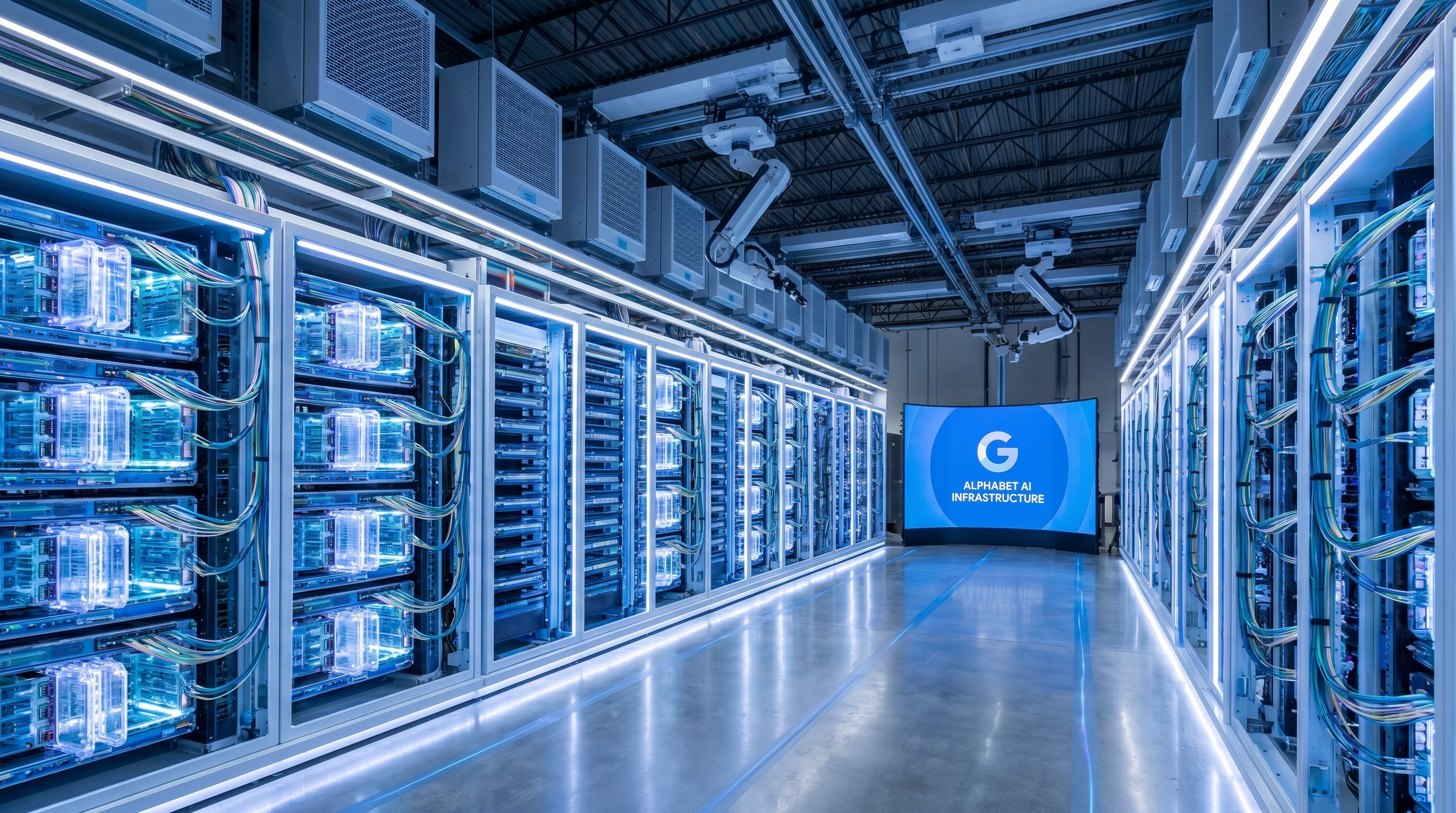
Google parent Alphabet announced an $80 billion equity capital raise on June 1 — the largest single financing in the company's history — with Berkshire Hathaway investing $10 billion in a direct private placement. The raise signals that the AI infrastructure arms race is attracting even the most traditionally conservative institutional investors.
Alphabet set its full-year 2026 capital expenditure guidance at $180-$190 billion, a figure that would rank it among the largest infrastructure investors on the planet. The company said AI solution demand currently exceeds available supply, requiring a rapid expansion of its custom TPU chip production and global data center footprint.
How the $80 Billion is Structured
The capital raise is divided into three components. Berkshire Hathaway is making a $10 billion private placement — $5 billion in Class A common stock at $351.81 per share and $5 billion in Class C capital stock at $348.20 per share. An additional $40 billion will be raised through an at-the-market offering in the third quarter of 2026. The remaining $30 billion will come from a combination of convertible preferred and common stock.
Berkshire had quietly begun building its Alphabet stake in Q3 2025, according to the announcement. The $10 billion investment represents a significant allocation even by Berkshire's scale, and CEO Greg Abel was noted as involved in overseeing the transaction.
The Berkshire Signal
Warren Buffett's firm has historically avoided capital-intensive technology businesses, preferring asset-light models with predictable cash flows. Its entry into Alphabet at this scale — tied explicitly to AI infrastructure buildout — suggests a view that the compute layer of the AI industry has the durability and pricing power of traditional infrastructure assets like railroads or utilities.
The raise puts Alphabet in the same league as Microsoft and Amazon, both of which have disclosed $150 billion-plus annual capital expenditure programs tied to AI infrastructure. Between these three companies alone, more than $500 billion in annual capex is now directed at AI data centers, cooling systems, power infrastructure, and custom silicon.
Implications for the AI Market
The scale of investment makes it increasingly difficult for smaller players to compete at the infrastructure level. For enterprise customers, it signals a continued build-out of capacity that should eventually bring down inference costs and improve model availability. For regulators, it raises questions about concentration: three companies controlling the physical substrate of global AI is a dynamic that antitrust officials in both the US and EU are watching closely.
Alphabet's 2027 capex is expected to rise further, the company said, without providing a specific figure. The combination of equity financing at scale and rising capex guidance suggests Alphabet is making a structural bet that AI infrastructure economics will remain favorable for at least a decade.
Originally reported by Alphabet Inc.. Read the original article for additional details.
View original source