Apple rebuilt Siri from the ground up at WWDC 2026 — and it runs on Google Gemini
A New Siri, Powered by Google
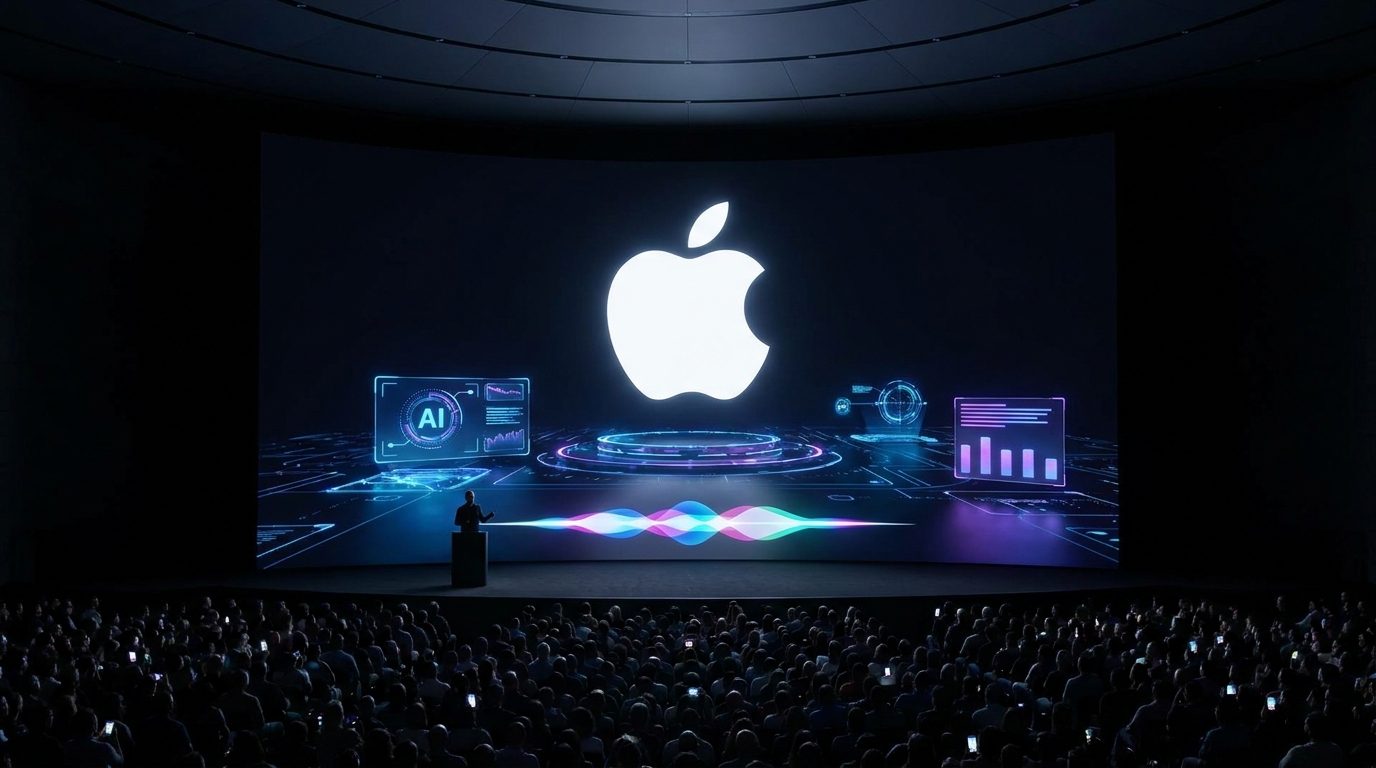
Apple opened WWDC 2026 today with its most significant software announcement in years: a complete rebuild of Siri, now running on a custom 1.2-trillion-parameter model developed in partnership with Google. The Gemini-based Siri is the centerpiece of Apple Intelligence's next generation — replacing the assistant that Apple has struggled to modernize since its 2011 debut.
The partnership, first disclosed in January 2026 and reportedly valued at around $1 billion per year, gives Apple access to Gemini's underlying capabilities while letting it tune the model around privacy, on-device processing, and deep integration with Apple's own apps. The result is a Siri that can hold multi-turn conversations, reason over personal context from Mail, Messages, Calendar, and Notes, and take actions across the operating system.
What the New Siri Actually Does
The rebuilt assistant is a meaningful step beyond what "Siri" has meant for the past decade. Key capabilities:
- Chatbot interface — a standalone Siri app with an iMessage-style thread view, synced across all devices
- Dynamic Island integration — Siri now lives in the Dynamic Island with a redesigned presence and new animations
- On-screen awareness — the assistant can read and interact with content currently on your display, enabling in-app actions without switching context
- Personal context — cross-app access to first-party data (with user permission) for answers like "what was the restaurant my sister mentioned last week?"
- Web search, image generation, file analysis — capabilities that were previously outsourced to third-party integrations are now built in
Siri Extensions: Choose Your Own AI
Perhaps the most surprising announcement was the Extensions system — an App Store section that lets users set any supported AI model as their default for Apple Intelligence features. At launch, supported options include ChatGPT, Gemini, and Anthropic's Claude. The Extensions framework applies to Writing Tools, Image Playground, and the core Siri interface itself.
This is a notable strategic concession from Apple, which has historically kept its software stack tightly controlled. Opening the default AI slot to competitors suggests Apple has prioritized capability and user trust over lock-in — at least for now.
iOS 27: The Snow Leopard Year
iOS 27 lands as a "stability-first" release, echoing the approach Apple took with Mac OS X 10.6 Snow Leopard in 2009 — refining the foundation rather than piling on new features. The headline additions:
- AI Photos editing — three new tools: Extend (generate content beyond image edges), Enhance (automatic exposure and color), and Reframe (intelligent crop and composition)
- Customizable Camera app — users can rearrange controls and enable Visual Intelligence directly via a Siri mode in the viewfinder
- Safari AI tab grouping — the browser automatically organizes open tabs by topic using on-device inference
- Grammar tools in the keyboard — inline suggestions and phrasing improvements across all text fields, functioning like a native Grammarly layer
- Wallet QR import — create digital passes from physical or screenshot QR codes without a third-party app
Developer Beta 1 is available today. Public beta follows in July; the stable release ships alongside new iPhone hardware in September. iPhone 11 is dropped from iOS 27 support, making iPhone 12 the new minimum.
Tim Cook's Final WWDC
Today's keynote is widely expected to be Cook's last as Apple CEO. He is scheduled to hand over the role to John Ternus, Apple's Senior Vice President of Hardware Engineering, on September 1, 2026. Cook has led Apple since Steve Jobs' death in 2011, overseeing the launch of the Apple Watch, AirPods, Apple Silicon, and the company's expansion past a $3 trillion market cap.
Ternus, who led the transition to Apple Silicon M-series chips, will inherit a company that has now staked its next decade on artificial intelligence — with today's Siri announcement as the clearest signal of that direction yet.
What Developers Should Know
The Extensions API opens new ground for AI-adjacent apps looking to integrate directly with Siri and Apple Intelligence. The WWDC session schedule includes dedicated tracks for Siri Extensions, the new Apple Intelligence writing APIs, and Visual Intelligence integration. For teams already building on-device ML features, iOS 27's stability focus means fewer surprise API changes in this cycle — a welcome change from the churn of the past two years.
Originally reported by Apple WWDC 2026. Read the original article for additional details.
View original source