China Forced Meta to Unwind Its $2 Billion Manus AI Deal — and Now the Founders Need $1B to Buy It Back
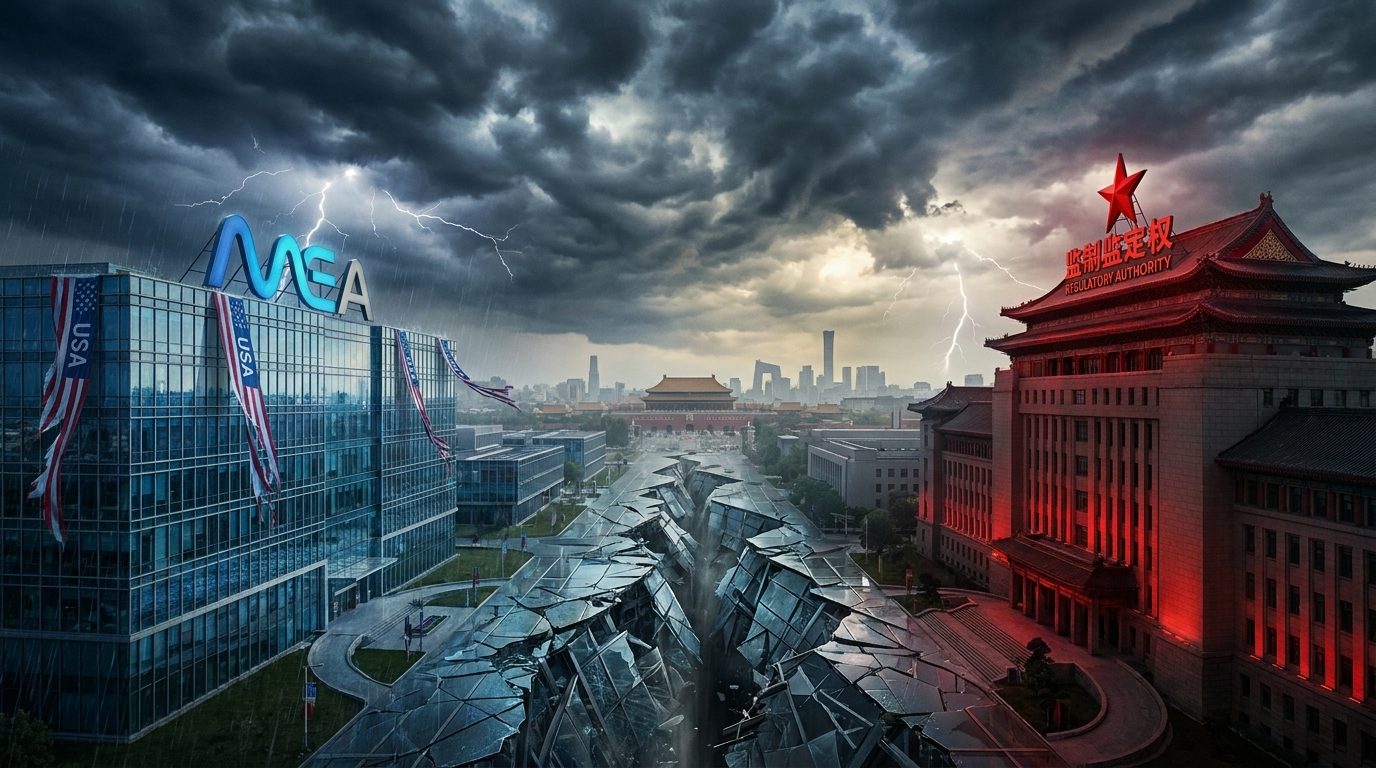
Meta's $2 billion acquisition of Manus AI — the agentic AI startup that briefly became the most-discussed tool in AI circles after its viral demo in early 2025 — is being unwound on orders from China's National Development and Reform Commission (NDRC). The Chinese regulator determined in April 2026 that the deal violated foreign investment and technology export rules, triggering a mandatory separation that is now in its operational phase. As of June 1, 2026, Manus staff have been blocked from Meta's internal data systems, and Meta employees can no longer use Manus tools for internal projects.
The forced divestiture is being watched closely in both the US and China as a test case for what Chinese regulatory authority over technology acquisitions actually means in practice — particularly when the acquired company has technically relocated outside China's jurisdiction.
How the Deal Fell Apart
Meta announced the acquisition of Manus AI in December 2025, paying $2 billion for the startup, which had attracted enormous attention for its autonomous AI agent capabilities and a waiting list reportedly in the millions. Manus had relocated its headquarters and key staff from China to Singapore in 2025, a move intended partly to reduce regulatory exposure. It didn't help.
The NDRC launched a probe almost immediately after the acquisition was announced, and by March 2026 the situation had escalated significantly: Manus's three co-founders — Xiao Hong, Ji Yichao, and Zhang Tao — were summoned to Beijing for questioning and reportedly restricted from leaving China. In April 2026, the NDRC formally ordered the deal unwound, citing concerns over Manus's links to China through technology and data, and the potential impact on China's "industrial security and development interests."
Meta responded by erecting a data firewall and instructing staff to "sunset" the Manus platform — migrating existing projects to Meta's own systems and discontinuing new work on Manus tools. The transition to full operational separation was completed by June 2026.
The Precedent Being Set
The most significant aspect of the NDRC's action is its jurisdictional reach. Manus had incorporated outside China, relocated key staff to Singapore, and structured the company to appear as a Singaporean entity at the time of the acquisition. The NDRC's determination that it could still regulate the deal — based on the founders' nationality, the technology's origins, and data ties to China — sets a precedent that Chinese-origin tech companies cannot simply relocate their way out of Beijing's oversight for the purposes of cross-border acquisition.
For US and European acquirers, this introduces a new due diligence requirement: whether the target company, regardless of its current incorporation or headquarters, has Chinese-origin founders, technology IP that originated in China, or data that flows through Chinese infrastructure. If any of these apply, the NDRC has now demonstrated it considers the deal within its purview.
The case inverts the more familiar pattern of US regulators blocking Chinese acquisitions of American technology companies on national security grounds (CFIUS reviews). Here it's China blocking an American acquisition of a nominally non-Chinese company.
What Manus's Founders Are Doing Now
With the Meta acquisition unwinding, Manus's co-founders are attempting to buy the company back at the original $2 billion valuation. According to reporting by The Next Web and the Straits Times, they are seeking approximately $1 billion in external investment, with the expectation of contributing their own funds to cover any remaining gap.
If the buyback succeeds, the plan is to reconstitute Manus as a Chinese joint venture with the new backers and pursue a Hong Kong IPO. The structure would acknowledge Chinese regulatory realities rather than attempting to work around them — a significant shift from the company's earlier Singapore-reincorporation strategy.
The $1 billion fundraising target implies Manus's founders and investors believe the company retains the value Meta originally paid for it, despite the regulatory disruption and the 18+ months of separation from Meta's infrastructure and distribution. Whether the broader investor community shares that view will be apparent once the fundraising process advances publicly.
The Broader Context
The Manus situation is part of a broader pattern of friction in cross-border AI deals involving Chinese-origin technology. US export controls imposed since October 2022 have progressively restricted what American companies can sell to China in semiconductors and AI systems. The NDRC's action on Manus is, in some respects, a reciprocal use of regulatory tools — demonstrating that China also has leverage over the flow of AI technology, not just the US.
For the AI startup ecosystem, the immediate lesson is about deal risk. Any startup with Chinese-origin technology, founders, or data connections that is considering a Western acquisition should expect NDRC scrutiny regardless of where it's incorporated. That friction will either deter some acquisitions outright or add a layer of regulatory process that extends timelines and creates uncertainty — neither of which is good for founders or acquirers trying to close deals quickly.
As reported by The Next Web and the Straits Times, the operational separation is complete; what remains is the financial unwinding, which is expected to proceed through Q3 2026.
Originally reported by The Next Web / Straits Times. Read the original article for additional details.
View original source