Ex-AWS CEO Adam Selipsky Launches $10B AI Infrastructure Company With KKR, Nvidia, and Kuwait's Sovereign Fund
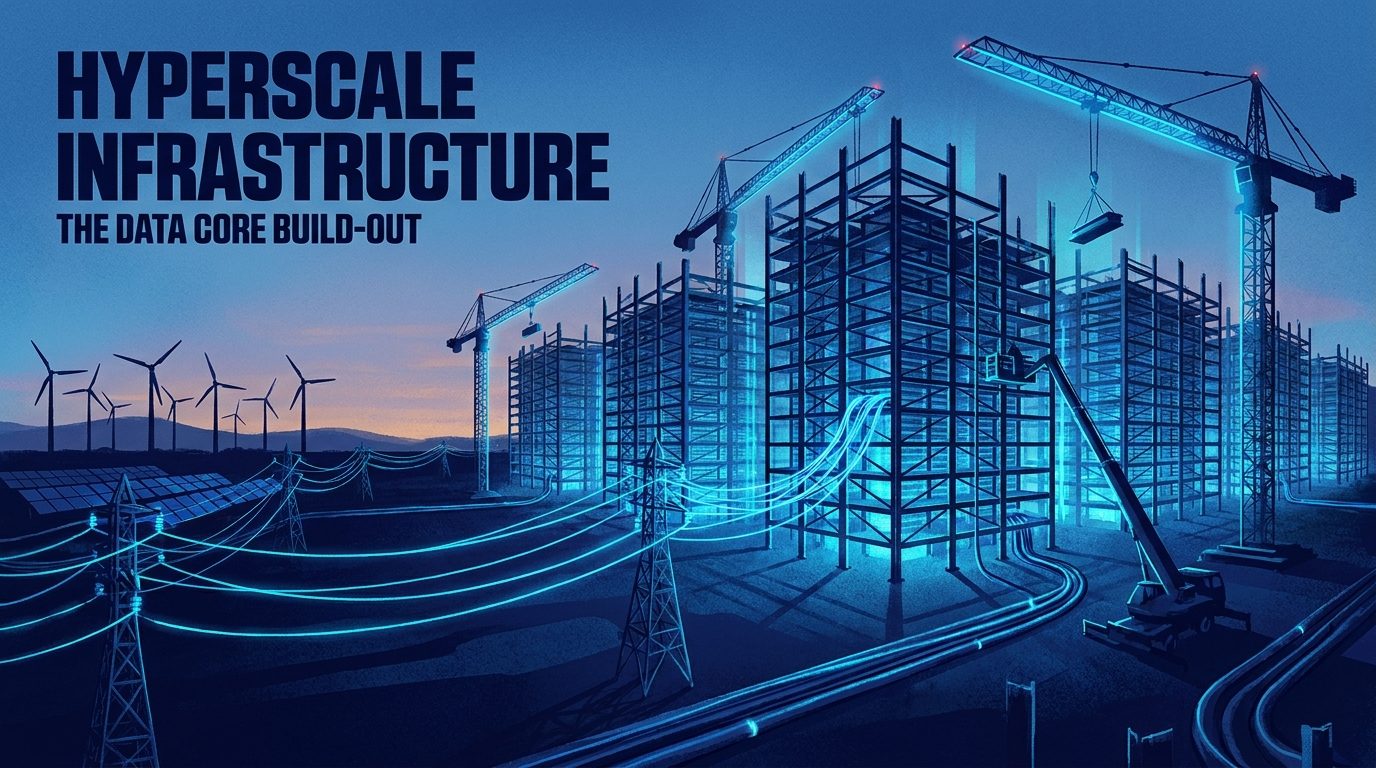
KKR launched Helix Digital Infrastructure today, a new company purpose-built to provide integrated infrastructure for AI hyperscalers — data centers, power generation, transmission, and fiber — under one entity. The company starts with over $10 billion in committed capital and is led by Adam Selipsky, the former CEO of Amazon Web Services, who left AWS in 2024 after a five-year run that included overseeing the platform through its peak growth years.
The founding investor and capital partner is KKR, whose infrastructure platform manages over $100 billion in assets. Nvidia is a cornerstone strategic partner, bringing its DSX (Data center Systems eXperience) AI factory-aligned infrastructure design and deployment expertise. Vistra, one of the largest integrated power generation companies in the US, is Helix's preferred power provider. The Kuwait Investment Authority, the sovereign wealth fund of Kuwait, is also a founding investor.
What the Company Actually Does
Helix is not a cloud provider, a chip company, or a colocation operator in the traditional sense. Its stated purpose is to be the infrastructure layer underneath all of them — the entity that handles the full stack of physical requirements that AI hyperscale computing demands but that existing market structures have made difficult to deliver at speed and scale.
That stack is expansive. Training and running frontier AI models requires not just data center space and compute, but reliable multi-gigawatt power supply (which increasingly means owning or contracting the generation capacity directly, not just buying grid power), high-capacity transmission infrastructure to move that power, and fiber connectivity with sufficient bandwidth and low latency to handle the inter-data-center traffic that large distributed training runs generate.
Most companies trying to build AI infrastructure have to assemble these pieces from separate vendors — negotiating power purchase agreements with utilities, leasing land, contracting with data center developers, buying network capacity. Selipsky's pitch for Helix is that this fragmentation is the core bottleneck, and that an entity with enough capital and the right partnerships can vertically integrate across all of it.
Why Selipsky and Why Now
Selipsky ran AWS from 2021 to 2024, taking over from Andy Jassy when Jassy became Amazon's CEO. His tenure covered the period when AI workloads transformed from a specialty use case into the dominant growth driver for cloud infrastructure — he watched firsthand how the infrastructure capacity constraint became the central problem for hyperscale AI deployment. AWS invested aggressively in custom silicon (Trainium, Inferentia), data center expansion, and power infrastructure during that period, and the playbook for what it takes was formed through those years of execution.
The timing of the Helix launch reflects a specific moment in the AI infrastructure build-out. Demand for AI compute has outpaced available supply for the past three years — lead times on GPU clusters, power connections, and data center space have all been measured in quarters, not weeks. Multiple hyperscalers have reported that power availability is their primary constraint on expansion. Building a company specifically designed to solve the integrated infrastructure problem, with $10 billion in committed capital and Nvidia's imprimatur on the hardware architecture, positions Helix to move faster than incumbent infrastructure providers who are building capacity incrementally.
The Nvidia Partnership
Nvidia's strategic partnership with Helix is notable because it signals Nvidia's willingness to co-develop infrastructure architecture with a dedicated company outside the major cloud providers. The DSX framework — Nvidia's reference design for AI factory infrastructure — provides Helix with validated designs for how to integrate Nvidia's hardware (GB300 NVL rack systems and their successors) into the data center environment at scale, including power density requirements, cooling approaches, and networking architecture.
For Nvidia, having a well-capitalized independent infrastructure operator deploying DSX-aligned facilities creates another major customer channel for its hardware that doesn't go through AWS, Microsoft Azure, or Google Cloud. For Helix, it provides a level of technical validation that would otherwise take years of in-house development to achieve.
The Power Dimension
The Vistra partnership is arguably the most operationally critical component. Vistra operates approximately 37 gigawatts of generating capacity across the US, including natural gas plants, nuclear plants (it owns the Comanche Peak nuclear facility in Texas), and a growing renewable portfolio. Having Vistra as preferred power provider means Helix can potentially structure long-term power purchase agreements with a single counterparty capable of guaranteeing reliable baseload power for data centers that cannot tolerate intermittent supply.
The data center industry's power constraint is not primarily about total megawatts available on the grid — it is about reliable, contracted baseload power at the right locations, with the transmission capacity to deliver it, at a price that makes the economics of AI compute work. Vistra's involvement suggests Helix is structuring the power supply side as a core product, not an afterthought.
The Broader Context
Helix is one of several large capital pools that have formed specifically to build AI infrastructure. Stargate (the OpenAI/SoftBank/Oracle joint venture) has committed $500 billion over four years. Blackstone's digital infrastructure unit, Blue Owl's AI infrastructure fund, and several sovereign wealth fund-backed vehicles are all moving in similar directions. What distinguishes Helix is the integration of power and connectivity alongside compute infrastructure under a single operating entity, and the specific combination of Selipsky's operational credibility with KKR's infrastructure capital and Nvidia's technical partnership.
Helix has not disclosed specific project locations, customer commitments, or a timeline for its first operational facilities. Given the lead times on large data center development — typically 24 to 48 months from site selection to first compute delivery — the facilities Helix funds and builds in 2026 will come online in the 2028–2030 window, which aligns with the expected continued scaling of frontier AI model training requirements.
Originally reported by GeekWire / BNN Bloomberg. Read the original article for additional details.
View original source