NEURA Robotics Closes $1.4 Billion Series C — the Largest Robotics Funding Round in History
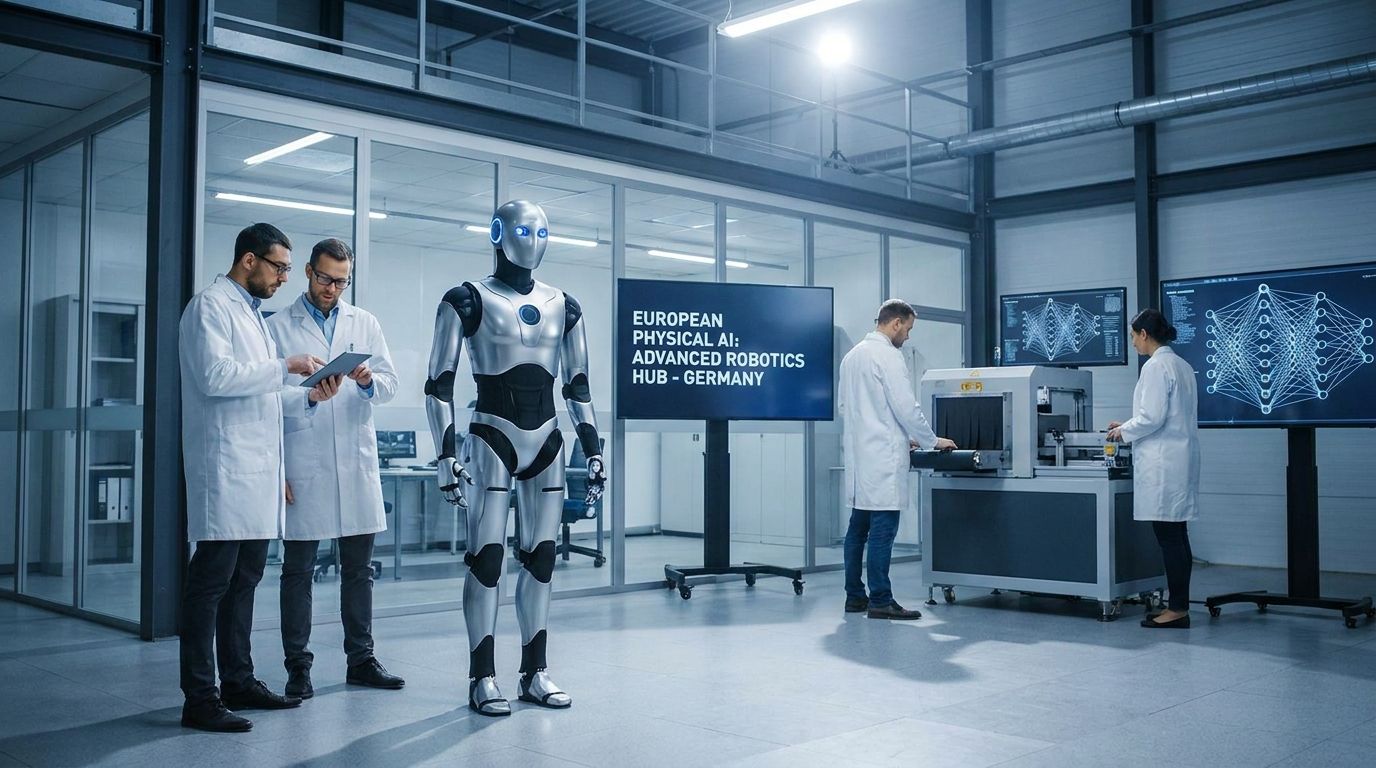
NEURA Robotics, a German cognitive robotics startup, has closed a Series C funding round of up to $1.4 billion — the largest single capital raise in the history of robotics. The round was led by Tether and joined by Amazon, NVIDIA, Qualcomm Technologies, Bosch, Schaeffler, the European Investment Bank, imec.xpand, Lingotto Horizon, and InterAlpen Partners, valuing the company at approximately $7 billion.
The investment arrives at a moment when physical AI — the integration of machine learning with robotic hardware operating in the real world — is attracting its most serious capital concentration yet. NEURA's round eclipses all prior single-round robotics investments and establishes the company, founded in 2019 in Metzingen, Germany, as Europe's most-funded robotics firm.
What NEURA Actually Builds
The company's product line runs from industrial cobots to full humanoids. Its MAiRA (Multi-Sensing Intelligent Robotic Assistant) cobot, in commercial deployment since 2021, integrates 3D vision, voice recognition, force-torque sensing, and AI-based object recognition for collaborative industrial tasks. It is developed and manufactured in Germany with TUV-certified safety architecture.
The more ambitious product is the 4NE-1 — pronounced "for anyone" — a third-generation humanoid standing 170 to 180 centimetres tall and weighing approximately 60 to 80 kilograms. The 4NE-1 can lift up to 100 kilograms using its legs and 10 kilograms with its hands, and integrates NVIDIA Thor silicon for on-device inference. It supports multi-language voice commands, gesture control, and emotion recognition. Large-scale shipments are planned for late 2026 at approximately 98,000 euros per unit.
The Neuraverse Infrastructure Play
Beyond individual robots, NEURA is building Neuraverse — an open Physical AI platform where deployed robots share operational experience, sensor data, and learned behaviours across a shared intelligence network. The concept is closer to a compute and data infrastructure business than a traditional robotics manufacturer: robots become both the product and the data-generating nodes that improve the platform.
NEURA Gyms are the physical training infrastructure for this network. The first, TUM RoboGym, is a 2,300-square-metre AI training facility at Munich Airport where robots accumulate real-world interaction data. Starting mid-2026, humanoid robots at NEURA Gyms will generate the training pipeline that feeds Neuraverse improvements globally. In April 2026, NEURA partnered with Amazon Web Services to support Neuraverse's worldwide expansion on AWS infrastructure.
What Amazon and NVIDIA Get
Amazon's participation is not purely financial. The company's logistics network — which already deploys more than 750,000 robots in fulfilment centres — is the obvious integration target for NEURA's humanoid hardware. Amazon has been public about its need for robots that can handle unstructured picking tasks that existing wheeled AMRs cannot manage. An equity stake in NEURA gives Amazon preferential access to the 4NE-1 pipeline as shipments begin.
NVIDIA's position is more structural. The 4NE-1 already runs NVIDIA Thor compute, and NVIDIA's investment extends beyond chip supply to an active stake in the Physical AI software stack. NEURA's Neuraverse represents exactly the kind of real-world robot training data that NVIDIA's Omniverse and Isaac robotics platforms require. The funding round effectively makes NVIDIA an infrastructure partner rather than just a component supplier.
Tether's lead position is the most unexpected element. The stablecoin issuer, which reported $13 billion in profits in 2024, has been deploying capital into technology infrastructure at scale. Its bet on NEURA is its largest known tech investment and reflects a strategy of using stablecoin treasury reserves to acquire stakes in physical computing infrastructure — previously Bitcoin mining, now robotics.
Scale Targets and the Real Unknowns
NEURA's stated target is millions of robots by 2030, supported by manufacturing expansion across Germany and India. The company reports an order backlog and strategic deployment pipeline exceeding $1 billion. The full $1.4 billion raise is contingent on NEURA meeting undisclosed performance milestones, meaning the headline figure is a ceiling rather than a confirmed close.
For context: the global humanoid robot market produced fewer than 10,000 units in total through 2025 across all manufacturers. A target of millions by 2030 requires manufacturing scale no robotics company has demonstrated. NEURA's funding gives it the capital to attempt it. Whether the Neuraverse data flywheel can produce robots reliable enough to deploy at that scale — in Amazon warehouses, on factory floors, in healthcare settings — is the question the next three years will answer.
Sources: The Robot Report, Sifted EU, TechFunding News, The Next Web
Originally reported by The Robot Report / Sifted EU. Read the original article for additional details.
View original source