Pentagon Clears Eight AI Giants for Classified Military Networks as Trump Signs NSPM-11
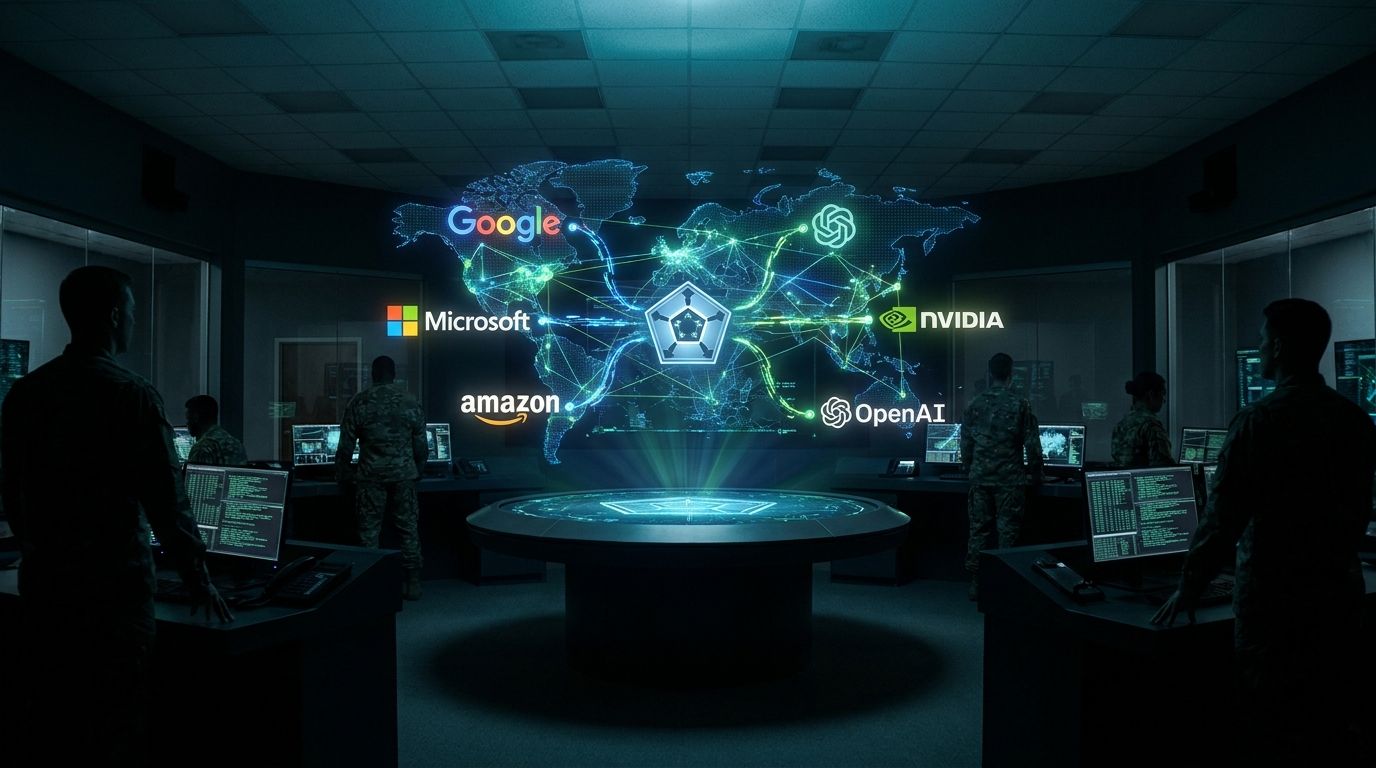
The United States military's most classified data networks just got a new set of authorized tenants. On May 1, 2026, the Pentagon announced agreements with eight leading technology companies to integrate their AI systems into the Department of Defense's Impact Level 6 (IL-6, Secret) and Impact Level 7 (IL-7, Top Secret/SCI) classified networks. The list reads like a who's who of the modern AI industry: Amazon Web Services, Google, Microsoft, OpenAI, SpaceX, NVIDIA, Reflection AI—an NVIDIA-backed startup—and Oracle, which was added later the same day to bring the total to eight.
## What Impact Level 6 and IL-7 Mean
For those outside defense circles, Impact Level 6 covers information classified as Secret—material that, if disclosed, could cause serious damage to national security. IL-7 covers Top Secret and Sensitive Compartmented Information (TS/SCI), the category reserved for intelligence sources, methods, and the most sensitive operational data.
Deploying commercial AI on these networks is not a trivial step. It requires extensive vetting, air-gapped or isolated infrastructure, and continuous monitoring. The fact that the Pentagon has moved forward with eight vendors simultaneously signals both urgency and a deliberate strategy to avoid lock-in on the most critical systems in the U.S. government.
## NSPM-11: The White House Mandate That Changes Everything
Just five weeks after the Pentagon's May 1 announcement, President Trump signed National Security Presidential Memorandum 11 (NSPM-11) on June 5, 2026. The directive goes further than the Pentagon's initial agreements: it mandates that **all U.S. defense and intelligence agencies** must diversify their AI contracts across multiple providers.
This is a direct policy response to years of concern within the defense establishment that over-reliance on any single commercial AI vendor—whether Microsoft's Azure, Google Cloud, or any other—creates a strategic vulnerability. NSPM-11 makes multi-vendor AI procurement not just a preference but a legal requirement.
Agencies have 120 days from the signing date to comply—meaning the overhaul deadline falls on **October 3, 2026**.
## Why These Eight Companies
The selection reflects both technical capability and security posture. AWS GovCloud and Microsoft Azure Government have long served as the backbones of classified federal computing. Google was added following years of negotiating its re-entry into defense work after controversies over Project Maven in 2018. OpenAI's inclusion—through a security-focused government offering—marks a significant escalation of the company's federal ambitions. SpaceX, already deeply embedded in DoD logistics through Starlink and launch services, adds AI to its defense portfolio. NVIDIA's presence, both directly and through Reflection AI, reflects the hardware reality that GPU-based inference underlies virtually every modern AI workload. Oracle rounds out the group as a long-established federal database and cloud provider.
## Industry Implications
For the AI industry, NSPM-11 and the Pentagon agreements represent a structural opportunity of enormous scale. The U.S. defense and intelligence budget dwarfs most commercial markets. But the 120-day mandate also creates acute pressure: agencies that have spent years consolidating on a single vendor must now rapidly architect multi-vendor AI workflows.
Expect a wave of compliance consulting, integration tooling, and government-focused AI product launches through the rest of 2026. The companies already authorized—especially those with existing IL-4/IL-5 footprints—are best positioned to move fast.
For the rest of the industry, NSPM-11 signals that Washington is treating AI infrastructure the same way it has long treated weapons systems: you do not bet national security on a single supplier.
## What Comes Next
The 120-day clock running from June 5 puts October 3, 2026 as the hard compliance deadline. Defense and intelligence agencies will need to demonstrate active AI deployments across multiple approved vendors by that date. The Pentagon's eight-vendor agreement is effectively the template—and it will almost certainly expand.
Whether smaller AI companies can meet the security clearance requirements to join the list remains an open question. But the direction of travel is clear: the U.S. government is building a diversified, competition-driven AI supply chain for national security, and it is moving fast.