US Closes China AI Chip Loophole: NVIDIA and AMD Hit by New Export Guidance
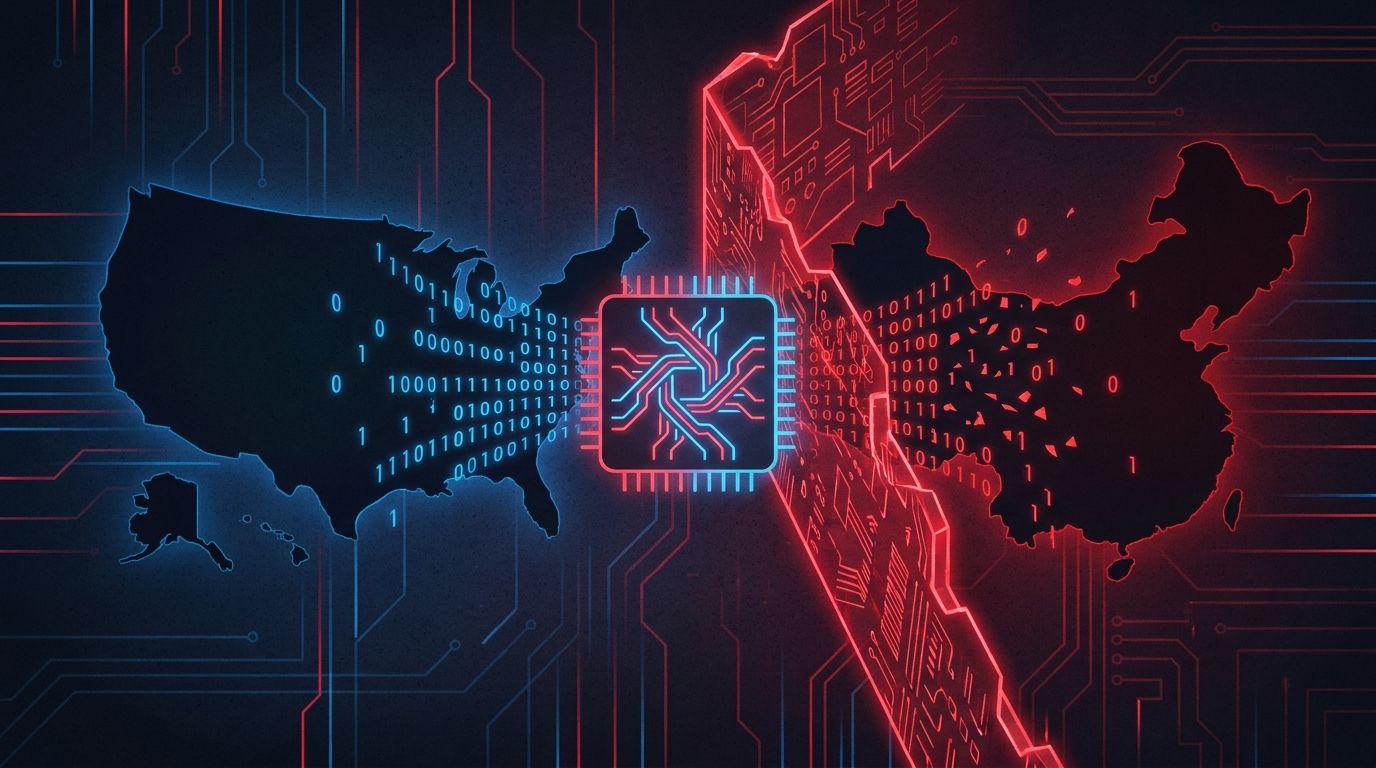
On May 31, 2026, the US Commerce Department moved to close a significant loophole that had allowed advanced AI chips from NVIDIA and AMD to reach Chinese companies through their overseas subsidiaries. The guidance clarifies that export license requirements in place since 2023 now explicitly apply to Chinese-headquartered companies regardless of where their subsidiary entities are physically located -- ending a workaround that had been quietly exploited for over a year.
How the Loophole Worked
The gap opened in May 2025 when the Trump administration opted not to enforce the Biden-era AI Diffusion rule. Without that framework in force, companies discovered they could route chip procurement through subsidiaries in countries not subject to direct China restrictions -- Malaysia became a frequently cited example. A Chinese AI company with a subsidiary in Kuala Lumpur could procure NVIDIA Blackwell chips through the Malaysian entity without triggering export license requirements. The new guidance eliminates that interpretation. Estimates suggest hundreds of thousands of advanced AI chips may have moved through this channel over the past year.
Which Chips Are Affected
The tightened controls explicitly cover NVIDIA's Rubin and Blackwell accelerator families and AMD's MI350x data center GPU -- the chips that matter for training and running frontier AI models. The guidance does not require that data centers cease using chips already installed; it applies to new exports going forward.
The Revenue Calculus
NVIDIA reported that over 20% of its fiscal year 2026 compute revenue was derived from China through intermediary channels. Jensen Huang has stated NVIDIA's direct market share in China has already fallen to nearly zero from prior restrictions -- but indirect flows through subsidiaries had been partially compensating. The closure of this channel removes another option in what has been a progressively shrinking set of pathways for Chinese customers seeking American AI silicon. NVIDIA stated the guidance does not alter their current obligations, suggesting the company had already accounted for this in its compliance posture.
The Strategic Consequence: Huawei Fills the Gap
Each tightening of US AI chip export controls produces the same downstream effect: it accelerates China's domestic AI chip industry. Huawei is projected to capture 62% of China's domestic AI accelerator market in 2026. The broader direction is moving from general-purpose GPUs toward custom ASICs designed for specific model architectures -- reducing the dependency on the general-purpose GPU ecosystem that US export controls are designed to constrain.
What This Means for Enterprises Outside China
For companies headquartered outside the US with Chinese beneficial ownership or operational ties, the clarification reinforces a consistent message: Chinese-headquartered entities are treated as Chinese for export control purposes regardless of where their subsidiaries operate. Legal counsel for semiconductor procurement and data center investment should review subsidiary structures in light of the updated guidance. The Commerce Department has signaled active enforcement, not just paper clarification.
Originally reported by Financial Express / Commerce Department. Read the original article for additional details.
View original source