Microsoft's Majorana 2 chip has qubits that last 20 seconds — and a scalable quantum computer by 2029
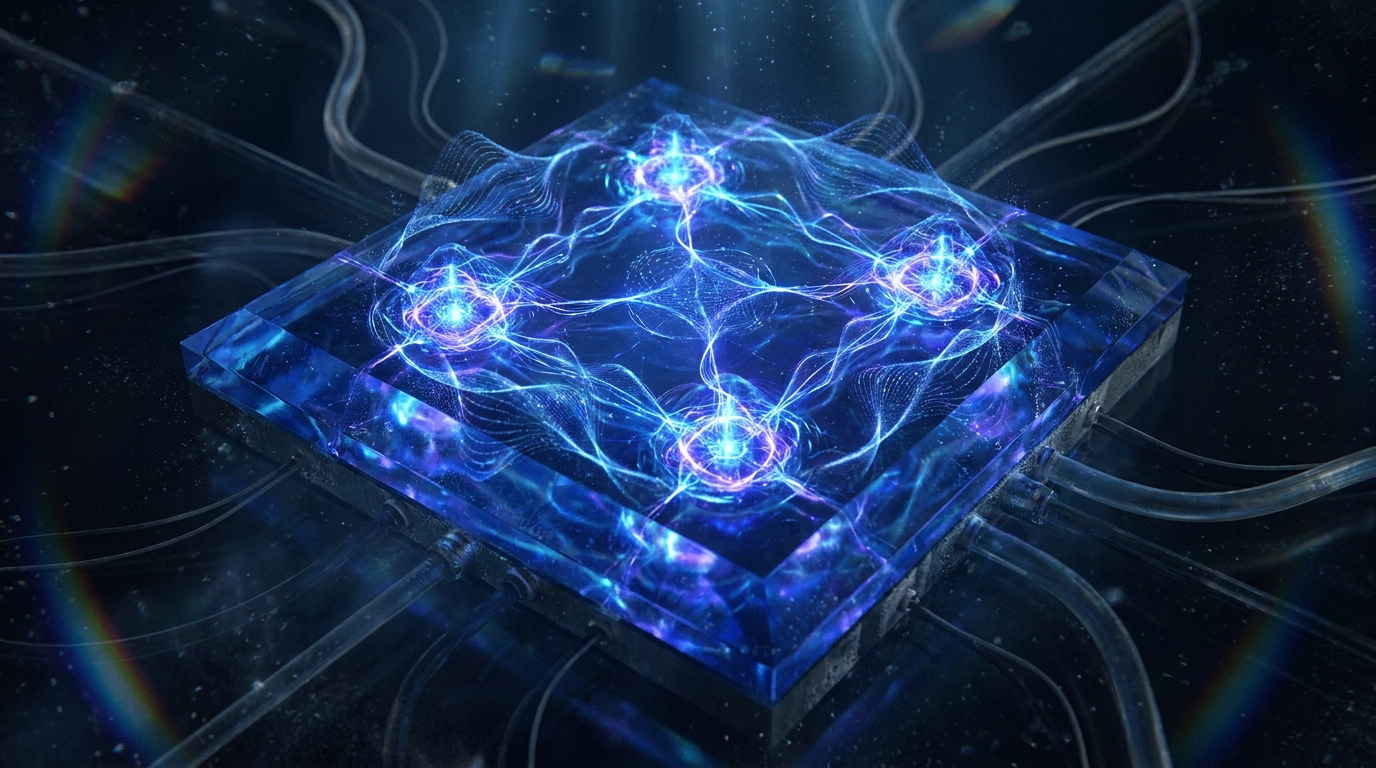
Microsoft unveiled Majorana 2 at Build 2026 in San Francisco — its second topological quantum computing chip, and a significant step forward in a bet the company has been making for over a decade. The qubits in Majorana 2 have a mean lifetime of 20 seconds, with some lasting up to one minute. That number matters enormously in quantum computing, where the fragility of qubit coherence has historically been the central obstacle to building systems that can do useful work.
For comparison: conventional superconducting qubits, the approach used by IBM and Google, typically maintain coherence for hundreds of microseconds to single-digit milliseconds. Majorana 1, Microsoft's first topological chip announced in February 2025, represented a proof-of-concept that topological qubits could be manufactured. Majorana 2 represents what CEO Satya Nadella described at Build as "the beginning of the engineering scale" — not just proving the physics, but demonstrating the fabrication improvements needed to build reliable qubits at volume.
What makes topological qubits different
Conventional qubit designs encode quantum information in the state of a single physical object — a superconducting circuit, a trapped ion, or a photon — which makes them inherently sensitive to environmental noise. A stray electromagnetic field, a vibration, or a cosmic ray can collapse the quantum state and cause an error.
Topological qubits encode information differently. Rather than a single physical object, topological qubits store quantum information in the global properties of a physical system — specifically, in the configuration of exotic quasiparticles called Majorana fermions that emerge at the boundaries of certain superconductor-semiconductor interfaces. Because the information is encoded in a topological property rather than a local state, it's inherently more resistant to local perturbations. Environmental noise has to disturb the entire global topology of the system to cause an error, not just perturb a single particle.
This theoretical protection has been the appeal of topological qubits since the approach was first proposed. The challenge has been demonstrating that it works in practice — that Majorana fermions can actually be created, controlled, and read in manufactured devices. Majorana 1 provided the first experimental validation. Majorana 2 significantly improves the qubit lifetime, which is the metric that most directly determines whether topological qubits can deliver on their theoretical promise.
The new materials stack
The key changes in Majorana 2 are materials-level. The previous approach used aluminum as the superconductor in contact with indium arsenide (InAs) semiconductor. Majorana 2 replaces aluminum with lead as the superconductor and adds indium arsenide antimonide (InAsSb) alongside indium arsenide in the semiconductor active region.
Lead has a significantly larger superconducting gap than aluminum — the energy barrier that protects the superconducting state from thermal disruption. A larger gap means greater stability at operating temperatures and more robustness against the kinds of thermal and electromagnetic fluctuations that cause errors. The indium arsenide antimonide layer modifies the band structure of the semiconductor-superconductor interface in ways that create a more stable topological phase — the regime in which Majorana fermions form and persist.
These material improvements were identified and optimized with the help of Microsoft Discovery, the company's agentic AI platform for scientific research (announced at Build 2026 as generally available). Microsoft is running a feedback loop where AI systems help design experiments, analyze results, and propose material modifications — then the fabrication team implements those proposals and the AI analyzes the outcomes. The Majorana 2 materials stack is partly a product of that human-AI collaboration in materials science.
Timeline: 2029 instead of 2033
The most commercially significant announcement in the Majorana 2 unveiling is the timeline revision. Microsoft had previously projected a "utility-scale" quantum computer — one capable of solving practical problems beyond classical computers' reach — by approximately 2033. That timeline has been moved to 2029, a four-year acceleration.
Microsoft's vision for what "scalable quantum" means is specific: a single chip containing over one million qubits. Current approaches to quantum scaling — including IBM's modular multi-chip architecture targeting hundreds of logical qubits by the late 2020s — involve connecting multiple smaller processors. Microsoft believes the topological approach's qubit stability and smaller physical footprint enable integration of far more qubits on a single chip, eventually reaching the million-qubit density needed for fault-tolerant computation without modular complexity.
The 2029 target is ambitious. It requires not just maintaining the Majorana 2 improvements at scale but also solving qubit control at densities far beyond current demonstrations, implementing quantum error correction efficiently, and integrating classical control electronics with the cryogenic quantum hardware. Each of these is a substantial engineering challenge.
How Majorana 2 compares to the field
The quantum computing landscape in 2026 has several credible approaches in parallel, each with different trade-offs:
IBM's roadmap targets 100,000 physical qubits by 2033, using superconducting transmon qubits in modular connected processors. IBM's near-term advantage is that its hardware exists at scale today — the company has over 100 quantum systems available via IBM Quantum cloud. The limitation is that superconducting qubits' shorter coherence times require more overhead for quantum error correction.
Google's quantum AI team demonstrated quantum supremacy in 2019 and has continued scaling superconducting qubit arrays. Google's 2024 Willow chip demonstrated quantum error correction below the threshold — meaning more qubits improving rather than worsening error rates — a landmark result. Google's approach and Microsoft's are similar in substrate but differ in qubit design philosophy.
IonQ, Quantinuum, and others use trapped-ion qubits, which naturally have longer coherence times than superconducting qubits and very high gate fidelity. The limitations are operational speed and scaling — trapped-ion systems are slow compared to superconducting systems, and building large arrays of trapped ions is mechanically complex.
Microsoft's topological approach, if the qubit lifetime and stability improvements demonstrated in Majorana 2 scale to larger systems, offers a potential path to the qubit counts needed for fault-tolerant computation with less overhead than error-correction-heavy approaches. The "if" is doing significant work in that sentence — Majorana 2 is a chip with a small number of demonstrable topological qubits, not a system running quantum algorithms. But the qubit lifetime metric is compelling enough that the approach deserves to be taken seriously alongside the more established alternatives.
What 2029 would actually mean
A fault-tolerant quantum computer with practical utility by 2029 would reshape multiple industries. Drug discovery and materials science are the most frequently cited applications: quantum simulation of molecular interactions could design drugs and novel materials that classical computers cannot model accurately. Cryptography is the other major application — quantum computers can break RSA and elliptic curve cryptography at sufficient scale, which is why the NIST post-quantum cryptography standards finalized in 2024 exist.
The 2029 timeline should be read as an ambition, not a guarantee. Quantum computing timelines have historically slipped. But Majorana 2's materials improvements and the 20-second qubit lifetime are experimentally verified results, not projections — and that foundation is meaningfully better than where the topological approach stood 18 months ago.
Sources: Microsoft News; Tom's Hardware; The Next Web
Originally reported by Microsoft News. Read the original article for additional details.
View original source