L'IA sur l'appareil est desormais suffisamment performante pour avoir un impact sur la vie privee : ce qu'elle protege reellement
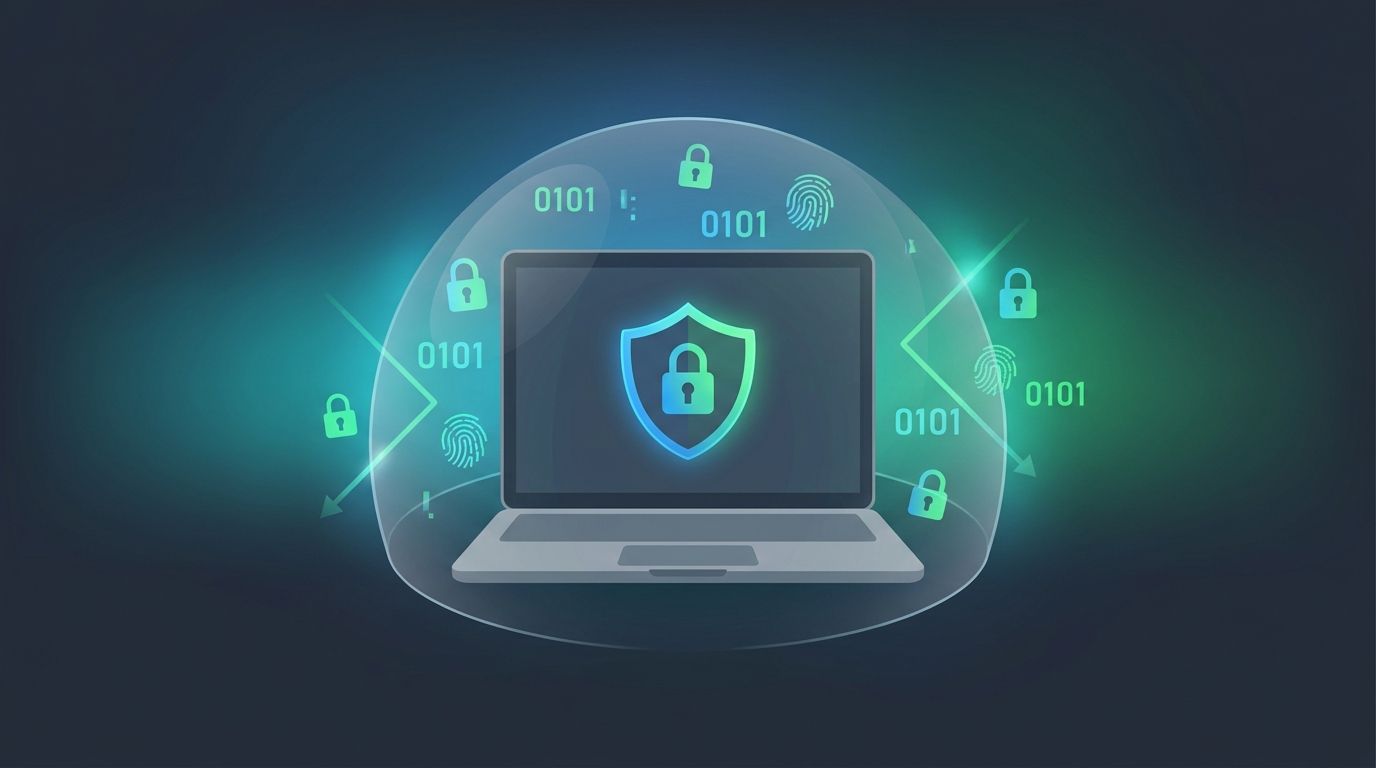
Every major AI assistant announced in the past three years has made the same implicit bargain with its users: send your data to our servers, get intelligence in return. Your medical questions, your financial anxieties, your relationship problems, your business strategies -- all of it traveling to data centers operated by companies with terms of service that few users read carefully. In 2026, a meaningful alternative is emerging, not from a regulatory mandate but from a hardware reality: the devices in people's pockets and on their desks are now powerful enough to run capable AI models locally, and the implications for privacy are substantial.
What On-Device Inference Actually Means
On-device AI inference means that when you ask an AI model a question, the computation happens on your device's processor -- not on a remote server. The model weights live on your device's storage. The input never leaves your hardware. The output is generated locally. No API call goes out over the network, no server log records your query, no third-party processes your data under terms you agreed to without reading.
This was impractical for capable models until recently. Running a language model that produces genuinely useful outputs requires significant memory and compute. The hardware that made this possible has arrived in 2026: Apple's M-series silicon and Neural Engine, NVIDIA's RTX Spark (announced at Computex 2026 with 128GB unified memory and 1 petaflop of AI performance), and the NPUs now standard in flagship smartphones from Apple, Samsung, and Qualcomm. Alongside the hardware, a new generation of efficient models -- Llama 3.2, Phi-4 Mini, Gemma 3 -- has been specifically optimized to run well on consumer hardware with quantization techniques that reduce memory requirements without catastrophic quality loss.
What On-Device AI Actually Protects
The privacy benefits of local inference are real but require careful scoping. When computation stays on-device, several specific threats are meaningfully reduced. Data breach risk at the AI provider disappears: there is no server-side store of your queries to be compromised. Training data harvesting without consent -- a practice that has attracted regulatory scrutiny across multiple jurisdictions -- is not possible for data that never left your device. Cross-border data transfer restrictions, currently a significant compliance burden for organizations in regulated industries, do not apply to computation that never crosses a border. For sensitive professional use cases -- legal research, medical consultation, financial analysis -- these are not theoretical concerns. They are the barriers that have prevented many organizations from adopting AI tools at all.
The limits of this protection are equally important to understand. On-device inference does not protect you from the AI model itself having been trained on problematic data. It does not prevent the application wrapping the model from exfiltrating data through telemetry, crash reporting, or other channels. Device backups that sync to cloud storage can capture local model outputs. App permissions on mobile platforms are frequently over-broad. The threat model that on-device inference addresses is specifically the server-side processing and logging of your queries -- a real and significant threat, but not the only one.
The Platform Moves in 2026
Apple has made on-device AI a centerpiece of its 2026 platform strategy. According to reports ahead of WWDC 2026, Apple plans to position local inference as its primary differentiator against cloud-based AI services -- framing privacy not as a compliance feature but as a product feature that its hardware uniquely enables. The combination of Apple Silicon efficiency, Secure Enclave isolation, and the tight control Apple maintains over the hardware-software stack gives it genuine structural advantages for private local AI that Android and Windows architectures struggle to match.
On Windows, NVIDIA's RTX Spark and Microsoft's OpenShell runtime are enabling a local AI agent layer. The architecture is different from Apple's -- more open, more configurable, and for technically sophisticated users, more controllable -- but also more complex to audit. A Windows user running a local language model through Ollama has more transparency into what the model is doing and where data flows than an iPhone user relying on Apple's system-level privacy claims -- but also more responsibility for ensuring that transparency translates into actual protection.
The Regulatory Push Is Aligned
Privacy regulations in 2026 are broadly favorable to the shift toward local inference. The EU AI Act, now in force, mandates transparency about when AI processes personal data. Colorado's AI Act, effective June 30, 2026, requires documented risk management for high-risk AI systems handling personal data. The US Department of Justice's bulk data transfer rule restricts transfers of sensitive personal data to countries of concern. Each of these creates compliance pressure that on-device processing elegantly sidesteps -- not by gaming the rules but by genuinely removing the data flows they are designed to regulate.
The Trade-Off That Remains
Local inference is not free. The largest and most capable models -- the ones that produce the most sophisticated outputs -- still require server-side computation. No consumer device today runs a 70-billion-parameter model at useful speeds. For tasks where the quality ceiling of a 7-billion-parameter local model is sufficient -- summarizing a document, drafting a reply, answering factual questions within a known domain -- local inference is a credible full alternative to cloud AI. For tasks requiring frontier model capability -- complex reasoning, nuanced judgment, cutting-edge code generation -- the data will still need to leave the device, and users will face the familiar trade-off between capability and privacy.
The trajectory, however, is clear. Local model capability improves every year as both hardware and optimization techniques advance. The threshold at which local inference becomes sufficient for a given task moves steadily downward. The organizations and individuals who benefit most from the privacy of local inference are not waiting for perfection -- they are deploying what is available now for their most sensitive use cases and accepting cloud AI's trade-off for tasks where the stakes are lower.