Smart Glasses Found Their Market in 2025. In 2026, Everyone Wants In — Including Google
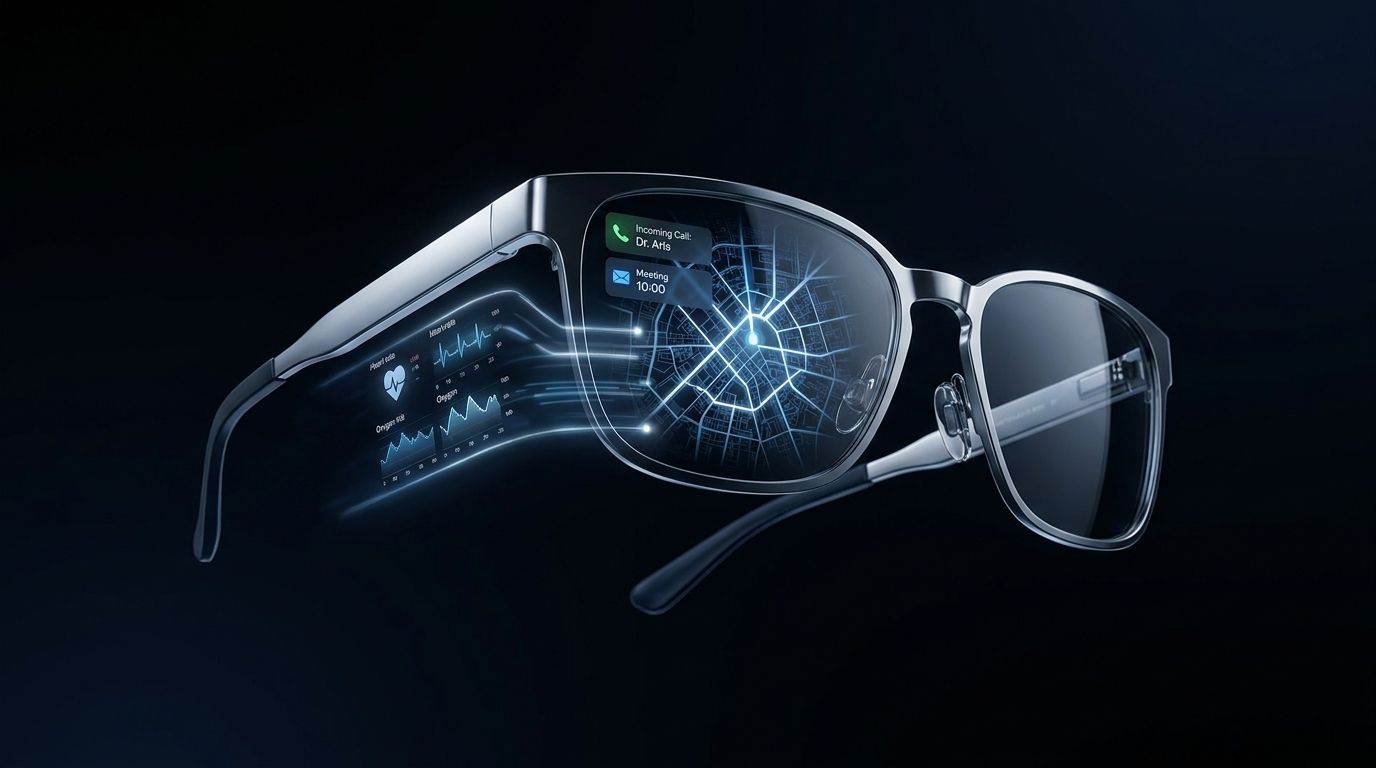
The smart glasses category has a graveyard. Google Glass launched to considerable fanfare in 2013, acquired the nickname "Glassholes," and retreated to enterprise applications by 2015. Intel's Vaunt project was cancelled before launch in 2018. Snap's Spectacles have existed in four generations without ever selling in meaningful volume. The category's history made it easy to be sceptical when Meta shipped Ray-Ban smart glasses in 2023 — another stylish-but-limited wearable, the thinking went, for early adopters who'd forget about it in six months.
That didn't happen. Meta sold more than 4 million Ray-Ban smart glasses through 2024, and in early 2025, when the company added a small LED display in the lens corner and upgraded the Llama-3-based AI to handle real-time visual questions, monthly active usage jumped significantly. By late 2025, Meta was the undisputed leader in a category it had bet correctly on, and the rest of the industry was catching up fast.
What the Ray-Ban glasses actually do well
The Ray-Ban smart glasses' success rests on a design decision that turned out to be correct: don't try to be a display device. The glasses have cameras (two in current hardware), microphones, open-ear speakers, and Bluetooth — but no lens display, no AR overlay, no heads-up notification layer. They're sunglasses or opticals with a persistent AI assistant that can see what you see and hear what you say.
The use cases that drive retention: asking what something in your visual field is ("what type of plant is this?"), real-time translation of text in other languages, hands-free photo and video capture with "Hey Meta, take a photo," navigation via audio turn-by-turn directions, and persistent audio without earbuds blocking ambient sound. None of these are transformative on paper. Together, they make a device that comes with you because it doesn't feel like wearing a device.
The display-equipped model added in late 2024 uses a tiny LED that shows caller ID, navigation arrows, and notification counts in the corner of one lens — subtle enough that bystanders rarely notice it. It's not AR in any meaningful sense, but it's enough to make the glasses more self-contained for the most common interruptions a phone would otherwise handle.
Android XR and Google's return to glasses
Google announced Android XR in late 2024 and began shipping a developer preview version of Android XR glasses in Q1 2026 through a partnership with Gentle Monster and Warby Parker. The Android XR glasses are powered by a Snapdragon AR chipset, run Android XR (a variant of Android 16 optimised for wearables), and use Gemini as their AI layer.
The differentiation relative to Meta is primarily in AI depth: Gemini integration allows the glasses to pull context from your Google account — calendar, Gmail, Maps — in ways Meta's closed ecosystem cannot. A demo shown at Google I/O 2026 demonstrated the glasses proactively surfacing a flight confirmation from Gmail as the user drove to the airport and reading out gate change notifications without being asked. The glasses also support real-time translation of spoken language with a transcript visible in the lens corner, a feature particularly relevant for travel.
The initial price is $499, a premium over Meta's $299 Ray-Ban hardware. Consumer availability outside the developer program is expected in Q3 2026.
Samsung, Snap, and the field
Samsung announced Galaxy Glasses at MWC 2026 in February, targeting a Q4 2026 launch. The hardware is co-developed with Gentle Monster — the same luxury eyewear brand Google is working with — and will run One UI for Glasses, an overlay on Android XR. Samsung's pitch leans heavily on Galaxy ecosystem integration: seeing a notification while cooking, using the glasses as a Bluetooth relay for Galaxy Watch health data, hands-free Galaxy AI queries.
Snap launched Spectacles 5 in April 2026 with a notable specification difference: the first major consumer smart glasses with a colour waveguide AR display. The AR overlay is narrow — roughly 30 degrees field of view — but it renders text, navigation arrows, and simple graphics in colour directly in the user's line of sight rather than in a corner LED. The $799 price point and three-hour battery life position it as a prosumer device rather than an everyday glasses replacement. Early reviews have praised the display but flagged the battery and heat as real limitations.
The privacy question nobody has answered
Every smart glasses product ships with a persistent camera. In the case of Meta Ray-Ban, that camera is pointed at whatever the wearer is looking at, all the time, and can capture photos and video on voice command without any visible indication to bystanders that recording is occurring. The LED privacy light is present but dim enough that most people in a normal social setting don't notice it.
The privacy framework has not caught up with the technology. In most jurisdictions, recording in public is legal. In workplaces, medical facilities, and schools, the situation is more complex. Meta and Google have both published usage policies, but enforcement relies entirely on user compliance. There is no technical mechanism that prevents a user from disabling the privacy indicator, capturing extended video of bystanders, or feeding that footage to a face recognition model.
This is not hypothetical concern. Harvard students demonstrated in 2024 that a Meta Ray-Ban camera paired with a face recognition model could identify strangers in public and retrieve their personal information within seconds. Neither Meta's hardware nor Google's Android XR has a technical response to this capability. The question of how society wants to regulate persistent cameras on faces in public spaces will be resolved by lawmakers and courts, not by product teams. Until it is, smart glasses sit in an uncomfortable ethical grey area that their commercial success will only expand.
Where the category goes next
The roadmap from lightweight AI glasses toward genuine AR is constrained by optics and battery physics that are not close to being solved. Colour waveguide displays with a wide field of view, high brightness in outdoor conditions, and adequate battery life do not exist in a form that fits normal-looking spectacle frames. The leading estimates from optics researchers put that capability 5 to 8 years away.
What is achievable in the near term: better AI integration, more capable on-device processing, longer battery life, and incremental display improvements. The glasses you can buy in 2026 are not science fiction AR — they're useful, occasionally awkward, frequently interesting assistants you wear on your face. That's a real product category, and it's growing. Where it lands when the display technology catches up is the more interesting question.