AI drug discovery moved from hype to clinical pipeline — here's what's actually in trials
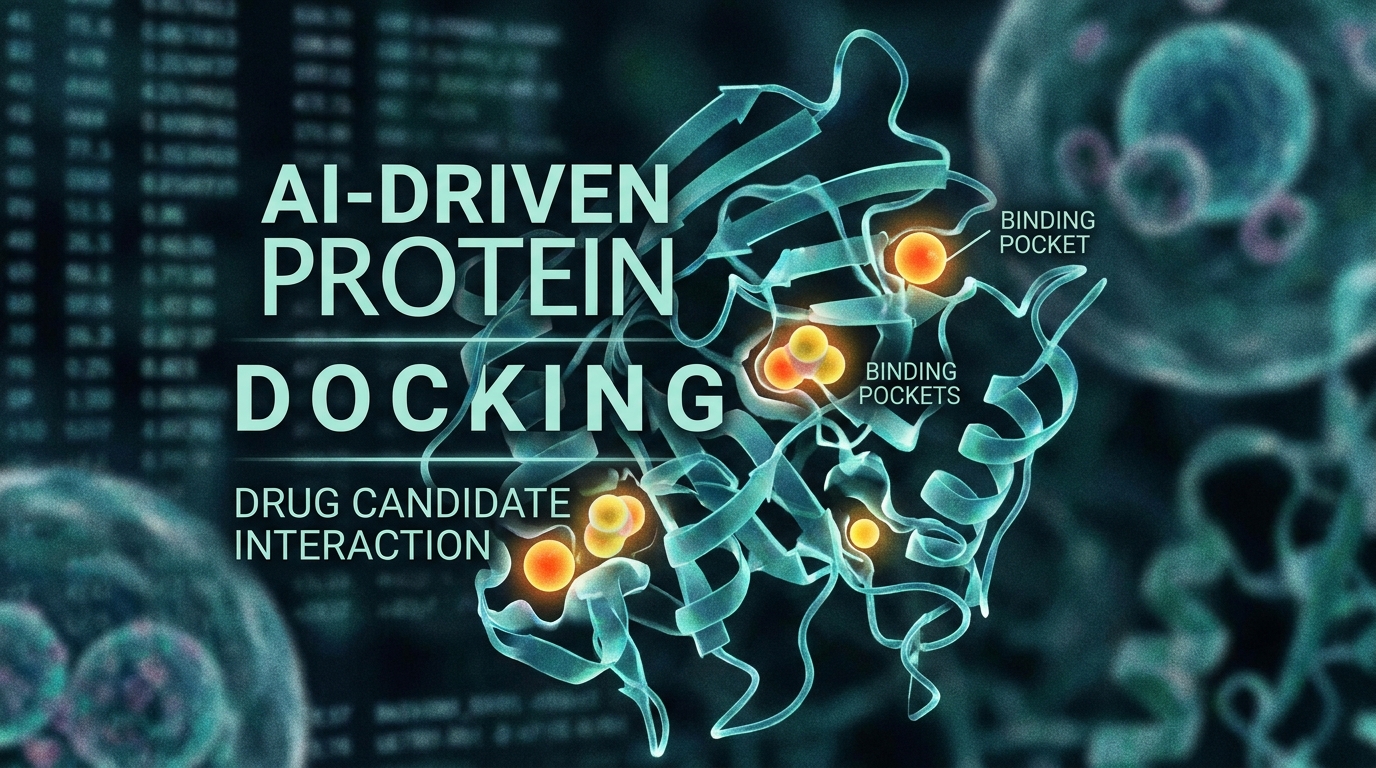
The pitch for AI in drug discovery has been running for years: AI will find new targets, design novel molecules, and compress timelines that historically stretched decades. In 2026, the proof of concept phase is genuinely over. Over 200 AI-designed compounds are in clinical testing, the FDA has established a dedicated accelerated pathway for AI-discovered drugs, and the most advanced AI-originated molecule has cleared Phase IIa with positive efficacy results. None of this means the problem is solved — but the question is no longer whether AI can contribute to drug discovery. It's which contributions actually survive into late-stage trials and what the regulatory path looks like when they do.
The most advanced case: rentosertib for pulmonary fibrosis
Insilico Medicine's rentosertib is currently the furthest-progressed AI-discovered drug in clinical development. It targets TNIK, a kinase involved in fibrotic signaling, and was identified and designed entirely by AI systems — from target identification through molecule design. The drug is being developed for idiopathic pulmonary fibrosis (IPF), a progressive lung disease with limited treatment options.
The Phase IIa results, published in early 2026, showed positive efficacy and safety signals. Rentosertib is now advancing to Phase IIb, making it the first AI-originated molecule to demonstrate clinical efficacy in humans. The caveat that matters: Phase IIa is typically 50–200 patients. Phase III trials run thousands. The Phase II → Phase III transition is historically where most drug programs fail, and rentosertib's track record doesn't yet say anything about Phase III probability.
The broader pipeline from Insilico includes multiple other AI-designed candidates in oncology and inflammation. The company's approach uses generative AI for molecule design and reinforcement learning for optimization — a workflow now common across the field but which Insilico deployed at clinical scale earlier than most.
Isomorphic Labs and AlphaFold 3's clinical ambitions
Isomorphic Labs, the Google DeepMind spin-off commercializing AlphaFold, is preparing to enter Phase I trials with AI-designed drug candidates in oncology by the end of 2026. The company builds on AlphaFold 3, which extended the original protein structure prediction capabilities to model how proteins interact with small molecules, nucleic acids, and other proteins simultaneously — the interactions that drug binding depends on.
AlphaFold 3's ability to predict protein-ligand binding structures was a significant practical advance for drug design. Earlier structure prediction could tell you what a protein looks like; AlphaFold 3 can model how a candidate drug molecule might dock into the binding site. Combined with generative molecular design, this creates an in-silico workflow that can evaluate billions of molecular candidates before synthesizing any physical compound.
Isomorphic's pipeline is distinct from AlphaFold itself — the research tool is open-access, while Isomorphic is building proprietary drug programs on top of it. The Phase I announcement expected by end of 2026 will be a meaningful milestone: the first human test of a molecule designed using AlphaFold 3's full structure-interaction prediction capabilities.
The regulatory framework is catching up
The FDA launched its Accelerated AI Pathway Pilot in early 2026, selecting ten companies with AI-discovered or designed drug candidates for expedited Phase I review. The pilot is a response to the growing volume of AI-originated investigational new drug (IND) applications and the agency's need to develop reviewer competency with AI-generated evidence packages before the volume scales further.
The FDA and the European Medicines Agency jointly published "Guiding Principles of Good AI Practice in Drug Development" in January 2026 — the first harmonized international regulatory framework for AI in drug R&D. The document addresses training data documentation, model validation, and how AI-generated evidence should be represented in regulatory submissions. It doesn't answer every question, but it gives companies a standard to build compliance toward rather than each agency improvising separately.
Draft guidance on AI use in drug regulatory decisions is expected to be finalized by the FDA later this year. The timeline matters: without finalized guidance, companies proceeding with AI-heavy submissions face uncertainty about what documentation the agency expects and how AI-generated data will be weighted against traditional experimental evidence.
The clinical success rate question
AI drug programs show an 80–90% success rate in Phase I trials, notably higher than historical averages. Phase I tests primarily safety and dosing, not efficacy — AI-optimized molecules appear to have better safety profiles and pharmacokinetic properties than molecules discovered through older approaches, likely because AI optimization explicitly models ADMET properties (absorption, distribution, metabolism, excretion, toxicity) from the start.
Phase II is a different story. AI-designed drugs are succeeding in Phase II at roughly 40%, similar to historical industry averages. The gap between Phase I performance and Phase II performance suggests AI is getting good at avoiding obvious failure modes (safety, tolerability) but hasn't yet demonstrated an ability to predict clinical efficacy — which depends on biological hypotheses about disease mechanisms that remain difficult even with the best structural models.
The companies with the most credible Phase II pipelines — Insilico, Recursion Pharmaceuticals, Schrödinger, Generate Biomedicines — are each attacking this differently. Recursion uses large-scale biological imaging to generate training data for disease mechanism models. Generate Biomedicines focuses on protein-based therapeutics where the target-mechanism link is more direct. Schrödinger combines quantum mechanical physics simulations with AI. None of these approaches has demonstrated Phase III success yet, but the Phase I and Phase II data accumulating in 2026 will start to differentiate which platforms have genuinely predictive biological models versus which are mainly better at molecule synthesis.
What the first FDA approval will actually mean
No AI-originated drug has received full FDA approval as of mid-2026. The earliest plausible approval window is 2027–2028, contingent on successful Phase III results from drugs currently in Phase II. When that first approval happens, it will be cited as a landmark — but the landmark will be more about regulatory precedent than scientific validation. The harder question is what Phase III approval rates look like across the AI drug pipeline by 2030, when enough programs will have run the full gauntlet to draw conclusions about which AI approaches produce drugs that actually work in large populations.
The more immediate 2026 milestone to watch is Isomorphic's Phase I initiation and rentosertib's Phase IIb interim results. Those two data points will do more to shape investor and scientific confidence in the field than any number of announced pipeline programs.